Nosy Be, Madagascar – The Dark Side of Paradise

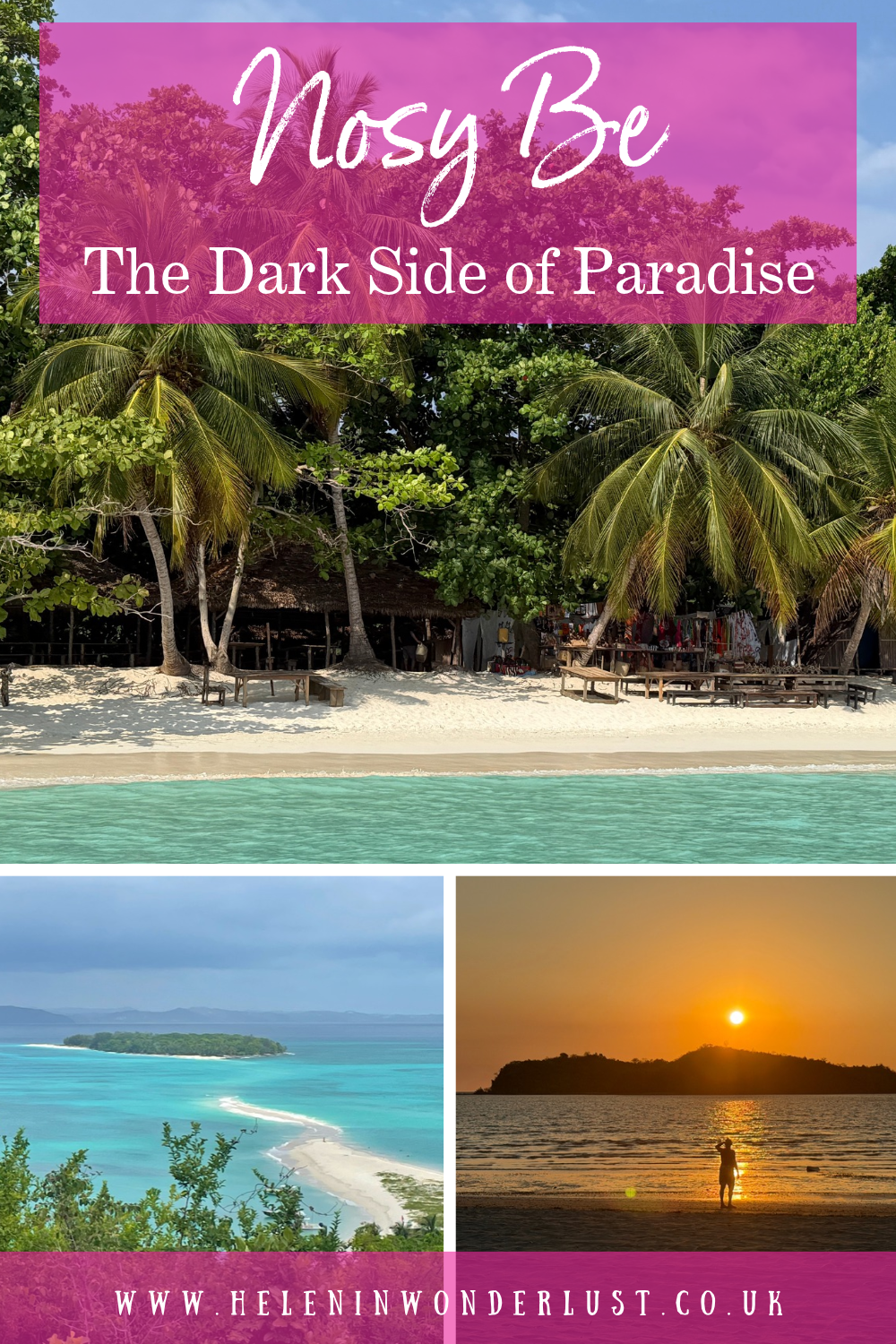
I love Madagascar, and the island of Nosy Be, Madagascar’s most famous beach destination, is wonderful.
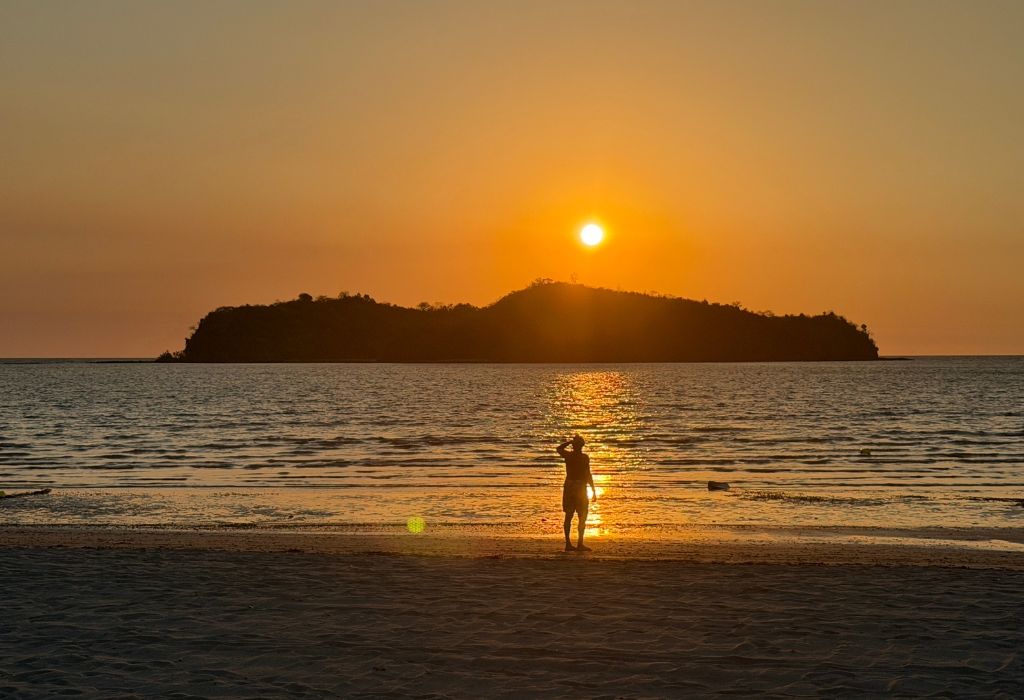
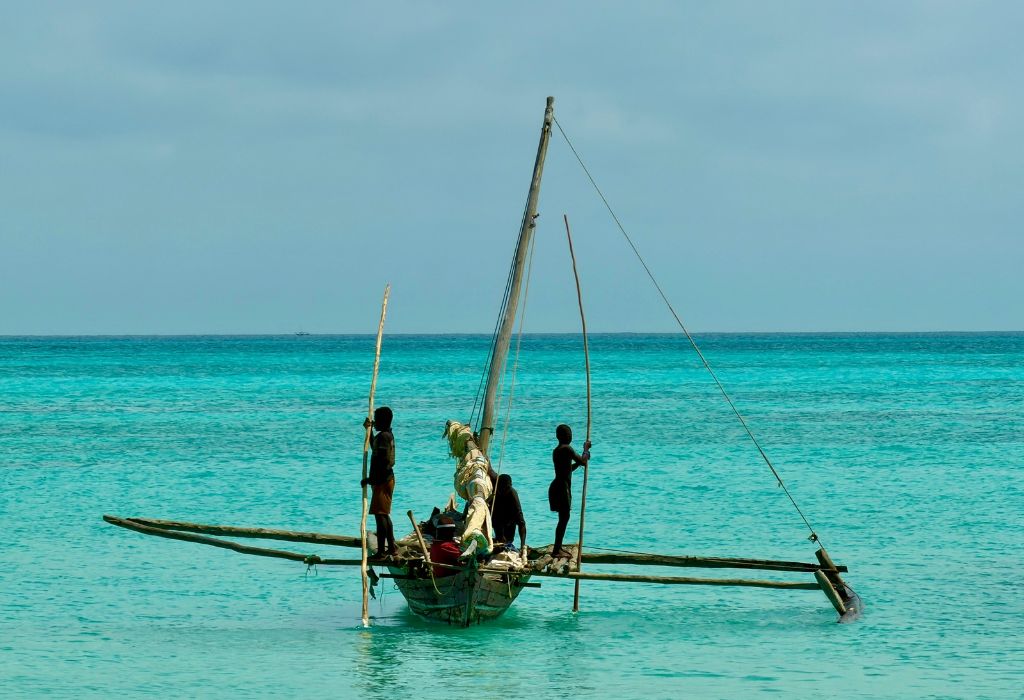
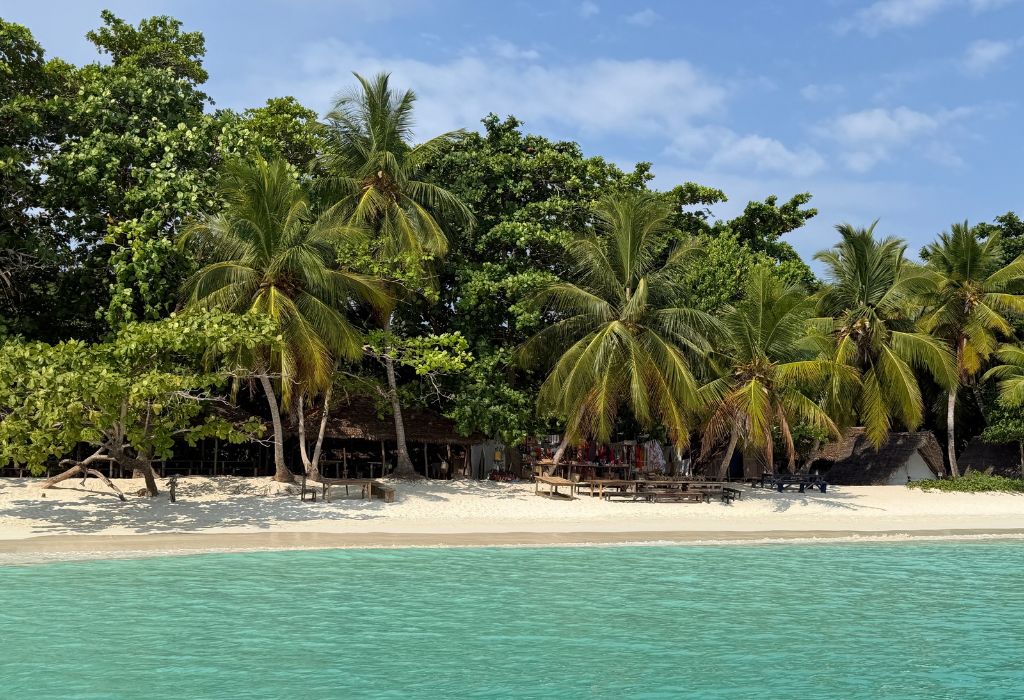
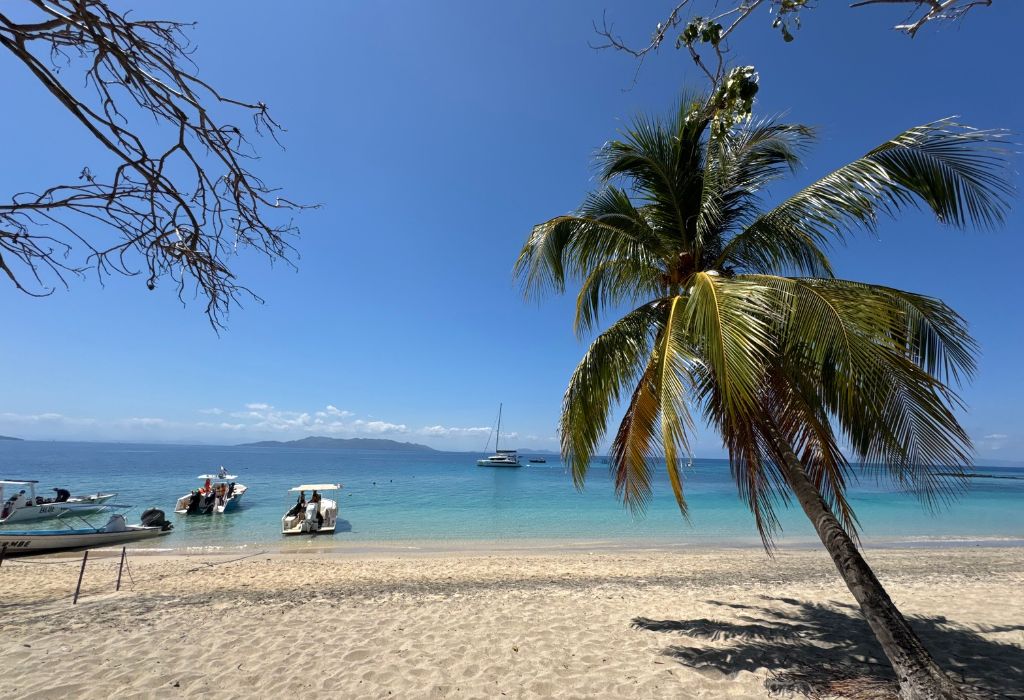
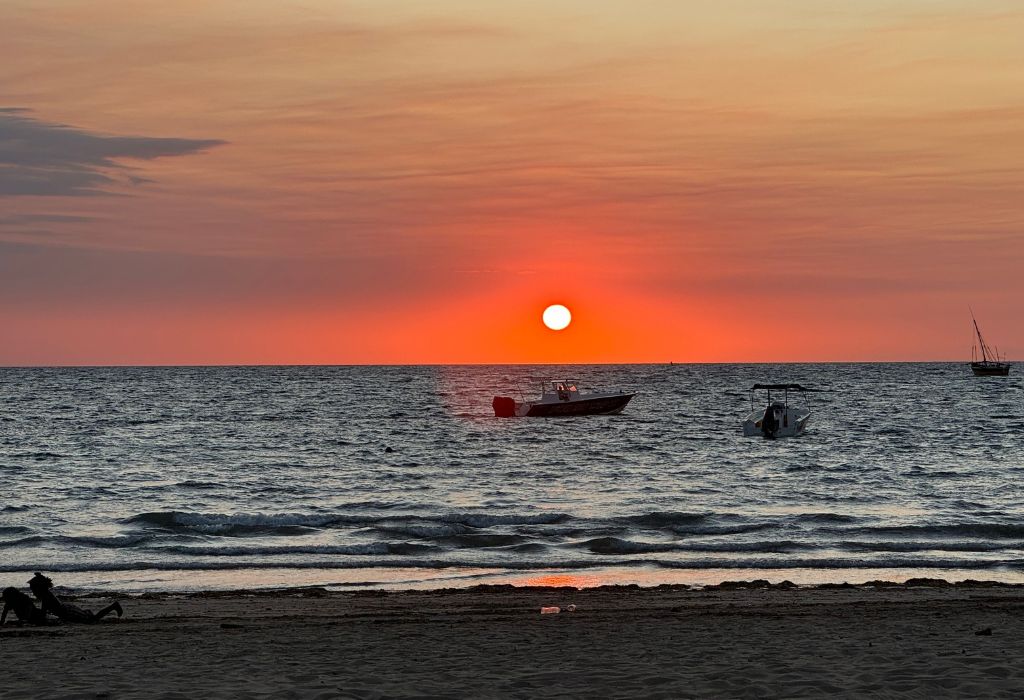
Turquoise waters, incredible marine life, nearby tropical islands to explore, gorgeous sunsets, lovely resorts and that wonderfully laid-back atmosphere – it’s easy to see why people holiday here.
On paper, it’s paradise.
But there’s something about Nosy Be that I absolutely hate.
And once you’ve noticed it, it’s very difficult to ignore.
The old European men. And the (often very) young Malagasy women.
They’re everywhere.
Or at least, that’s how it feels to me, particularly when you venture beyond your hotel and into the nightlife.

Grandads Gone Wild?
You know me, I’m a party girl. Even though I’m now in my mid-forties, I still love a good night out dancing, and I don’t think there should be an age limit on that.
But I remember my first night out in Nosy Be very well. In fact, it’s burned into my brain.
It was my second-ever Madagascar tour. We’d had a fantastic day swimming with whale sharks, and we wanted to go out and celebrate.
We were a mixed group of men and women, mostly in our thirties, forties and fifties.
We were out for a good time. A few drinks, some music, a bit of dancing. Karaoke if we could find it. Nothing particularly unusual.
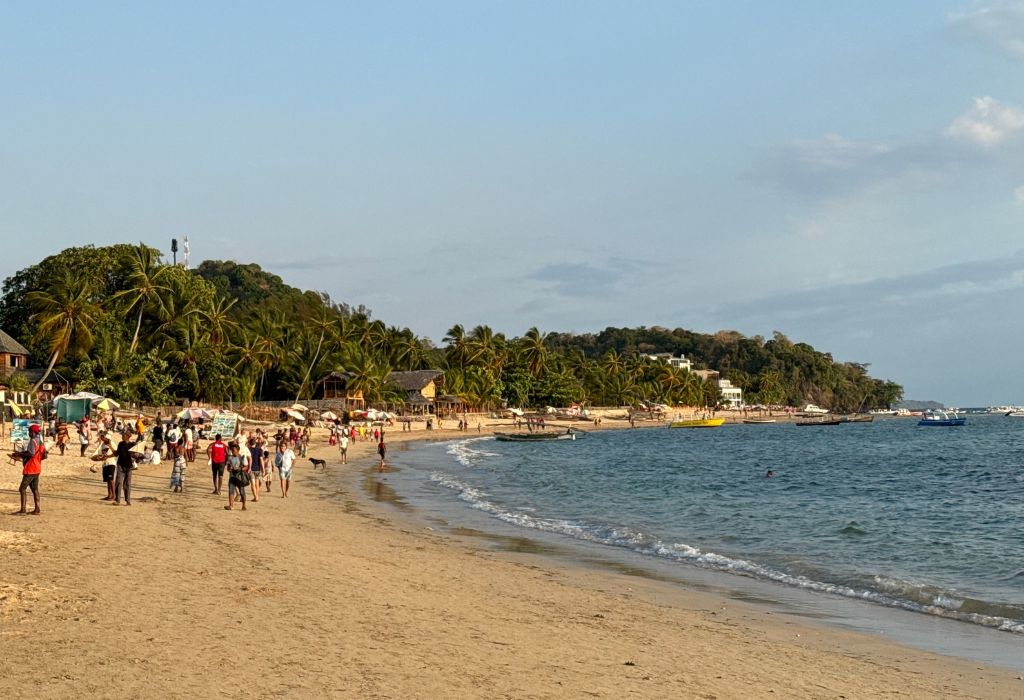
We had dinner, drank some rum and headed to the lively area of Ambatoloaka, a short drive from our hotel.
The main street was busy, with people sitting outside and music blaring. But then I noticed something…
Almost everyone else in the bars seemed to be older, white European men (mostly French and a few Italians, from what I could hear), in groups of anything from two to ten, accompanied by much younger Malagasy women in tiny outfits.
Some of the men looked well into their sixties and seventies, old enough to be the grandfathers of the women they had their hands all over.
And this wasn’t just one bar. It was pretty much every bar.
I remember the looks we were getting from the men. Almost as if to say, “What are YOU doing here?”
And I can imagine our faces didn’t exactly hide what we were thinking.
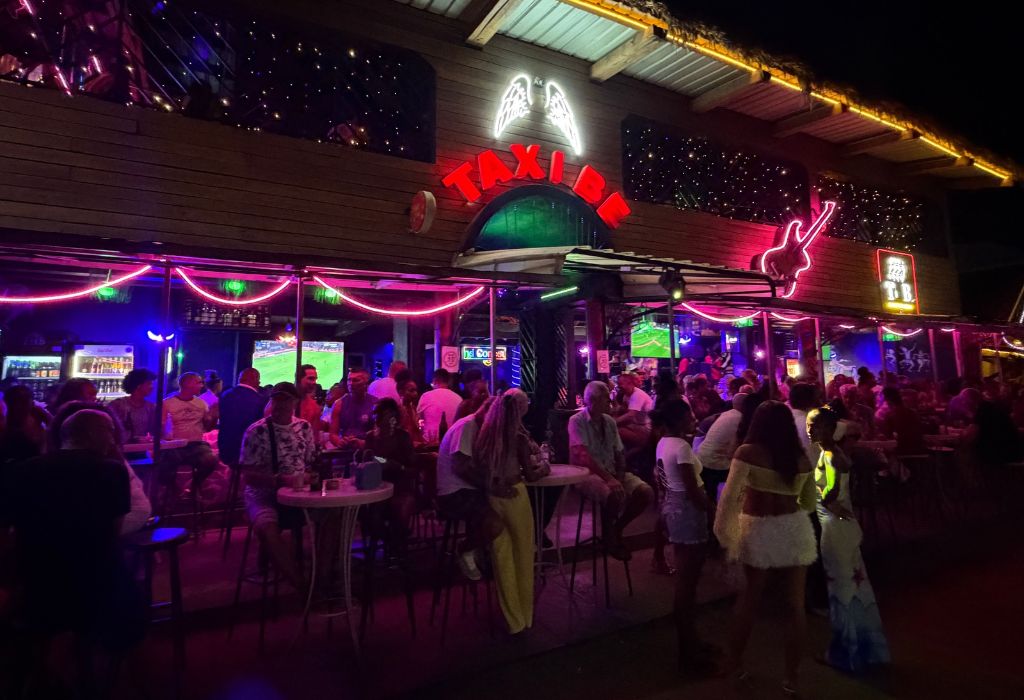
Not that they seemed especially bothered by our presence. In fact, there was a general air of arrogance. Safety in numbers, I guess.
Of course, I have absolutely no idea what was going through their heads.
It was like we’d wandered through a door into another world where this was all completely normal and we were the unusual sight.
And maybe, in that particular environment, it is.
But I couldn’t help wondering whether some of these men would behave quite the same way back home.
Would they be sitting in a bar in France or Italy, openly fondling a woman forty or fifty years younger than them, without a care in the world?
Perhaps. But I doubt it.
I suspect the combination of money, tourism and inequality makes Nosy Be a particularly appealing place for some of them.
The Old Men’s Club
And if you’re thinking that perhaps I just happened to stumble into the wrong bars on the wrong night, I wondered that too.
But I’ve been back to Nosy Be a couple of times since, and every time, it’s been much the same.
Hordes of older European men, often in groups, accompanied by much younger Malagasy women.
Different visits, different nights, same familiar scene.
And it’s not just something I’ve noticed in the bars at night.
By day, you might see the odd (odd being the operative word) older European man and younger Malagasy woman riding around on a motorbike or walking about town. Or groups of European men sitting together in cafés.
And it’s worth pointing out that not all the Malagasy women are particularly young. I’ve also seen older European men with women who appear to be in their thirties, forties and even fifties.
It’s not always a grandfather-and-granddaughter age gap, and I don’t want to suggest otherwise.
At dinner, you’ll spot couples too. A European man and a much younger Malagasy woman, not talking, often both staring at their phones, looking thoroughly bored.
Him peering at his screen over the glasses perched on the end of his nose, because he’s a little short-sighted these days.
It’s almost as though they don’t have much in common. She’s scrolling through TikTok, he’s doing his Sudoku. Although, to be fair, I’ve seen plenty of couples of similar ages doing exactly the same thing.
The other day, I was sitting in a restaurant when a man, I’d say at least seventy, walked past holding hands with a woman who looked no older than twenty-five.
And strangely, the couples don’t bother me quite as much. Seeing people going about their everyday lives together makes me wonder whether some of these might be genuine, ongoing relationships.
But the guys in the nightclubs? That’s a different story.
Where do they all find each other? Is there some sort of Old Men’s Club? Why do they move in packs?
Do they travel together from France and Italy? Or do they meet here in Nosy Be?
Is there a Facebook group?
It’s like witnessing a Louis Theroux documentary in real life, and I have so many questions.
I also noticed quite a few Malagasy men hanging around outside the bars. Some appeared to be tuk-tuk drivers, but others didn’t seem to be.
I’m not sure what their role was, if any, or whether they were connected to what was going on inside.
But it was another thing that made me curious about how the whole nightlife scene operated.
In fact, as I write this from my hotel pool in Nosy Be, there are two older white European men sitting opposite me with two very young-looking Malagasy women.
I’d guess one man is in his mid-sixties, the other in his early seventies. One of the women looks to be in her mid-twenties at most, while the other looks much younger.
I’m going to assume she’s an adult, but she looks incredibly young.
And it’s hard not to wonder about the circumstances.
And before anyone suggests I have a problem with interracial relationships or age gaps, I absolutely don’t.
I’ve met some lovely cross-cultural couples and families while travelling, and I know that genuine relationships come in all shapes and sizes.
That’s not what bothers me.
It’s the sheer frequency of what I’m seeing. The groups of leery men with their hands all over much younger women. The enormous age gaps. And the circumstances in which these relationships seem to exist.
That’s what makes me uncomfortable.
What Are These Men Actually Looking For?
Are they lonely and looking for companionship?
An ego boost? Power? Just sex?
Trying to recapture their youth, enjoying the attention of beautiful young women who might not ordinarily give them a second glance in their home countries?
All of the above?
I genuinely don’t know.
But when I see groups of ageing men leering over young women in nightclubs, over and over again, it starts to feel less like a collection of love stories and more like an industry.
When Poverty Becomes Part of the Tourist Experience
And let’s be clear, this isn’t unique to Madagascar.
I’ve witnessed similar situations elsewhere in Africa and around the world. Thailand is another destination often associated with this sort of tourism, although I haven’t visited the areas particularly known for it.
But nowhere have I personally found it quite as noticeable as Nosy Be.
On one side, you have tourists enjoying beautiful beaches, expensive hotels, restaurants and cocktails.
On the other, local people living in a country where poverty shapes so many of the opportunities available to them.
And somewhere between the two is an economy of sex, companionship, relationships and money.
Of course, relationships involving money and financial support exist all over the world. They always have.
But when a relatively wealthy foreign tourist enters a relationship with someone living in poverty, the balance of power can be very different.
One person might be looking for a holiday romance, companionship or a bit of fun.
The other might be looking for financial security, help supporting their family or simply a way to get by.
That doesn’t automatically mean anyone is being exploited. But it does raise questions about how equal those relationships really are.
Would these relationships exist in quite the same way if everyone involved had similar financial circumstances?
I very much doubt it.
But What About the Women?
This is where things become a little more complicated.
It’s very easy for me, a relatively privileged Western woman, to sit by a hotel pool with a cocktail in hand and pass judgement.
But what about the women?
Madagascar is one of the poorest countries in the world, and for many people, opportunities to earn a decent living are incredibly limited.
A relationship with a foreign man might mean money, accommodation, financial security, support for their families or even the possibility of a completely different life.
In fact, Malagasy friends have told me that some women actively seek out relationships with foreign men, seeing them as a potential route to a better life.
And when women in their communities end up with money, nice clothes, a house or a more comfortable lifestyle as a result, they can become something of a role model for others hoping to achieve the same.
Of course, that’s what I’ve heard from friends, rather than something I can speak to from personal experience.
But maybe some genuinely find these men attractive? Who doesn’t love a silver fox? Although, I have to say, the men I’ve seen aren’t exactly George Clooney.
Perhaps some are genuinely kind, generous men who treat their partners well. Maybe these women have found love, companionship or stability with someone who happens to be considerably older.
And who am I to say that isn’t a perfectly reasonable choice?
I’m certainly not suggesting that all these women are sex workers.
Some may be in loving relationships, others may have arrangements involving financial support, while some encounters might be purely transactional, lasting a night, a holiday or until the plane leaves.
And some might just be enjoying a few free drinks. I certainly did that in my younger days, although the men were generally a little closer to my own age!
The truth is, I don’t know their individual circumstances, and I wouldn’t pretend to.
Most of the time, the women I’ve seen appear perfectly happy. They’re chatting, laughing, dancing or simply going about their day.
But appearances don’t necessarily tell us very much.
Occasionally, I’ll catch a woman’s eye and find myself wondering what she’s thinking.
Is she happy? Bored? Tired? Counting down the hours until she can go home?
Or am I reading far too much into a fleeting glance?
And that’s the thing. We can speculate about these women’s motivations all day long, but ultimately, their stories are theirs to tell.
What I do know is that money can change the dynamics of a relationship enormously, particularly when one person has significantly more of it than the other.
Maybe some women are making perfectly rational decisions within the opportunities available to them.
And maybe others feel they have very little choice.
Because how free is a choice when one person has all the money and the other is struggling to survive?
That’s the part I find difficult.
I don’t judge the women. Not for a second.
I question the circumstances that might make these arrangements necessary in the first place.
And I question the men who may be deliberately taking advantage of those circumstances.
Because there’s a big difference between finding love across cultures and actively seeking out relationships in places where poverty creates an enormous imbalance of power.
And whilst I can’t possibly know which relationships fall into which category, I think it’s important to recognise that the difference exists.
How Did Nosy Be Become a Sex Tourism Destination?
The sex trade in Nosy Be isn’t a new phenomenon.
Its history stretches back to at least the colonial era, when European traders were already engaging in sexual and commercial relationships with local women.
But the modern sex tourism industry really began to expand in the early 1990s.
According to a fascinating 2010 investigation by The New Humanitarian, two developments helped fuel its growth: widespread job losses and the arrival of a Japanese tuna-fishing fleet.
The foreign fishermen had money. Many local women were struggling to find work.
And as tourism developed, particularly among European visitors, the sex trade became increasingly intertwined with the island’s tourism industry. Malagasy women travelled to Nosy Be from other parts of Madagascar in search of opportunities.
Interestingly, the laws surrounding prostitution in Madagascar aren’t quite as straightforward as you might think.
Although prostitution has historically been described as legal, the UK government’s current travel advice states that paying for sex is illegal, with penalties including substantial fines and potentially imprisonment.
Yet the industry clearly hasn’t disappeared.
The Darker Side: When Children Are Involved
And while consensual relationships between adults are one thing, there’s a much darker and more serious side to this industry.
The sexual exploitation of children.
And this isn’t speculation. It’s a documented problem in Madagascar.
According to the US State Department’s 2024 Trafficking in Persons Report, children as young as twelve have been exploited in sex trafficking in tourist destinations, including Nosy Be.
The report identifies bars, nightclubs, hotels and private homes among the places where exploitation occurs. It also identifies foreign tourists, among those involved.
Disturbingly, it reports that some parents encourage girls to pursue relationships or commercial sex with foreign tourists as a way of achieving financial independence.
And it’s not just foreign tourists. The report states that Malagasy men are responsible for the majority of child sex trafficking exploitation.
A separate ECPAT report also identifies Nosy Be as a location where children have been sexually exploited, sometimes to survive or pay school fees.
Then there are the signs I’ve seen displayed in hotels…
Non à la prostitution des enfants.
No to child prostitution.
It’s a sobering reminder that the sexual exploitation of children is a very real and recognised problem here.
And it makes me wonder how many of the older men I’ve seen with very young-looking women actually know how old they are.
Do they ask? Do they check? Or do some simply not care?
I have no way of knowing, of course.
And I’m certainly not suggesting that every young-looking woman I’ve seen is underage. Appearance alone tells us nothing about someone’s actual age or circumstances.
But knowing that child sexual exploitation is a documented problem here makes it impossible for me to dismiss what I’ve witnessed without question.
I meet a lot of children when I travel, and some of my favourite travel memories involve the wonderful kids I’ve met along the way.
And when I look at the little girls and boys I meet in Madagascar, I can’t help wondering what their futures will hold.
Will they have opportunities? An education? The freedom to make their own choices?
Or will poverty leave some of them vulnerable to exploitation?
Because whatever questions we might have about consent, money and power in relationships between adults, when children are involved, there is no grey area.
Children cannot consent to sexual exploitation.
And surely, protecting them should be everyone’s responsibility.
What Can We Do About It?
I don’t pretend to have all the answers.
But I do believe that, as travellers, we have a responsibility to be aware of the impact our presence can have on the places we visit.
And that includes not turning a blind eye to exploitation, especially when children are involved.
I’m not suggesting people should stop visiting Nosy Be. Quite the opposite.
Go. Enjoy the beautiful beaches, explore the surrounding islands, swim with whale sharks, eat in the restaurants and dance the night away!
And perhaps one of the best things we can do is encourage more people to visit Nosy Be for all the right reasons.
Support locally owned businesses, book with responsible tour operators and spend your money in ways that benefit the communities who call this island home
The more people who come for the beaches, wildlife, culture and incredible experiences the island has to offer, the more opportunities there are for local businesses to thrive without relying on sex tourism.
And I think hotels, bars and tour operators have a responsibility too. It’s not enough to put up signs condemning child exploitation; businesses need to take safeguarding seriously, train their staff and know how to respond when something isn’t right.
And if you witness something that makes you genuinely concerned about a child’s safety, report it through the appropriate channels. Don’t confront people or make accusations based purely on appearances.
Organisations such as ECPAT work to combat the sexual exploitation of children, including exploitation linked to travel and tourism.
Tourism has the potential to bring enormous benefits to Madagascar, but those benefits should never come at the expense of vulnerable people.
Nosy Be deserves to be known for everything wonderful it has to offer, not for the exploitation that can exist alongside it.
Can You Love a Place and Hate Part of What Happens There?
Absolutely. And that’s the difficult thing about Nosy Be.
Because I genuinely love this island.
But I don’t think we should have to ignore the uncomfortable things we witness simply because we’re on holiday.
Travel isn’t always about beautiful beaches, incredible wildlife and pretty Instagram pictures. Sometimes it challenges us, makes us question what we’re seeing and forces us to think about things we’d perhaps rather not.
I’m conscious that I’m looking at all of this through my own cultural lens. I don’t know the stories of the women I’ve seen, and I certainly don’t want to speak for them.
Maybe some are genuinely happy. I really hope so.
But I also know that poverty can leave people with choices that aren’t really choices at all.
And whilst I can’t know the circumstances of any individual relationship, I do question how many of these women are there because they truly want to be, and how many are there because they feel they have no other choice.
And perhaps that’s the question that will stay with me long after I’ve left Nosy Be.
Have you visited Nosy Be? Did you notice the same things, or was your experience completely different? I’d genuinely love to hear your thoughts in the comments below.
Other Madagascar posts you might enjoy…
- Things to Know Before You Visit Madagascar
- The Best Things to Do in Madagascar
- Photos to Inspire You to Visit Madagascar
- The Ultimate Madagascar Travel Guide
- Safest Countries in Africa
- The Best Time to Visit Madagascar
- From Africa, With Love – Postcards from Madagascar
- My Top 12 Best African Countries to Visit