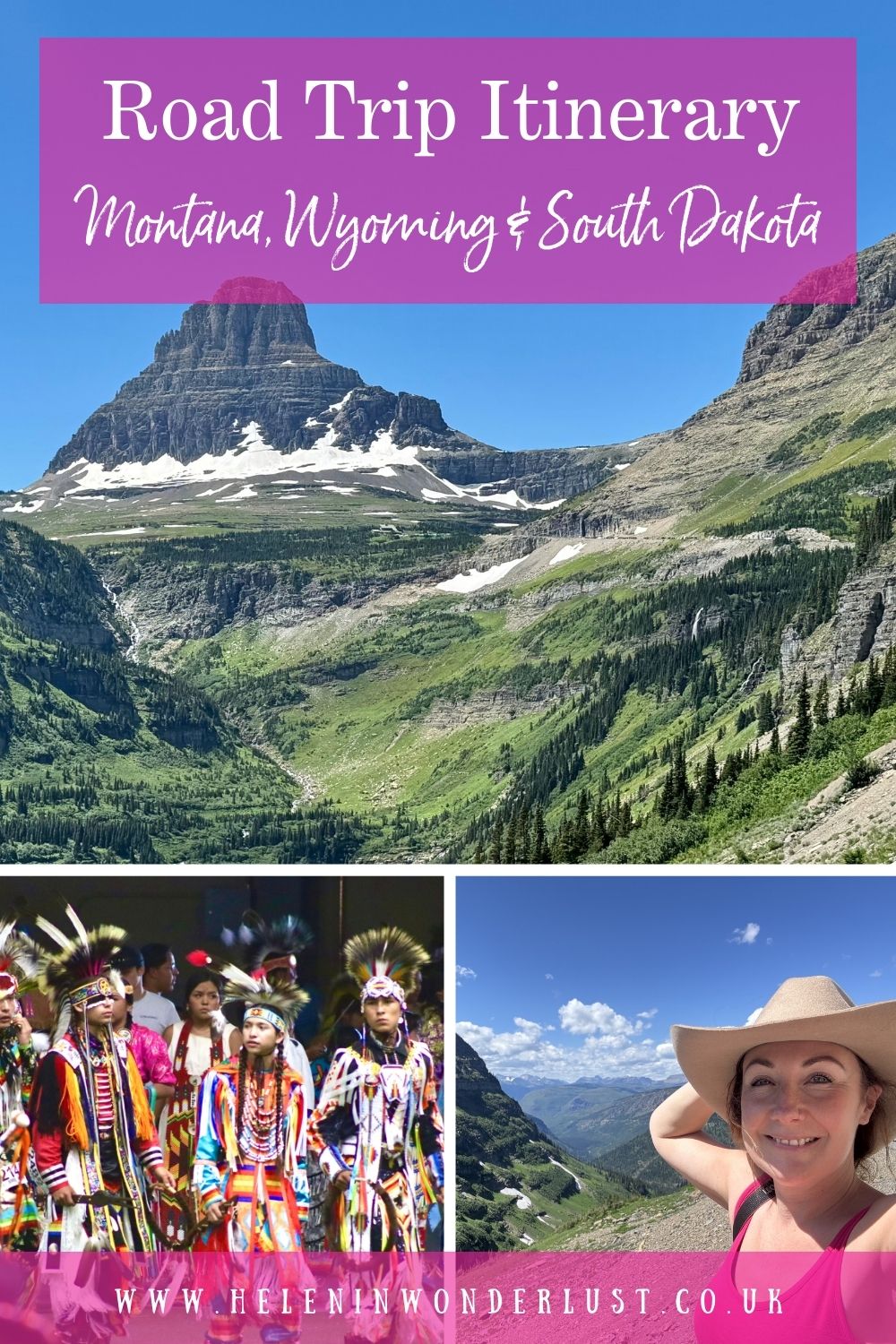
The Ultimate Wild West Road Trip Itinerary: Montana, Wyoming & South Dakota

Last updated on March 21st, 2026 at 06:50 pm
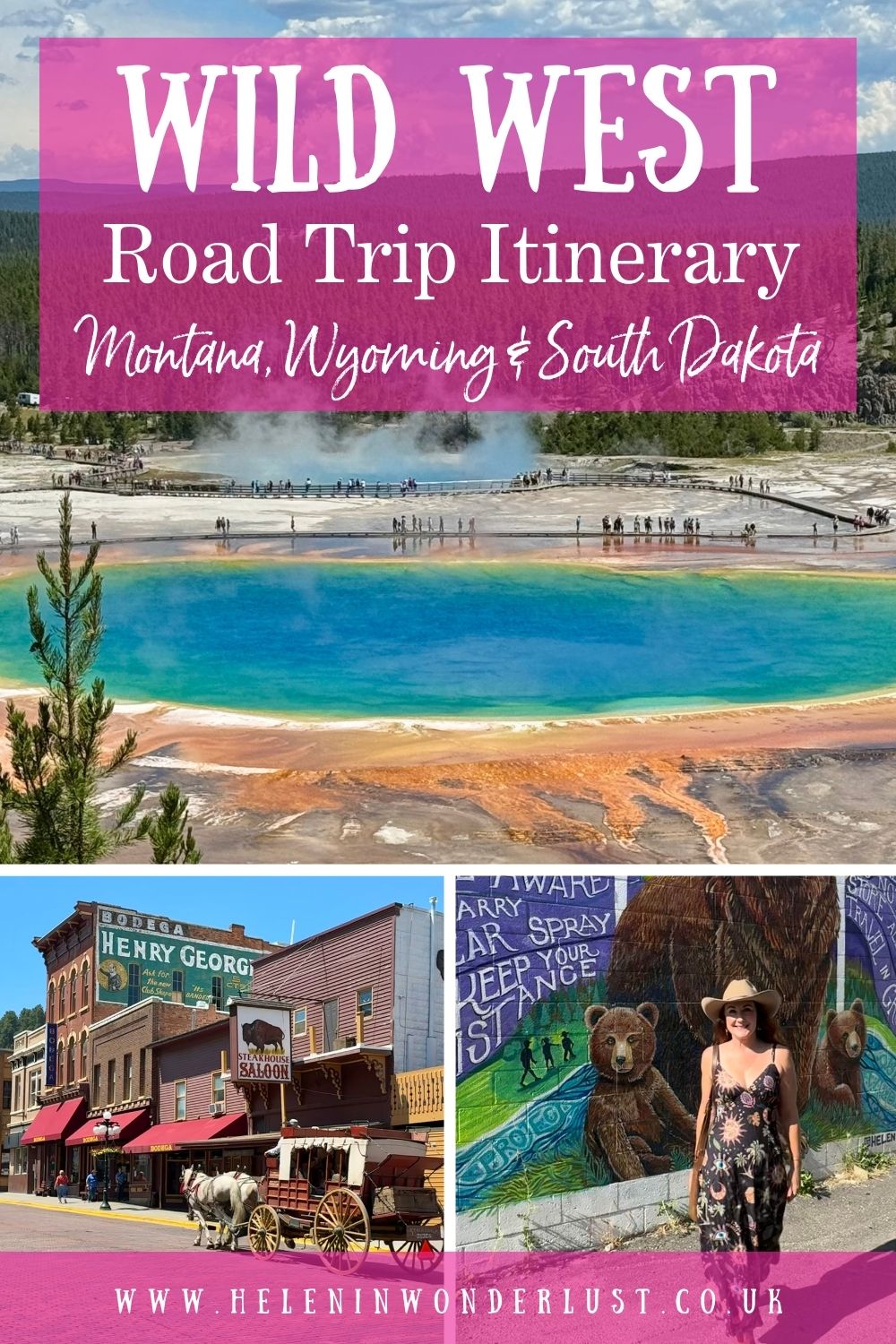
My road trip through Montana, Wyoming and South Dakota was, undoubtedly, one of my favourite adventures of all time. And if you love the great outdoors, wildlife, cultural experiences, and spectacular national parks like Yellowstone – I just know you’ll love this trip too.
From dramatic mountains and geothermal wonders to historic frontier towns and endless open roads, it’s perfect for travellers who crave adventure, enjoy stories of pioneers and Native American heritage, or simply want to experience cowboy culture, country music, and the rugged spirit of the Wild West.
Please Note: Some of the links in this post are affiliate links, which will earn me a small commission at no extra cost to you. Affiliate sales help with the running costs of this site, so thank you for your support!
16-Day Wild West Road Trip Itinerary (Montana, Wyoming & South Dakota)
My Wild West Road Trip Route (And How I’d Tweak It)
We started our adventure in Whitefish, Montana, flying into Glacier Park International Airport, and finished the trip in Boulder, Colorado, flying out of Denver International Airport.
That said, while I loved Boulder, it doesn’t quite slot neatly into a Wild West itinerary. The vibe is completely different, and it adds around six extra hours of driving with not much to see in between – aside from Denver (which we didn’t actually stop in) and my beloved Buc-ee’s – which almost justified the detour.
For a more on-theme and relaxed finish, I’d recommend ending in Rapid City, South Dakota instead and leave Colorado for another trip. This keeps the drives manageable.
If you are short on time or want a pretty relaxed trip, you could skip Whitefish and Glacier National Park entirely (for this trip at least – definitely go another time) and fly into Bozeman, which is much closer to Yellowstone National Park.
Alternatively you could start in Jackson Hole, go up through to West Yellowstone, then Gardiner, and over to Cody, ending in Rapid City or vice versa.
If you decide to skip Glacier National Park, you could always save it for another adventure and combine it with a trip through the Canadian Rockies, or even time your visit with the legendary Calgary Stampede.
To do this trip justice, I’d recommend allowing around 2 – 2.5 weeks, although 3 weeks would be even better if you want to take things at a slower pace or add in extra stops.
How Much Does a Wild West Road Trip Cost?
This trip was relatively expensive, costing us around $5,000 per person. That included the return flights from the UK which were around $1,250.
The costs can add up quickly once you factor in accommodation, national park entry fees, car hire, fuel, food, flights, and activities. And it could also be a LOT more expensive if you stay in luxury lodges, eat out every day and do tons of activities.
If you’re travelling on a tight budget, consider self-catering (food and drink is a big cost), camping, or opting for very basic accommodation and including fewer destinations. Activities can be expensive, but there’s a lot of free or cheap things to do too – hikes, swimming, exploring the towns, scenic drives – you don’t have to spend a fortune!
Wild West Road Trip Itinerary Map
My Suggested Route & Key Stops
This itinerary covers a lot of ground, so be prepared to spend a fair bit of time on the road. But with scenery this spectacular, the drives are often just as memorable as the destinations themselves.
- Whitefish, Montana: Charming mountain town with a friendly small-town vibe, stunning lake views, and easy access to Glacier National Park. Great dining, shopping, and relaxing spots.
- Glacier National Park, Montana: One of America’s most breathtaking natural wonders with dramatic peaks, crystal-clear lakes, and endless hiking trails. Going-to-the-Sun Road is a must.
- Gardiner, Montana: Historic gateway town at Yellowstone’s north entrance with the iconic Roosevelt Arch and access to Mammoth Hot Springs and Lamar Valley.
- West Yellowstone, Montana: Bustling town just outside Yellowstone’s west entrance, close to geysers, hot springs, and Old Faithful.
- Yellowstone National Park, Wyoming/Montana/Idaho: America’s first national park, packed with geothermal wonders, wildlife, and wilderness. Highlights include geyser basins, Yellowstone Lake, and the Grand Canyon of Yellowstone.
- Grand Teton National Park, Wyoming: Dramatic mountain skyline and pristine lakes, offering spectacular hiking, wildlife viewing, and photogenic landscapes.
- Jackson Hole, Wyoming: A stunning valley beneath the towering Tetons, home to the town of Jackson and Teton Village, where classic cowboy culture meets upscale restaurants, boutiques, art galleries, and lively nightlife.
- Cody, Wyoming: Founded by “Buffalo Bill,” rich in Wild West history with museums and summer rodeos.
- Deadwood, South Dakota: Historic gold rush town with preserved saloons, museums, and entertaining reenactments.
- Custer State Park, South Dakota: A wildlife haven in the Black Hills known for its scenic drives, roaming bison herds, granite peaks, the spectacular Needles Highway, and the park’s famous “begging burros.”
- Badlands National Park, South Dakota: A dramatic landscape of striped rock formations, deep canyons, and wide-open prairie, home to prairie dogs, bighorn sheep, and some of the most striking scenery in the American West.
- Rapid City, South Dakota: A lively gateway city to the Black Hills and nearby landmarks like Badlands National Park, Mount Rushmore, and the Crazy Horse Memorial.
For Yellowstone Fans…
The real-life Dutton Ranch is actually the Chief Joseph Ranch in the Bitterroot River Valley, Montana. It’s a bit out of the way for this particular itinerary – but if you do have the time, you’ll need to book early as it gets booked up way in advance and is pretty pricey too (at $1,700 per night for up to 4 guests, and $50 per night per each additional guest – max 8 total guests).
Airport Options
There are airports in the following places, so you could start or end in any of these destinations:
Glacier Park International Airport (FCA): About 15 minutes from Whitefish, Montana, closest to Glacier National Park.
Bozeman Yellowstone International Airport (BZN): Around 1.5 hours from Gardiner, this is one of the most popular airports for trips to Yellowstone National Park, particularly the North Entrance.
Jackson Hole Airport (JAC): Located inside Grand Teton National Park near Jackson, making it ideal for visiting both the Tetons and southern Yellowstone.
Yellowstone Airport (WYS): A small seasonal airport in West Yellowstone, just outside the West Entrance of Yellowstone National Park. Flights are limited but it’s the closest airport to sights like Old Faithful.
Yellowstone Regional Airport (COD): About 15 minutes from Cody, Wyoming and roughly an hour from Yellowstone’s East Entrance.
Rapid City Regional Airport (RAP): Main airport serving the Black Hills region, including Mount Rushmore, Deadwood, and Badlands National Park.
Car Hire for Your Wild West Road Trip
Every cowboy or cowgirl needs a trusty steed, so I’d highly recommend hiring a rental car from DiscoverCars.com. They give you the option to pick up a car in one place and drop it off in another, which is ideal for this type of road trip.
Best Time to Do a Wild West Road Trip
The best time for a road trip through Montana, Wyoming and South Dakota is between June and October. Many roads – especially in Yellowstone National Park – close from late October or early November through to mid-May due to snow (you’ve watched 1923, right?), so travelling outside this window means you won’t be able to drive through the park, limiting your access to key sights and your overall route.
We went in July which was ideal. Summer offers long daylight hours and full access to all areas, though there is a chance of wildfires. If you visit in September, the days will be shorter, but you’re likely to be treated to stunning autumn colours and might even witness the elk rut, one of the most remarkable wildlife spectacles of the year.
Montana tends to enjoy its best weather from late June to early September, with warm but comfortable temperatures and mostly clear skies.
Wyoming’s peak weather falls between July and early September, ideal for exploring both Yellowstone and Grand Teton National Parks.
South Dakota generally has the most pleasant conditions from late May through September, with warm temperatures perfect for visiting the Badlands, Black Hills and Mount Rushmore.
We travelled in mid-July, and while the summer months are typically dry, we did encounter some occasional rain and thunderstorms – particularly in South Dakota – so it’s wise to pack waterproofs just in case. It was cool in the evenings in some places, but overall the temperature was great.
National Parks Pass: America the Beautiful
If you’re planning to visit several U.S. national parks during your road trip through Montana, Wyoming and South Dakota (or any US states), the best value option is the America the Beautiful Annual Pass.
Costing $80, this pass grants unlimited access to over 2,000 federal recreation sites – including all National Parks, National Forests, BLM lands, and more – for a full year from the month of purchase. It covers entrance fees for a vehicle and all passengers at per-vehicle parks (like Yellowstone and Badlands), or for the pass holder plus up to three guests at per-person entry sites.
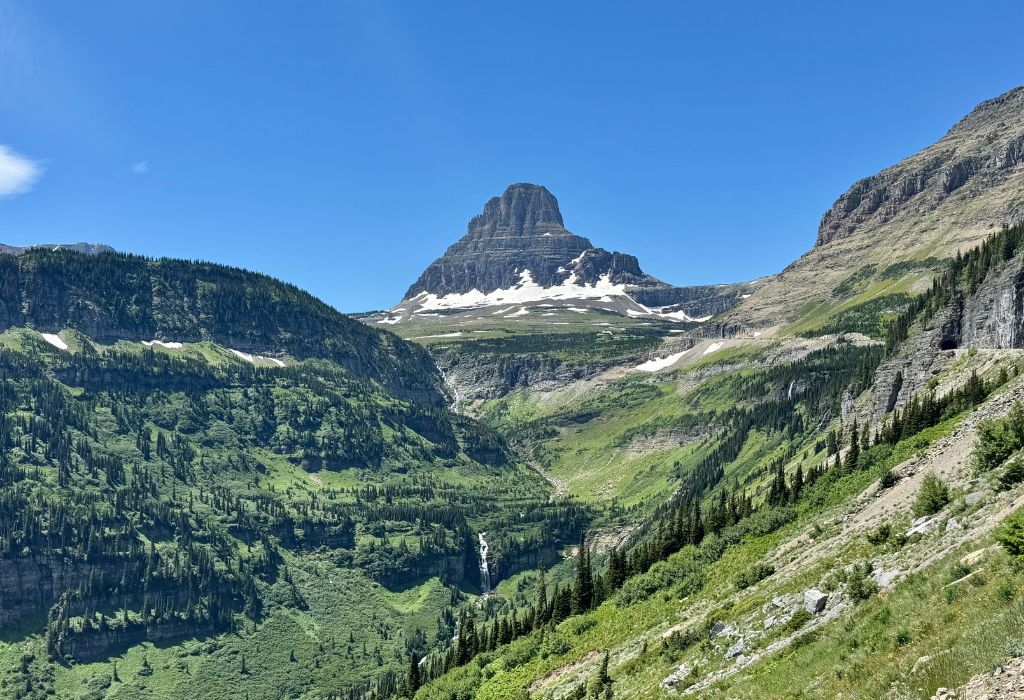
Considering that individual park entry fees typically cost around $35, the pass pays for itself after just three visits – which is great, especially when you’re entering Yellowstone multiple times, like we did.
Of the parks I visited, the following are included:
- Glacier National Park (Montana)
- Yellowstone National Park (Wyoming/Montana/Idaho)
- Grand Teton National Park (Wyoming)
- Badlands National Park (South Dakota)
Custer State Park (South Dakota) was not covered by the pass. You can buy the pass online at recreation.gov or in person at most park entrances.
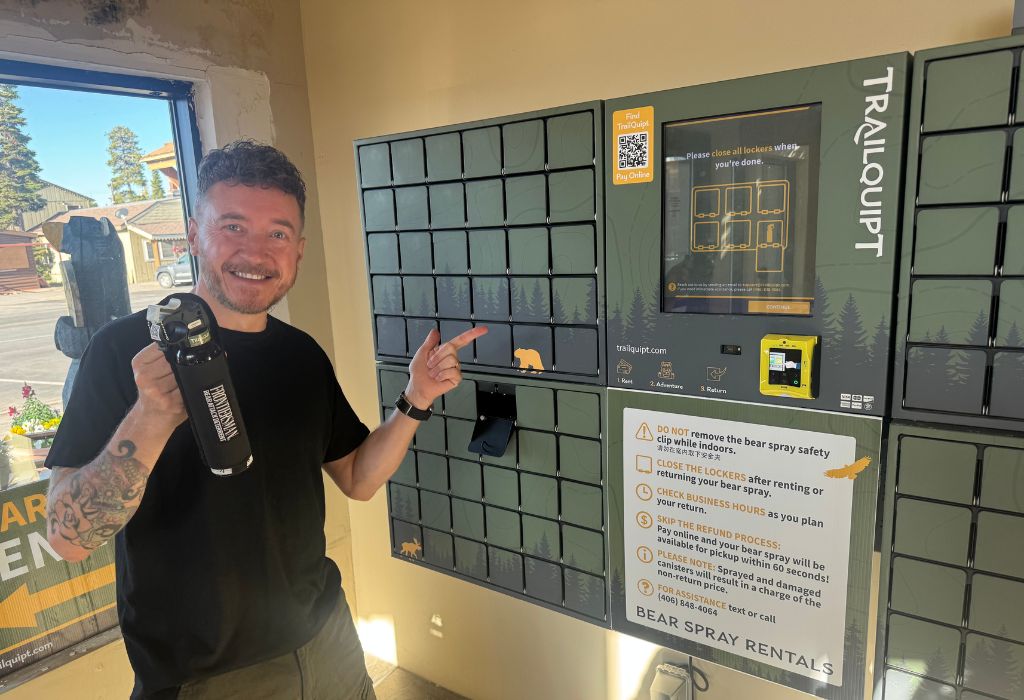
Bear Spray: Essential Safety for Hiking in the West
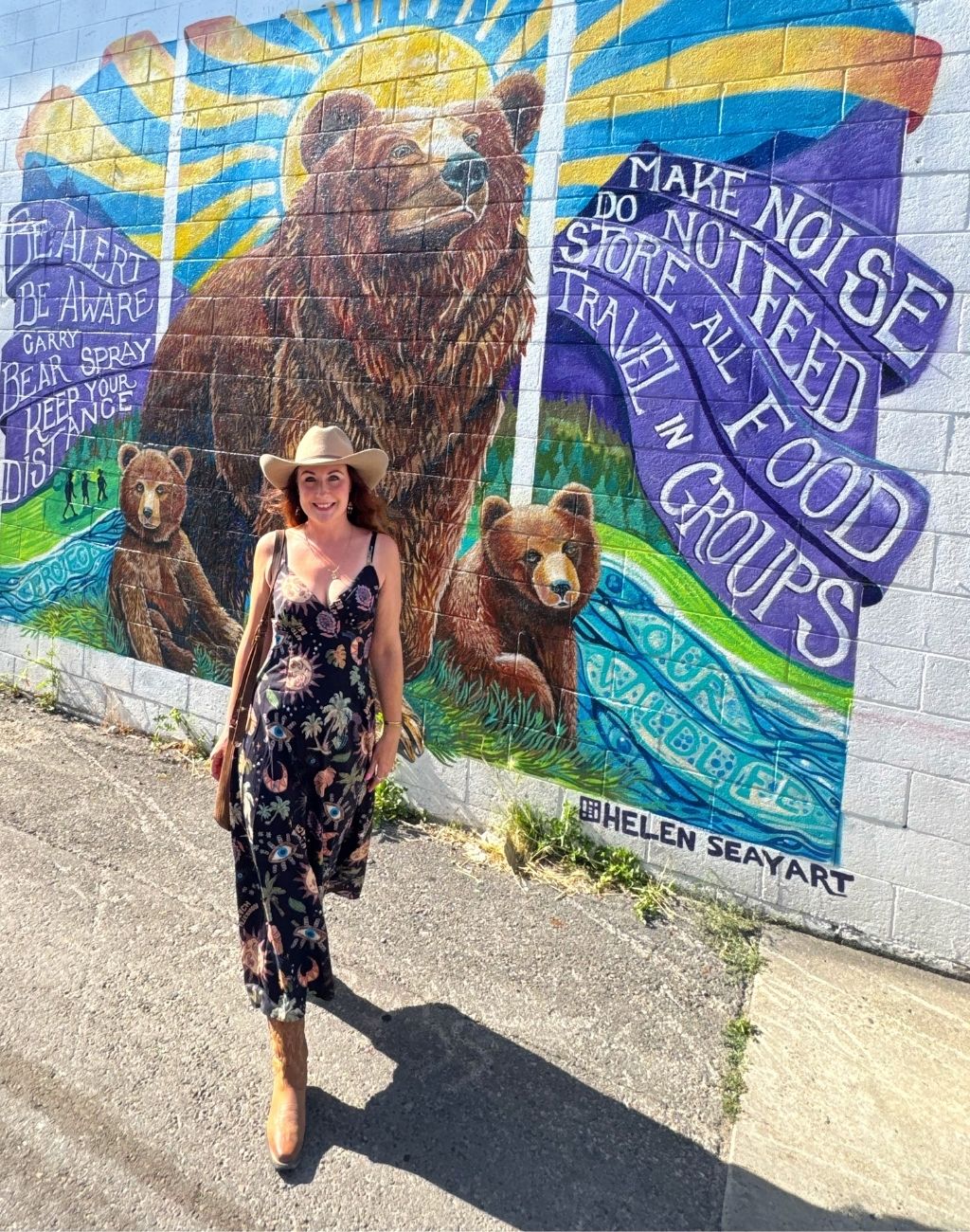
If you’re planning to hike in Montana, Wyoming, or South Dakota – especially in wilderness areas like Yellowstone, Glacier, or Grand Teton National Parks – carrying bear spray is strongly recommended, even for short hikes.
We didn’t see any bears on this trip, but you don’t want to risk it! You can hire bear spray in most towns near popular hiking areas, which is a convenient option.
Bear spray is a highly effective, non-lethal deterrent designed to protect you from potential bear encounters. It’s important to learn how to use it properly before you venture out and keep it easily accessible while on the trails.
Remember, bear spray is not a substitute for safe hiking practices, such as making noise, hiking in groups, and staying alert to your surroundings. Being prepared with bear spray adds an extra layer of safety so you can enjoy the incredible wilderness with greater peace of mind.
My Wild West Itinerary – Montana, Wyoming & South Dakota
Here’s my suggested 16-night itinerary for this region – a high-level overview of all the places we visited. There’s so much to see and do, I’ll mostly focus on what we did, but you can easily adjust it to suit your timeframe and interests.
I’m also writing guides for each destination if you want more detailed tips, more restaurant recommendations, places to stay and things to do – I will link to those asap!
Glacier National Park & Whitefish (Montana)
We began our trip in the picturesque mountain town of Whitefish, just a short drive from Glacier National Park in northern Montana. Surrounded by alpine peaks and sparkling lakes, Whitefish makes a relaxed base with boutique shops, great coffee, and beautiful mountain views.
We spent three nights here, giving us two full days to explore. It was enough time to get a taste of the area, but you could easily spend a week or more hiking, doing scenic drives, and spending time in nature.
That said, if you’re short on time, this is one part of the itinerary you could consider skipping, as it does add quite a bit of distance to the overall route. In that case, you should fly into Bozeman and start your trip closer to Yellowstone National Park.
Day 1: Arrival in Whitefish
If you’re arriving from Europe (like I did, with flights from Manchester to Kalispell via Las Vegas and Salt Lake City, arriving at 11.30pm – ouch) – the first day will be a bit of a write-off.
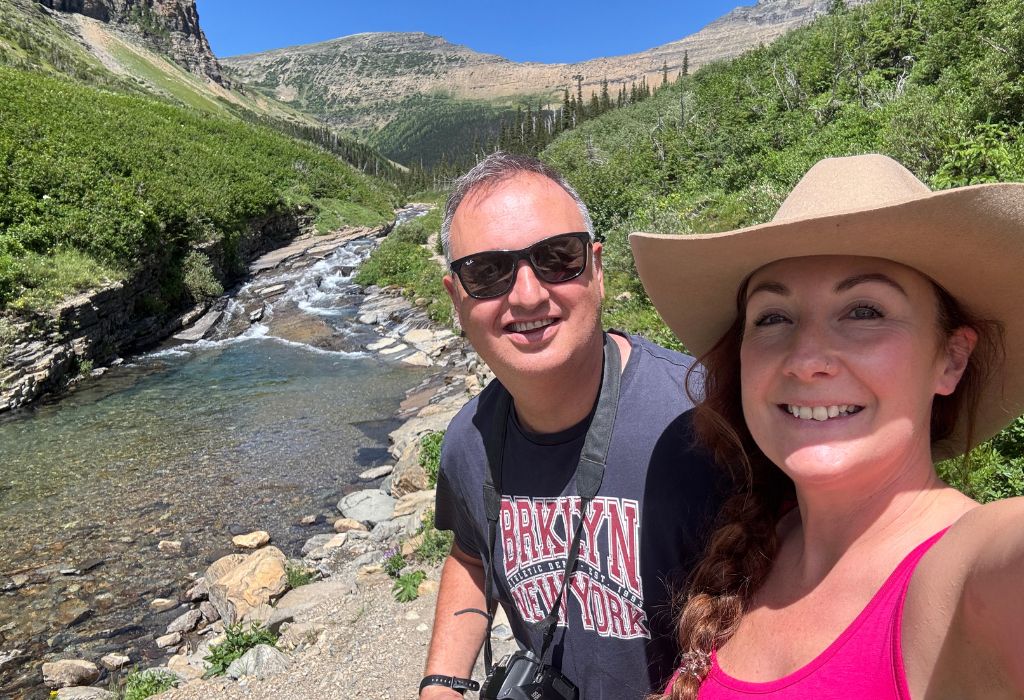
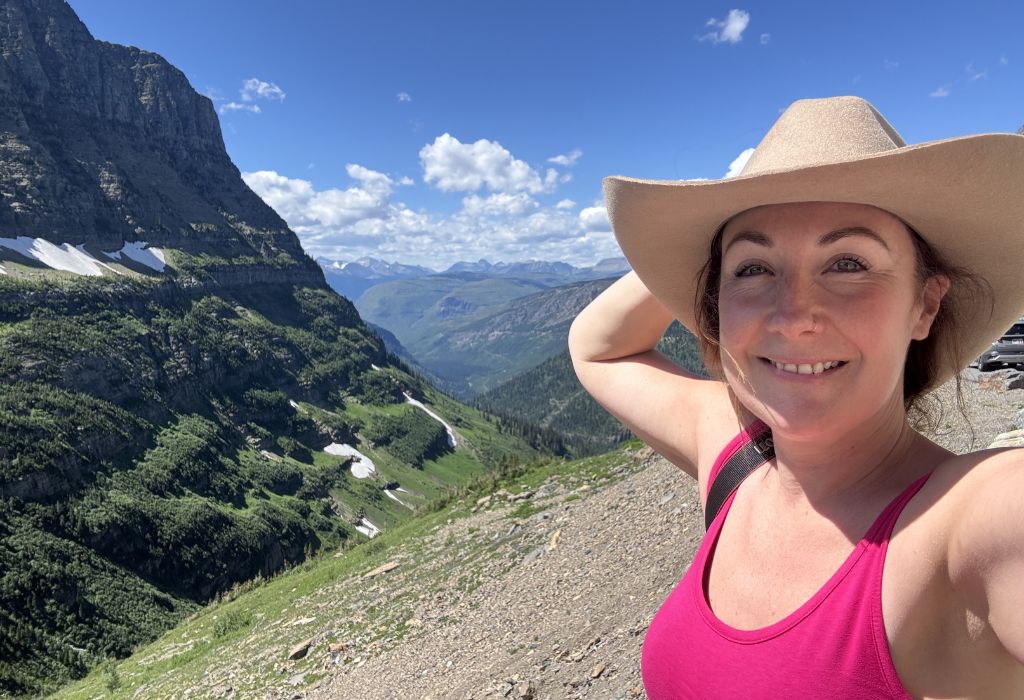
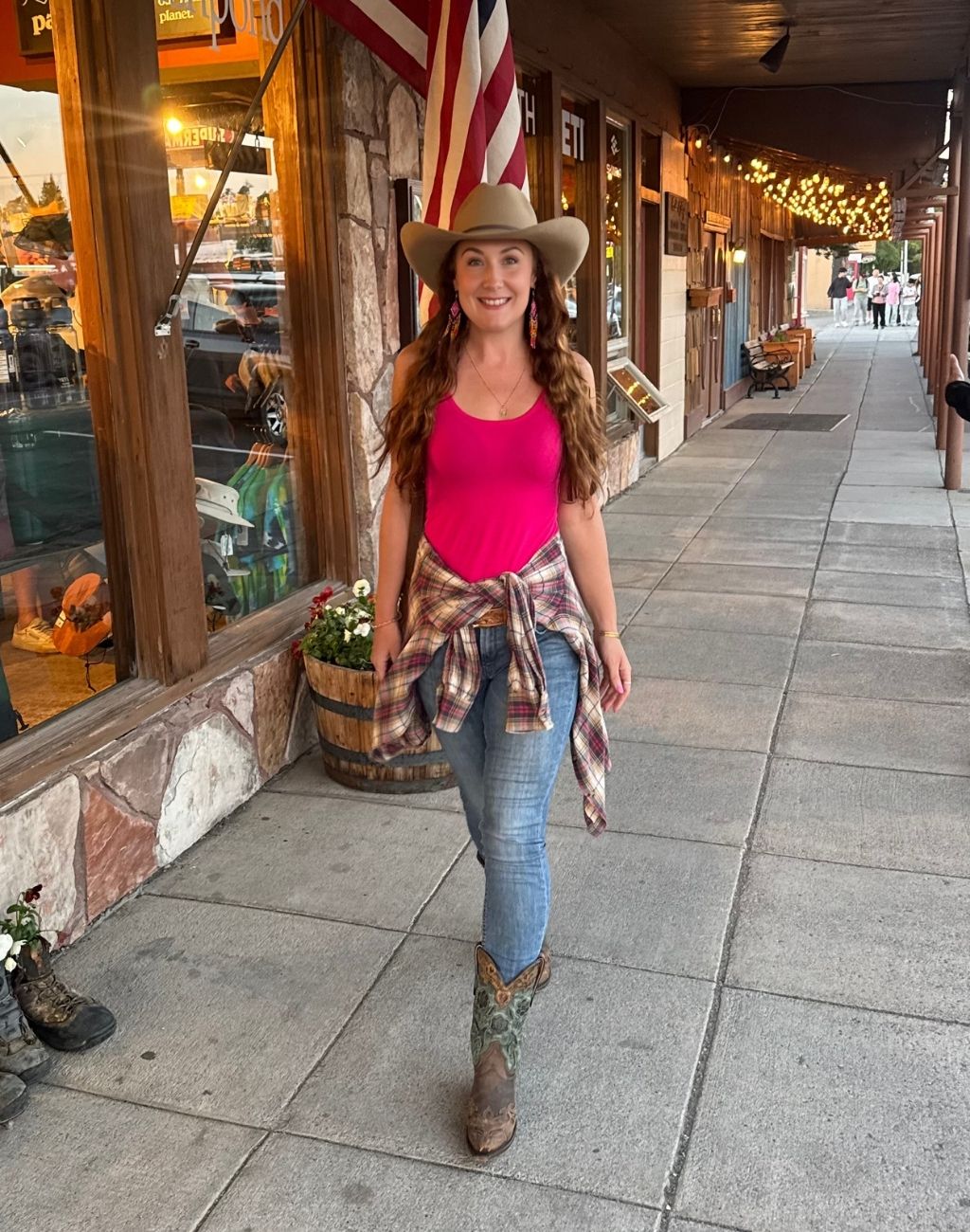
Even if you land earlier in the day, I’d recommend keeping things low-key on your first day and getting your bearings. Wander around town, go shopping (if you want to buy a cowboy hat, check out the Out West Trading Company – where I bought my absolute favourite hat – the one I’m wearing above) and ease into your trip!
Day 2: Glacier National Park or Blackfeet Reservation
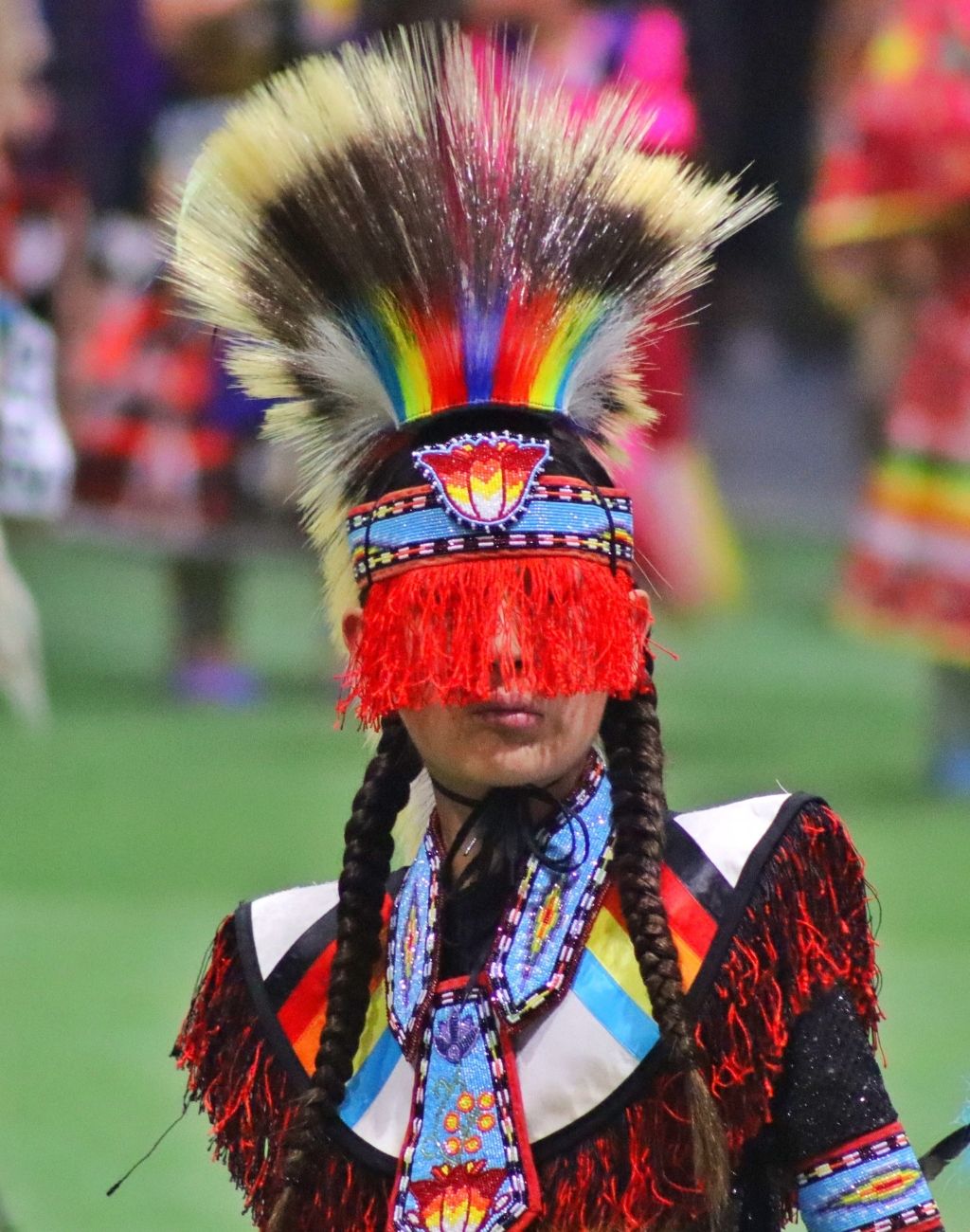
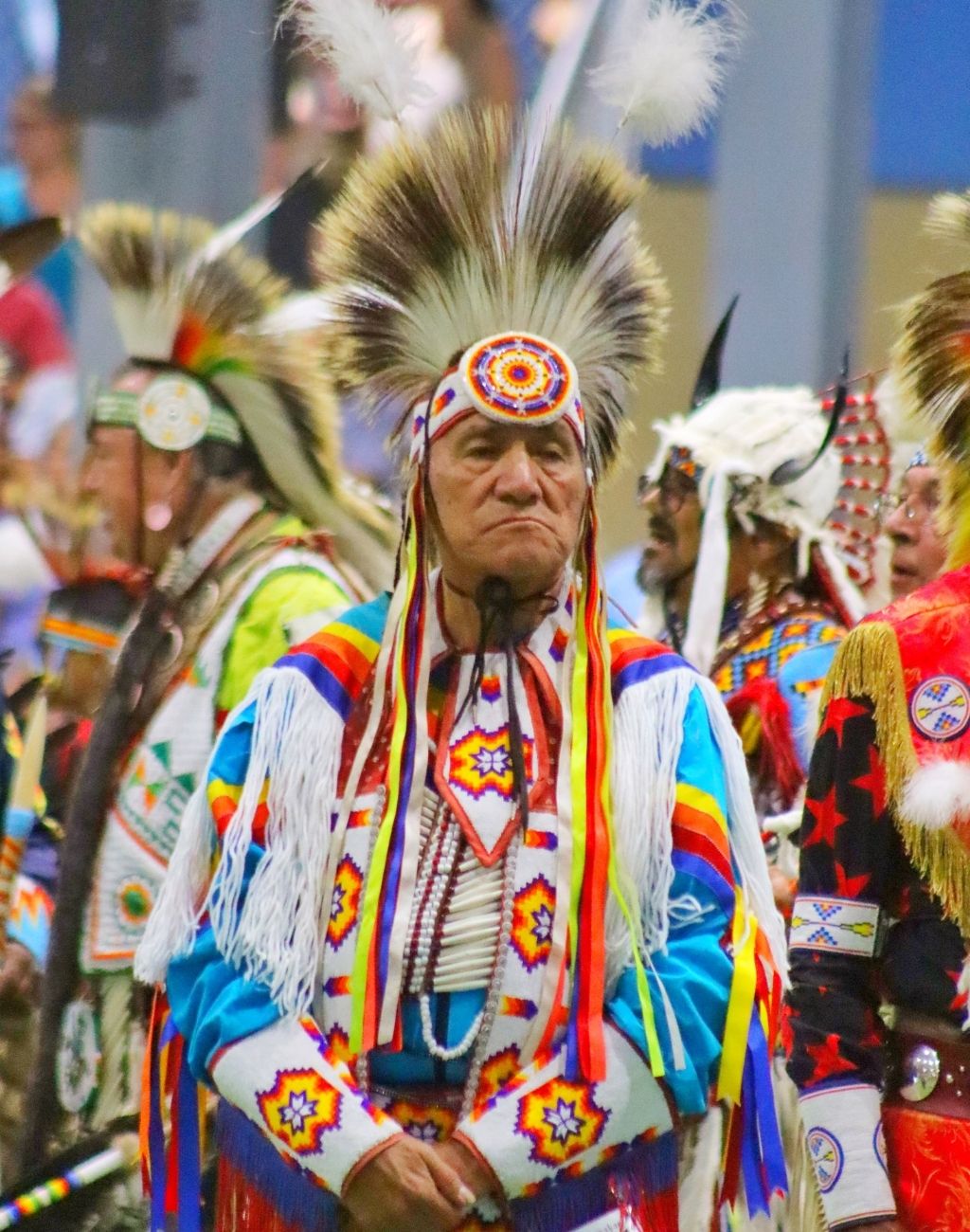
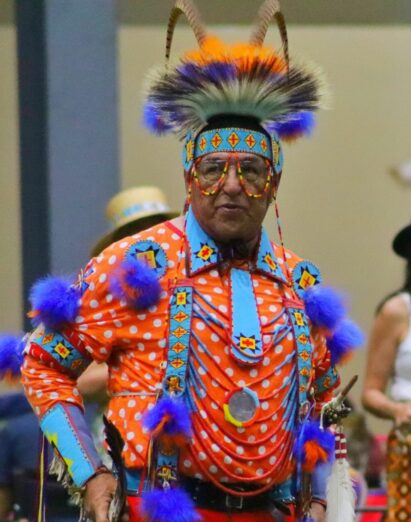
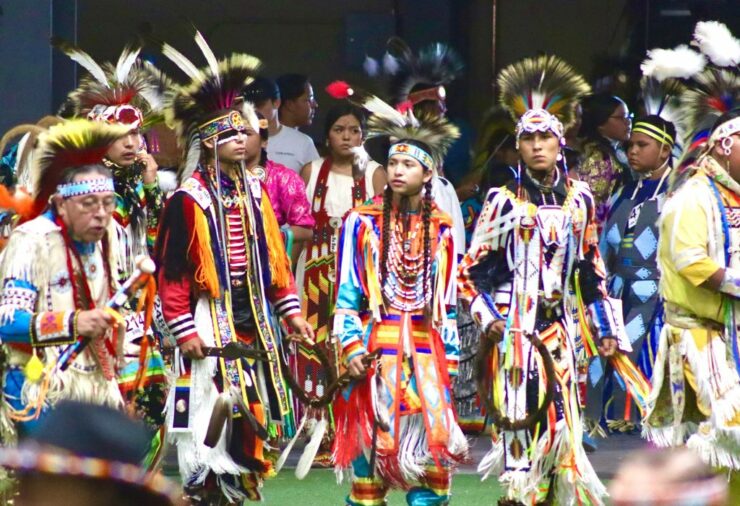
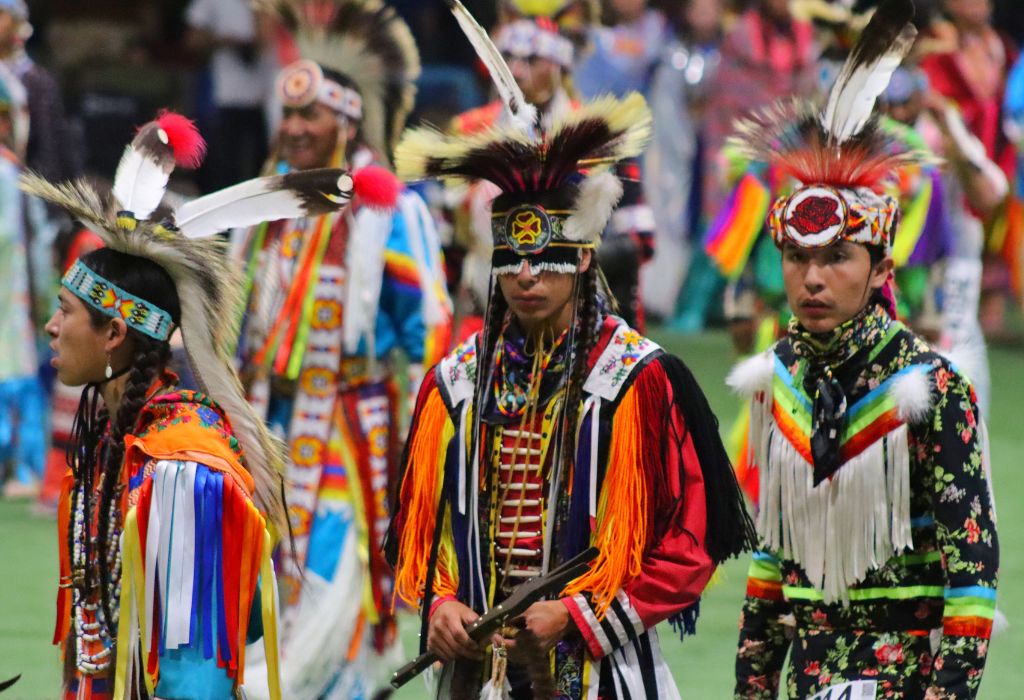
We spent our first full day at the Blackfeet Indian Reservation. We visited in mid-July and our trip aligned with the Native American Indian Days Powwow in Browning – a powerful celebration of culture, music, and community.
Powwows are vibrant gatherings that bring together Indigenous peoples from many Native American and First Nations communities to share traditions, reconnect, and celebrate their heritage.
This multi-day event is one of the largest gatherings of Plains tribes in the country, bringing together Native people from across North America to share traditional dancing, drumming, singing, and beautifully crafted regalia.
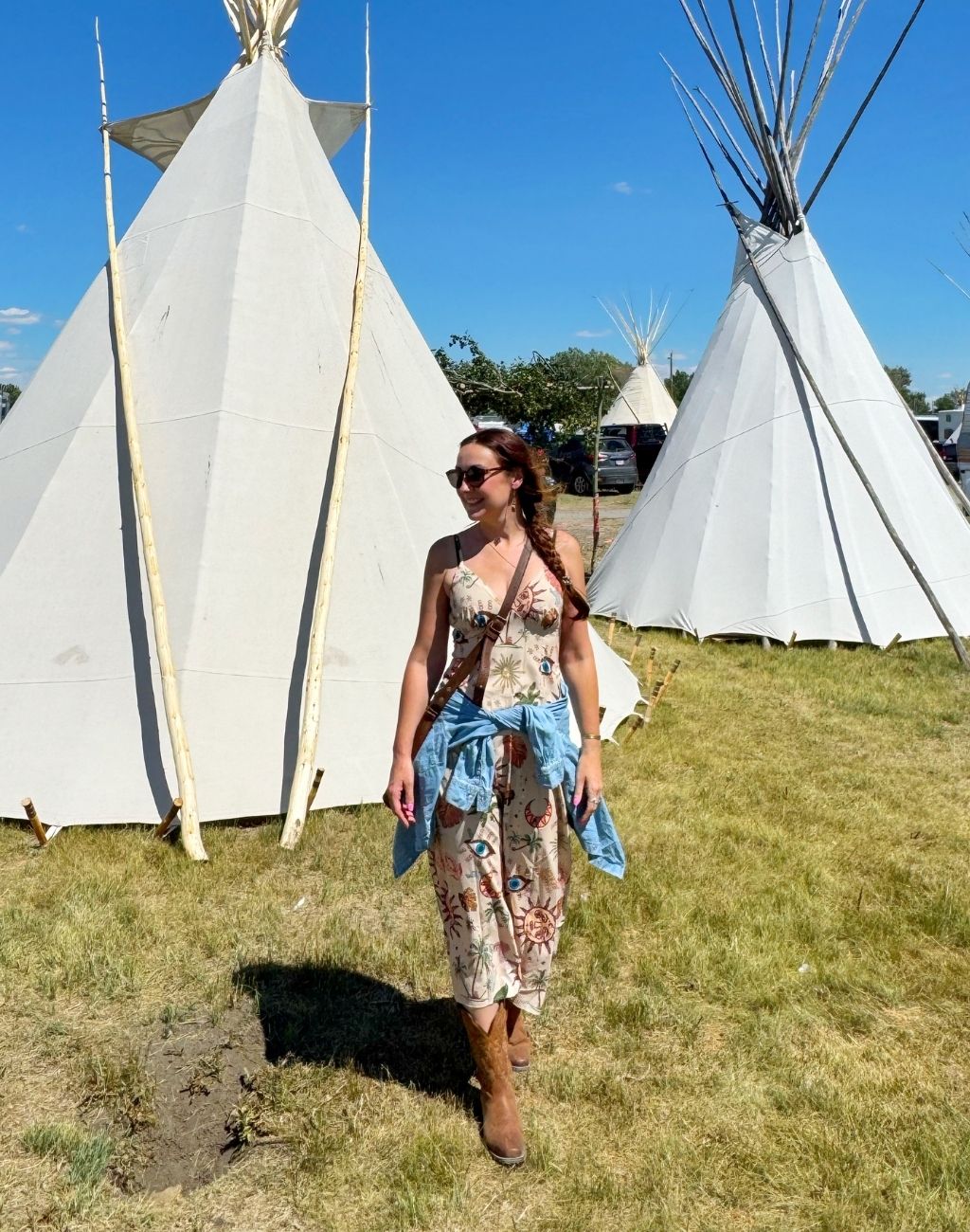
Beyond the main arena events, you’ll find food vendors, artisan stalls (I got the most beautiful pair of earrings), and opportunities to learn more about the Blackfeet Nation’s rich history and contemporary life. It’s around a 2-hour drive from Whitefish and offers a meaningful way to connect with the heritage and living traditions of the region.
It’s free to enter, but if you’d like to take photos, there’s a $30 photography fee, which goes directly to the community – a small contribution that helps support this important cultural event.
If you’re visiting outside of Powwow season, you could use this day to begin exploring Glacier National Park – we only spent one day inside the park and I wish we’d had more time.
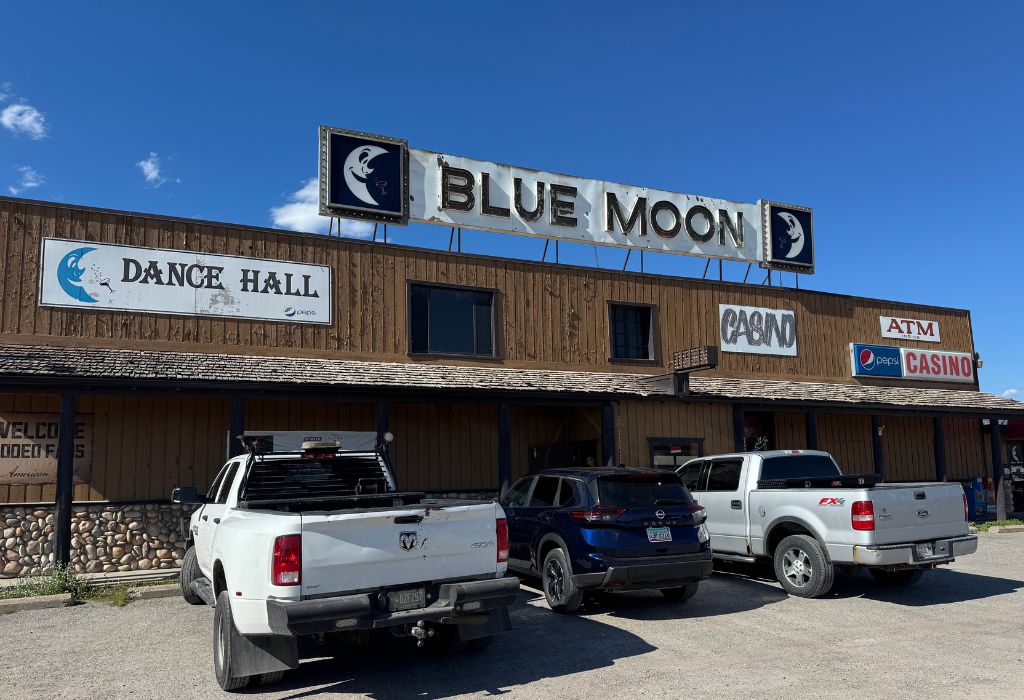
On the way back, we popped into Blue Moon Nite Club in Columbia Falls for a drink. I’d noticed it the previous night on our way out of the airport and knew I had to check it out – it had that classic honky-tonk vibe straight out of a movie, the kind of place where Patrick Swayze might have been the bouncer. It was still early, so quiet, but I could picture it filling up later.
Later, we stopped at Arn’s BBQ, an outdoor spot with food trucks, for a quick drink before heading for dinner at Great Northern Bar. The live band there made for a fun evening.
Day 3 – Glacier National Park & Going-to-the-Sun Road
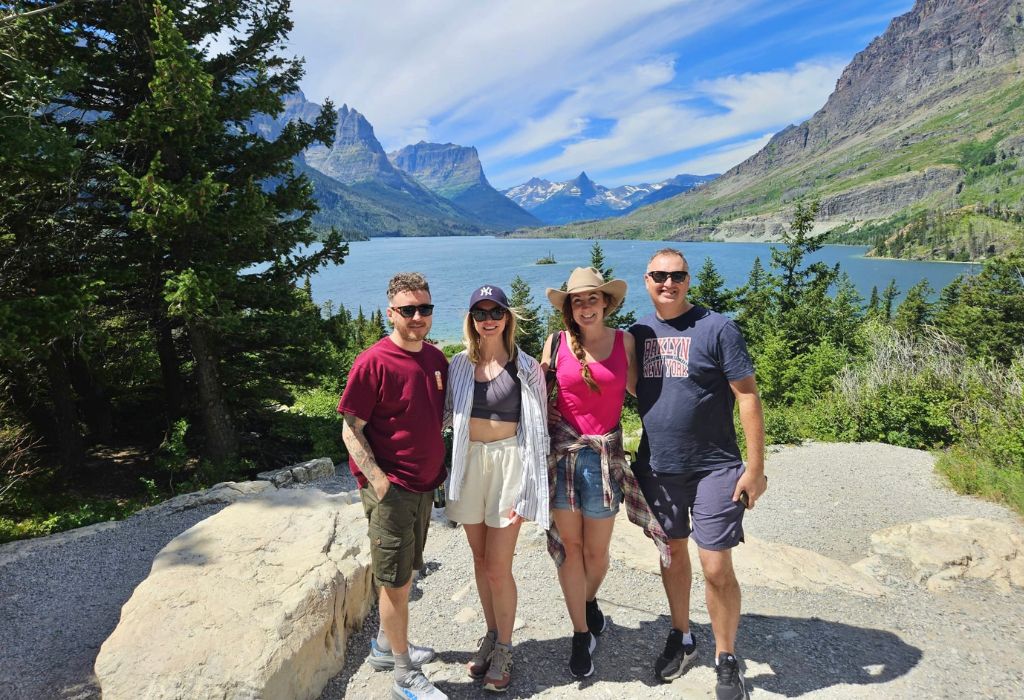
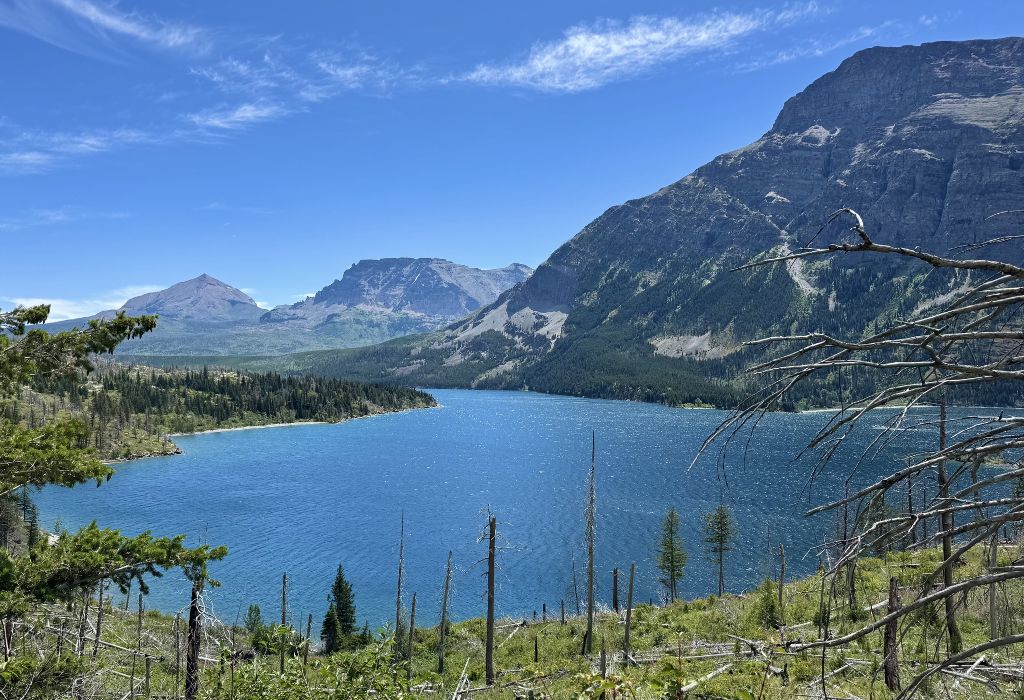
On our second full day, we headed to Glacier National Park to drive the Going-to-the-Sun Road, one of the most scenic drives in the U.S. It cuts across the park, offering sweeping mountain views, waterfalls, glacial valleys, and jaw-dropping scenery.
Timed entry reservations are required from mid-June to late September (7 a.m.–3 p.m.) via the West Entrance or North Fork Entrance. Passes are released four months in advance, with limited next-day passes available at 7 p.m. MDT. Check the National Park Service website for the latest details and booking links.
If you don’t get a reservation, you still have options:
- Drive in before 6–7 a.m. or after 3 p.m.
- Enter from St. Mary (east side) – no reservation needed to drive westbound (this is what we did as we didn’t realise about the timed entries until it was too late).
- If you’ve booked lodging, camping, or a commercial activity within the park area, it counts as your pass – but check this.
- Join a guided trip with Glacier Guides or Glacier Institute, which include park access. Or take a bus tour through the park. Guided tours are great if you don’t want to bother with parking (which was a pain in some places).
The park is perfect for hiking if you have the time. We mainly drove the road, stopped at viewpoints and the visitor centre, but with extra days, consider tackling some of the longer, scenic hikes.
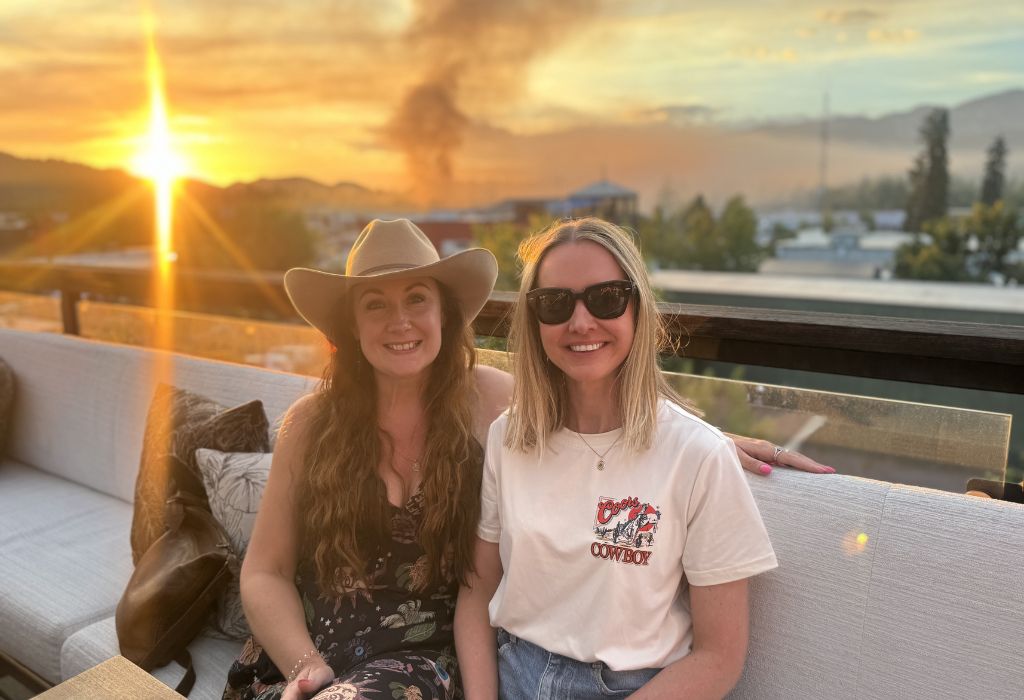
In the evening, we planned to have dinner at Piggyback BBQ, but a fire at the church next door forced an evacuation. Instead, we ended up at Blackstar Brew Pub , which was a great alternative – and they had bottles of Prosecco for just $22, a total bargain!
After dinner, we headed to The Belvedere rooftop garden at 101 Central for drinks and enjoyed a beautiful sunset overlooking the town (you can see the fire in the background).
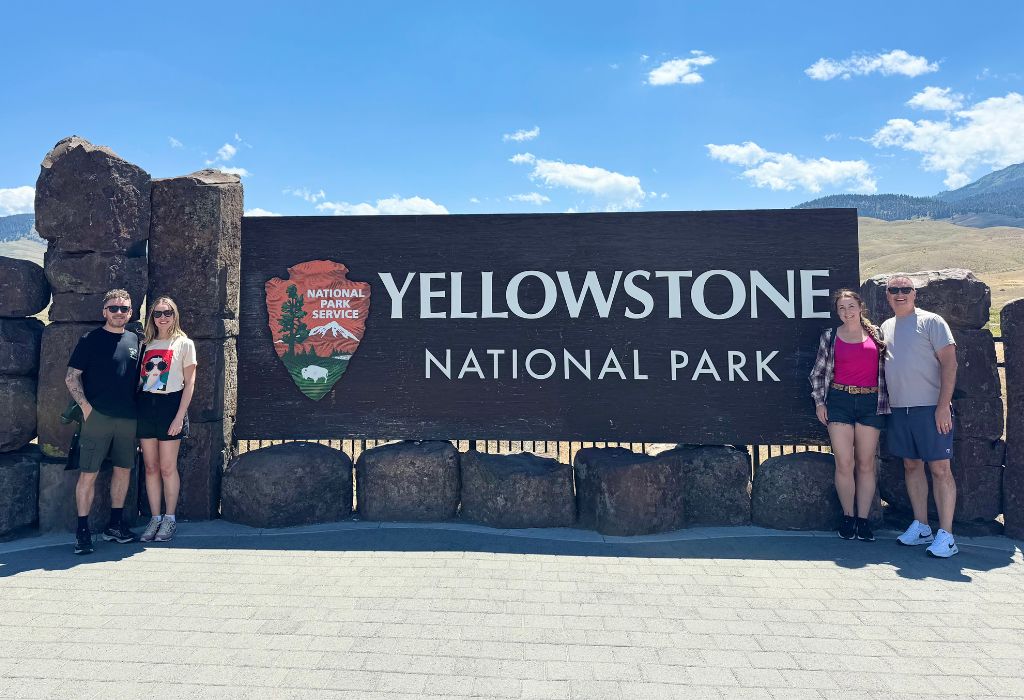
Yellowstone National Park (Montana & Wyoming)
Our next stop was the incredible Yellowstone National Park, a vast wilderness of geothermal wonders, wildlife, and dramatic landscapes. Because the park is so large, splitting your stay between two different bases can make exploring much easier and helps avoid a lot of backtracking.
I recommend staying in Gardiner at the North Entrance and West Yellowstone at the West Entrance, as each provides convenient access to different parts of the park.
We didn’t stay in Gardiner – we based ourselves in West Yellowstone and only visited for the day – but in hindsight I wish we had. Gardiner has a more authentic, rustic feel and sits beautifully beside the river. It’s also ideally located for exploring Lamar Valley and Mammoth Hot Springs in Yellowstone National Park.
West Yellowstone, meanwhile, is closer to some of the park’s most famous sights, including Old Faithful and Grand Prismatic Spring. While it’s incredibly convenient, and it’s always nice to spend longer in one place, I personally found it a little more touristy and less charming.
You can stay inside Yellowstone National Park, which puts you right next to many of the major attractions. However, accommodation inside the park tends to book up far in advance and can be expensive.
Basing yourself just outside the park entrances often provides better dining options, more flexibility, and a greater chance of finding last-minute availability. That’s why we chose to stay in the nearby gateway towns instead.
Another option is to move each night so you’re in different locations, but it all depends on personal preference.
GOOD TO KNOW: One thing to remember about Yellowstone, whilst the distances aren’t huge, allow most of the day for the journeys – there are plenty of scenic stops and wildlife-viewing opportunities along the way. Plus you can end up in queues, especially if there are animals on or close to the road and everyone is stopping to take pictures.
Day 4 – Drive from Glacier to Gardiner (via Bozeman)
We had an early breakfast at Loula’s Cafe in Whitefish and I got one of their famous pies to takeaway! We then hit the road for the long drive to Yellowstone National Park.
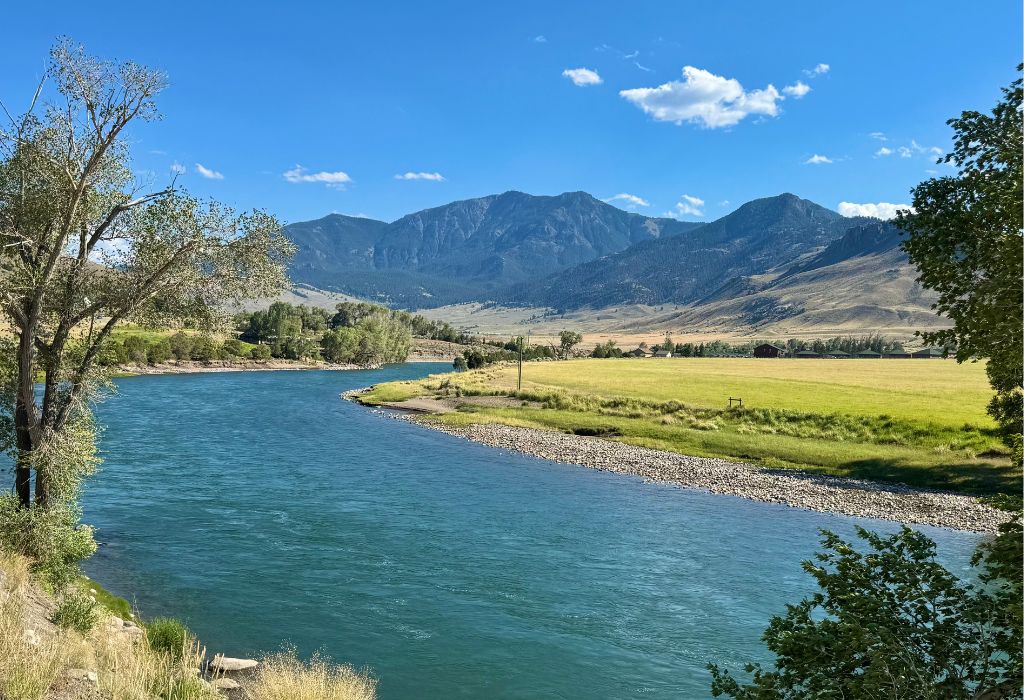
The drive from Glacier to Gardiner takes around 6.5 to 7.5 hours, depending on your route. If time allows, break up the journey with a stop in Bozeman (the town featured in the show Yellowstone) for lunch or a quick wander through its artsy downtown – with craft coffee, cowboy boots, and mountain views all in one place.
Once you arrive in Gardiner, you could have a wander around town and head to the Roosevelt Arch for a classic photo op at Yellowstone’s original entrance.
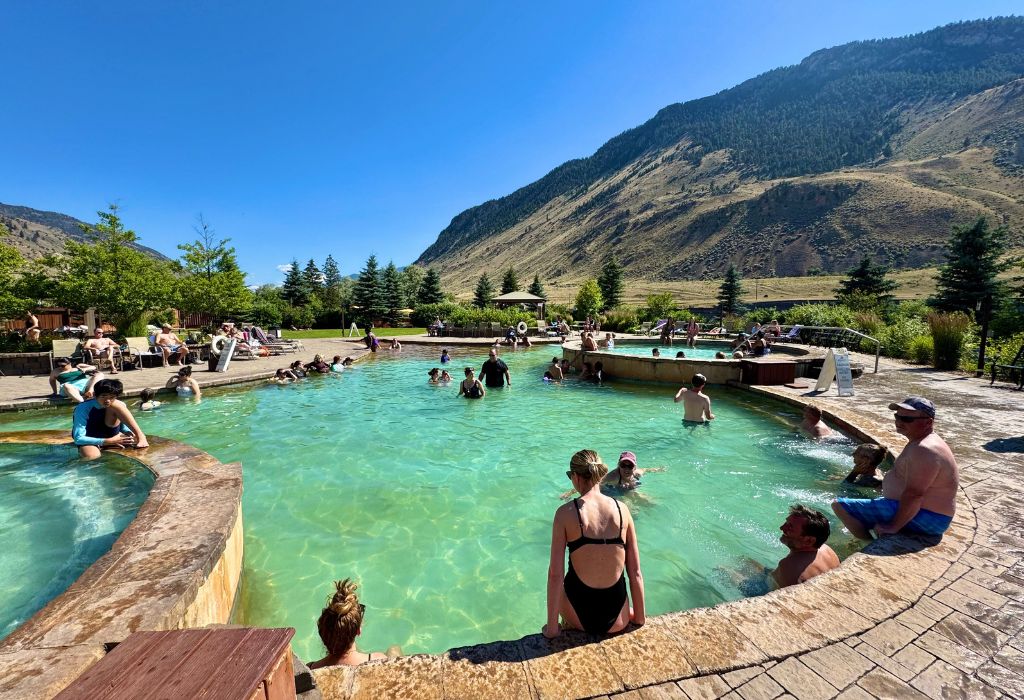
If you’re after something relaxing, spend the afternoon soaking in the Yellowstone Hot Springs, just a few minutes outside Gardiner. With mountain views and naturally warm waters, it’s the perfect way to unwind after a long travel day. We all loved it here and I gladly would have gone a second time!
If time (or energy allows) you could take a drive to Mammoth Hot Springs. The terraces of Mammoth are especially beautiful at sunset. Formed over thousands of years by mineral-rich water flowing over limestone, the steaming formations take on an almost otherworldly glow as the light shifts across them. You could also save this for tomorrow.
GOOD TO KNOW: If you skip Glacier National Park/Whitefish and fly into Bozeman instead, the drive between Bozeman and Gardiner is only 1.5 hours. This would allow you to spend more time in Yellowstone (or elsewhere). If you do spend a night in Bozeman, check out the very cool Sapphire Motel.
Day 5 – Northern Yellowstone & Lamar Valley
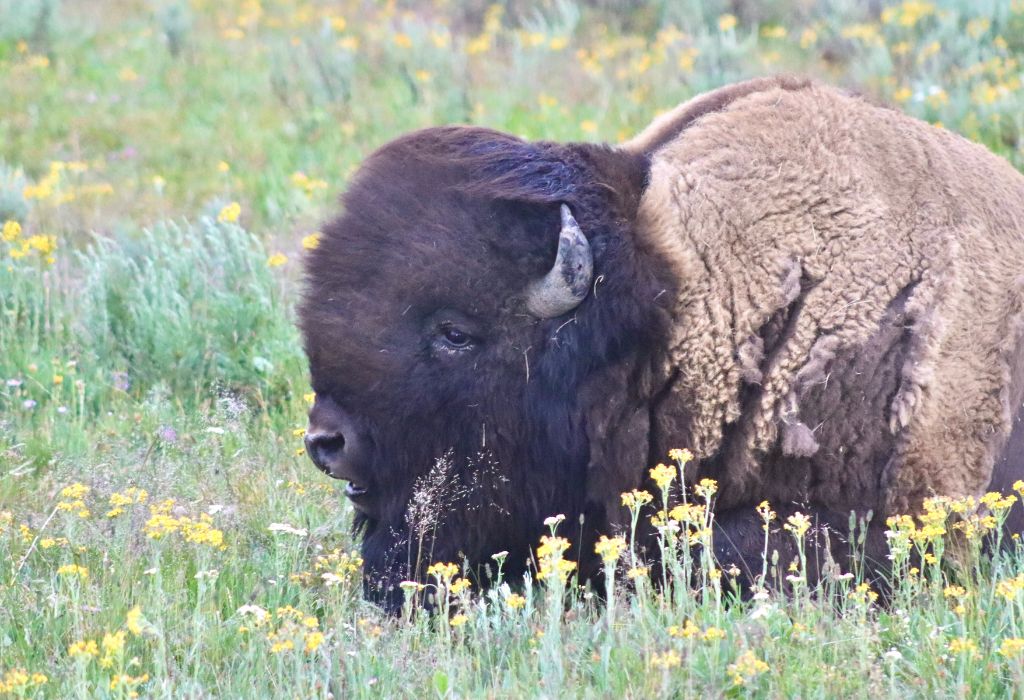
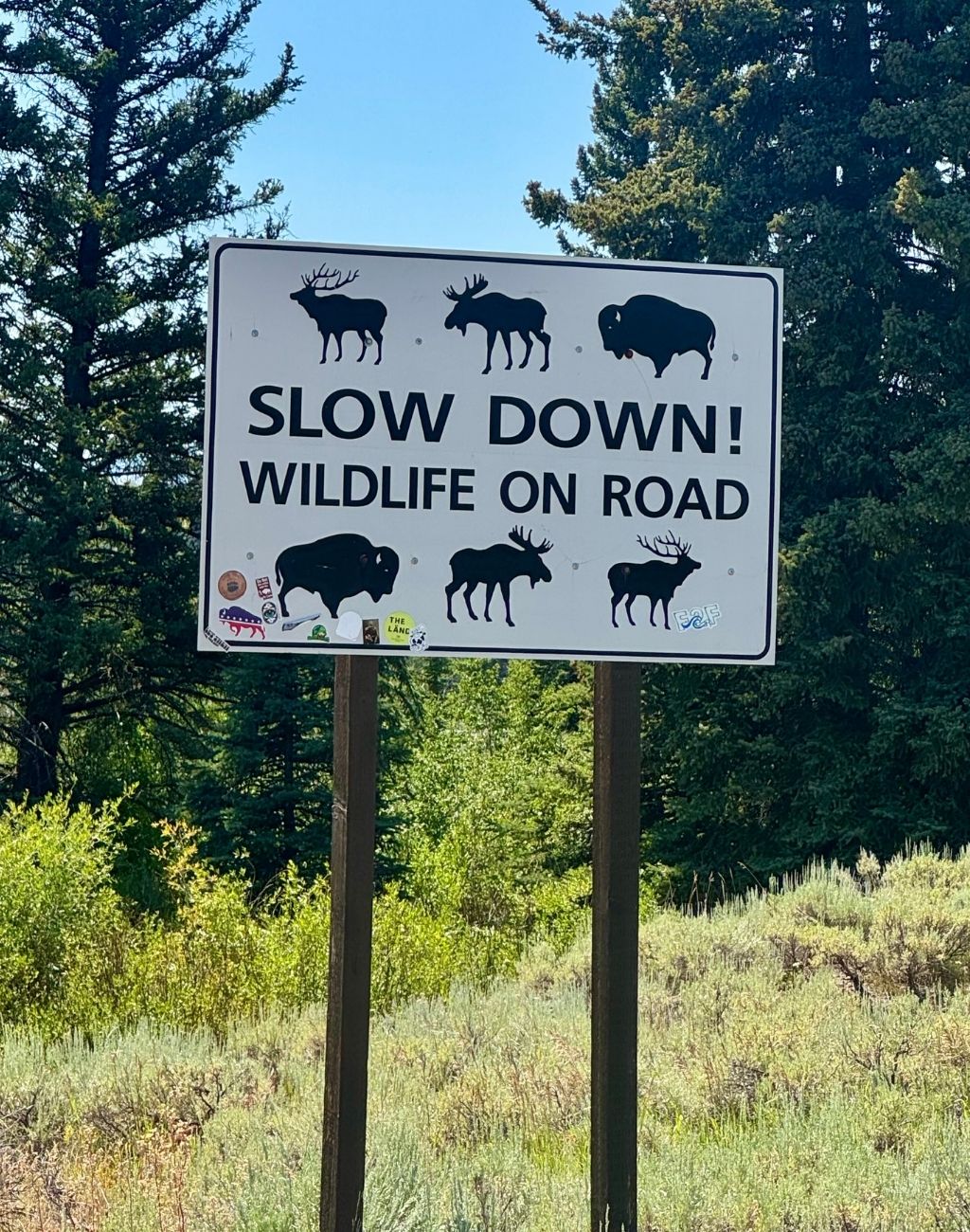
Get up very early and spend the day exploring the northern section of Yellowstone National Park. Early morning is the best time for wildlife spotting in Lamar Valley, often called “America’s Serengeti” thanks to its abundance of bison, wolves, bears, and elk. Bring binoculars and a zoom lens, take your time, and you’re likely to be rewarded.
Many wolf watchers gather around the Slough Creek area at sunrise – if you see a group of people with giant telescopes, stop and ask what they’ve spotted.
You can drive all the way through Lamar Valley to Cooke City, a small Old West-style town just outside the park where you can grab lunch or a coffee before turning around.
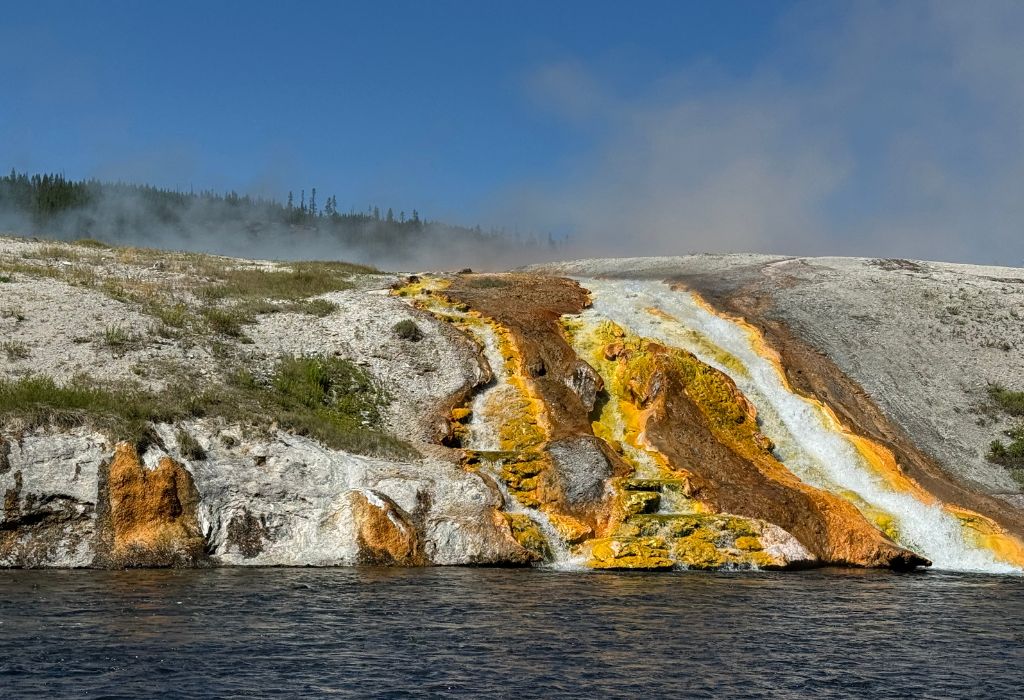
Key stops along the way include Undine Falls, Tower Fall, Calcite Springs Overlook, Lamar Valley, and Soda Butte Creek. I’d suggest heading straight to Lamar Valley and as early as possible, to give you the best chance of seeing wildlife, then stopping at viewpoints on the way back.
If wildlife viewing is slow or you’d prefer to spend more time elsewhere, turning around at Soda Butte Creek is also perfectly reasonable – this still takes you through most of Lamar Valley.
In the afternoon, return toward Mammoth Hot Springs (if not done already) to explore the surreal limestone terraces, or tackle one of the nearby hikes such as Beaver Ponds Loop or Bunsen Peak Trail.
Then return to Gardiner for the evening. We didn’t see as much of Gardiner as I would like, but we did have a nice meal at the Wonderland Cafe, which was a nice modern place with lots of food options.
Day 6 – West Yellowstone, Montana
The drive from Gardiner to West Yellowstone isn’t long (about 2–3 hours – without stops), but trust me – you’ll want to stop. This stretch of the park is filled with incredible sights, and it’s best to treat the day as a slow, scenic road trip.
Start early and head south from Gardiner through Mammoth Hot Springs, then continue along the Grand Loop Road. Key stops to consider:
- Norris Geyser Basin: One of the hottest and most dynamic thermal areas in the park. Don’t miss the Porcelain Basin boardwalk loop.
- Gibbon Falls: A pretty stop just off the road, perfect for a quick leg stretch and a photo.
- Artist Paint Pots: A short trail leads to colourful bubbling mud pots and steaming pools.
- Fountain Paint Pot Trail: A lovely loop near Lower Geyser Basin with geysers, mud pots, and vibrant hot springs.
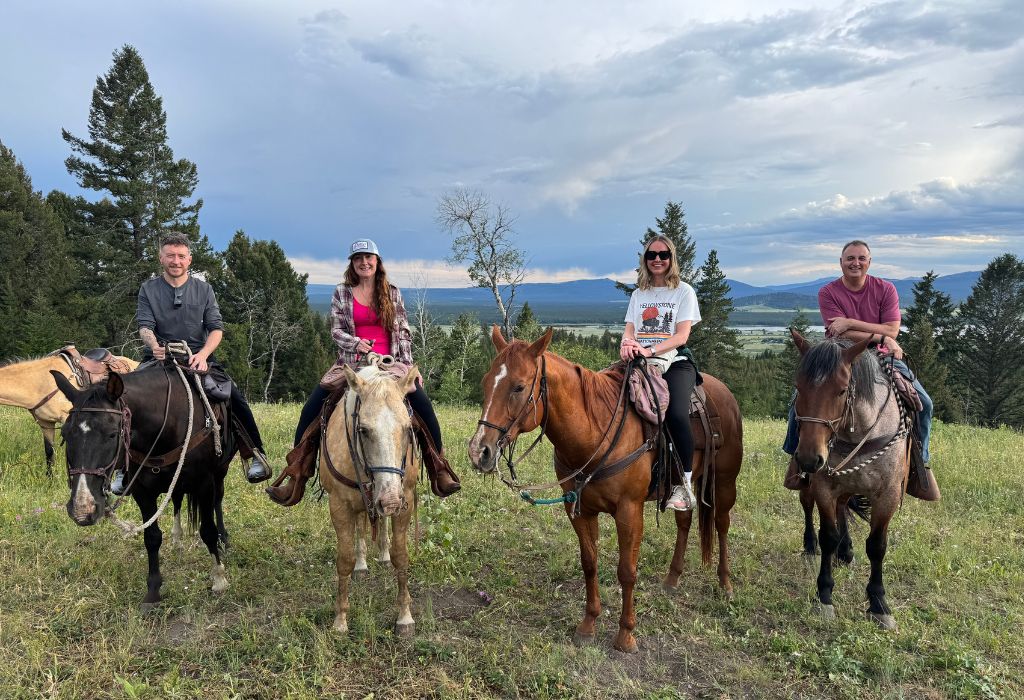
Arrive in West Yellowstone by the afternoon. Upon arrival, we went horse riding (or horseback riding as the Americans say) at the Parade Rest Ranch and it was amazing! They took us up and down the valley, which offered some incredible views of the area.
After settling in to our accommodation, we headed out for dinner to The Buffalo Bar, which was recommended by our hosts and just a few minutes walk from the apartment. The food was good so I’d definitely recommend it.
Day 7: Yellowstone’s Lower Loop
We had breakfast at the apartment, then stopped by Ernie’s Bakery & Deli to pick up packed lunches for the day. It’s a popular local spot, and while you can get food inside the park, everyone raves about Ernie’s, so I’m glad we made the stop to see what all the fuss was about.
We then headed into the park to explore the Lower Loop, home to some of Yellowstone’s most iconic and jaw-dropping natural wonders, some of which I’ve listed below, but there are plenty more stops you can make.
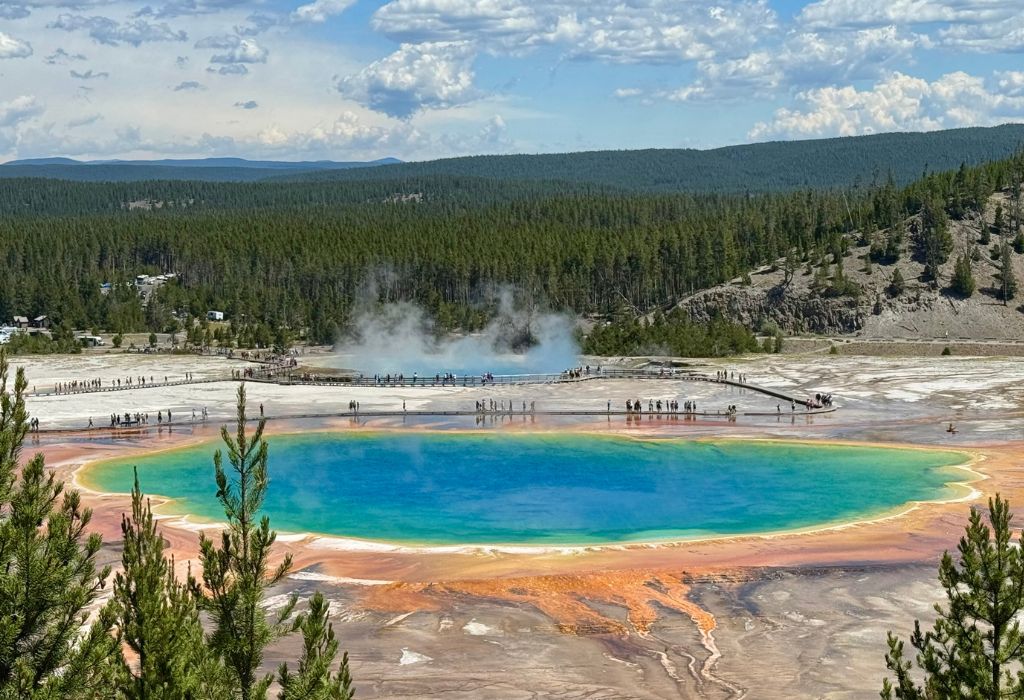
Here’s a sample route:
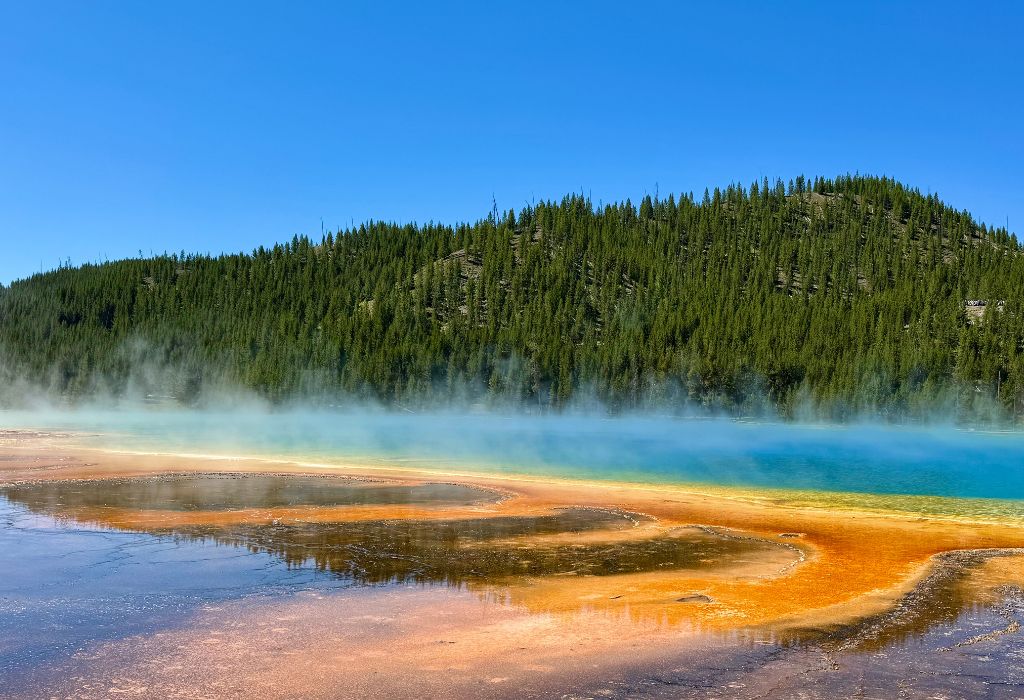
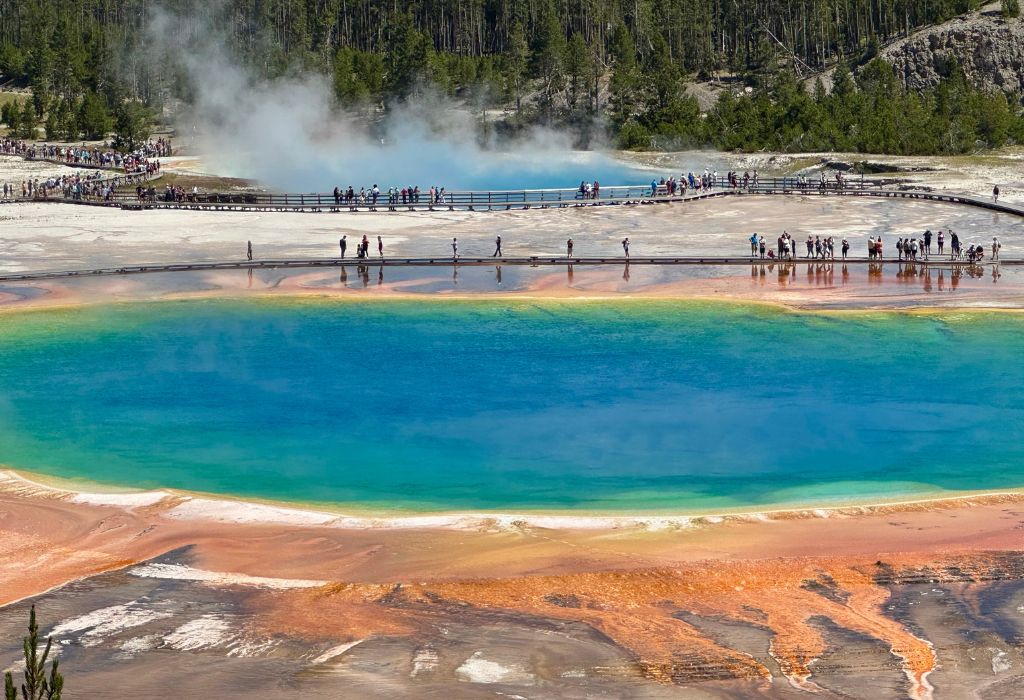
- Start early to beat the crowds at Grand Prismatic Spring (Midway Geyser Basin). For the best view, hike the short trail to the Grand Prismatic Overlook from the Fairy Falls trailhead.
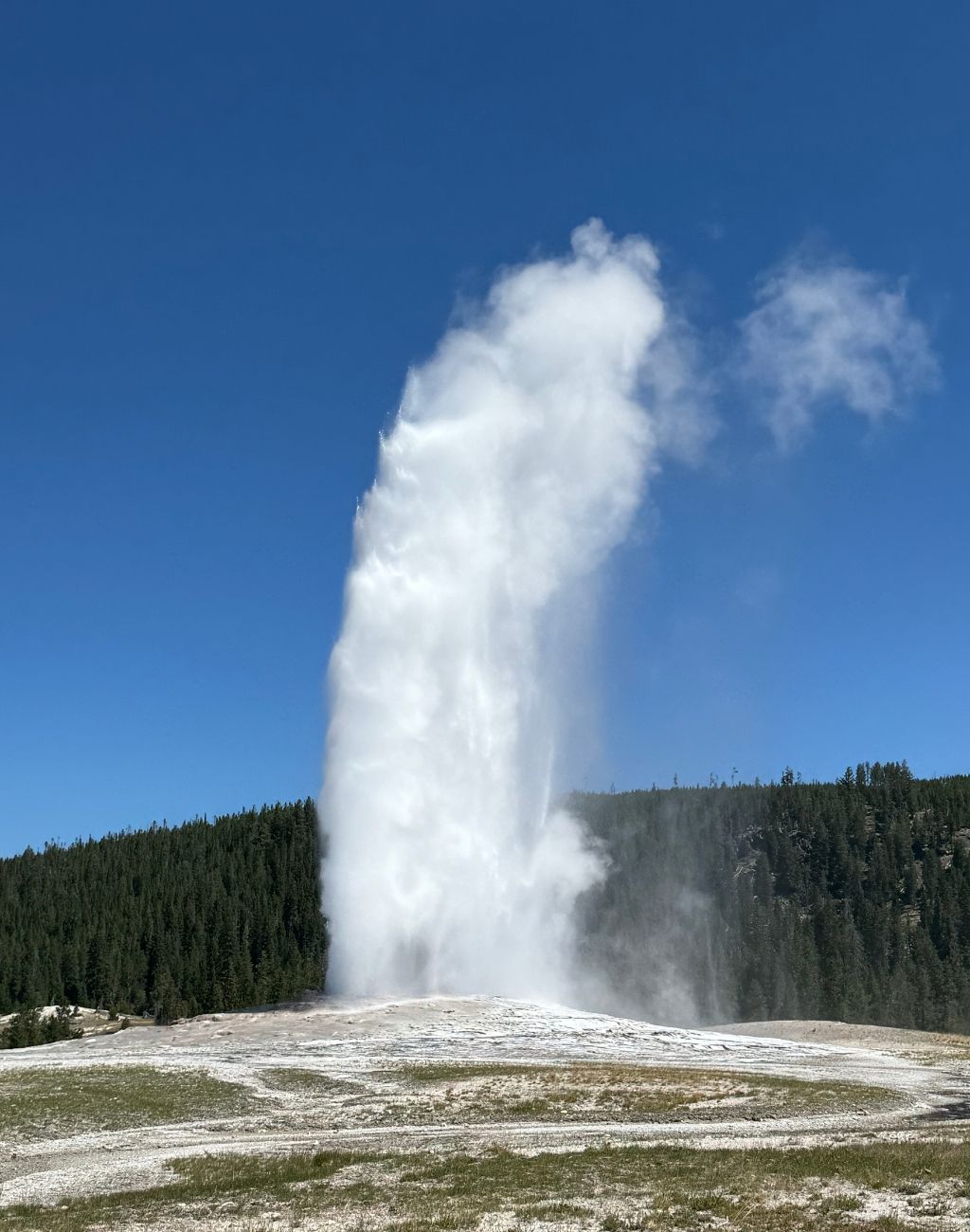
- Continue to Old Faithful, where you can watch the famous geyser erupt and explore the Upper Geyser Basin, which has a network of boardwalks passing dozens of active geysers and hot springs. Check the visitor centre for the eruption times! It goes off about every 90 minutes or so (give or take 10 minutes either side).
- Head east toward West Thumb Geyser Basin (right on the shores of Yellowstone Lake), a beautiful and often less crowded spot.
- Then loop up to the Grand Canyon of the Yellowstone. Stop at Artist Point and Lookout Point for incredible views of the Lower Falls, one of the most iconic waterfalls in the U.S.
If doing the full loop, around sunset head to Hayden Valley for wildlife spotting or you could even take a quick dip in the Firehole River Swimming Area, if it’s open and conditions allow.
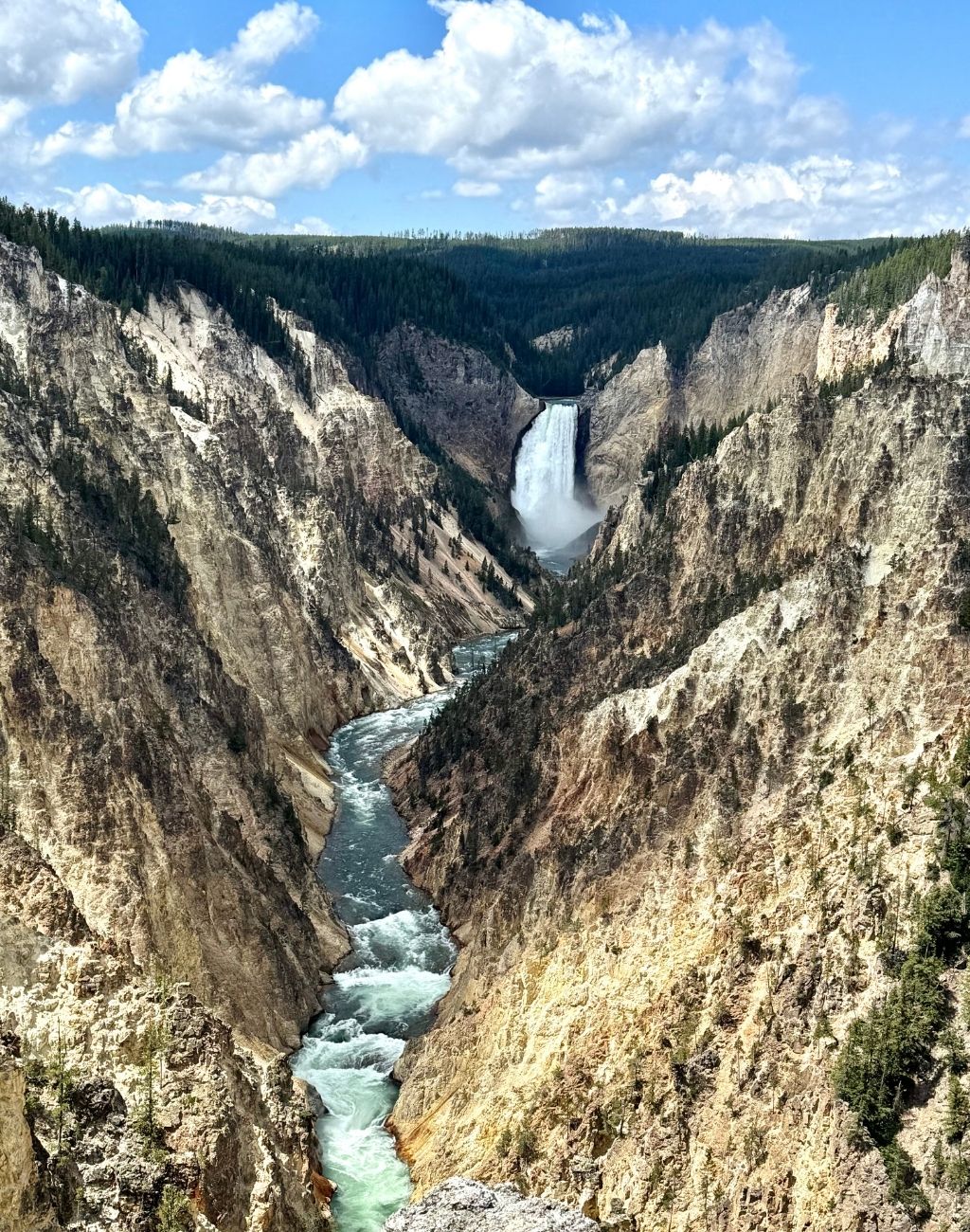
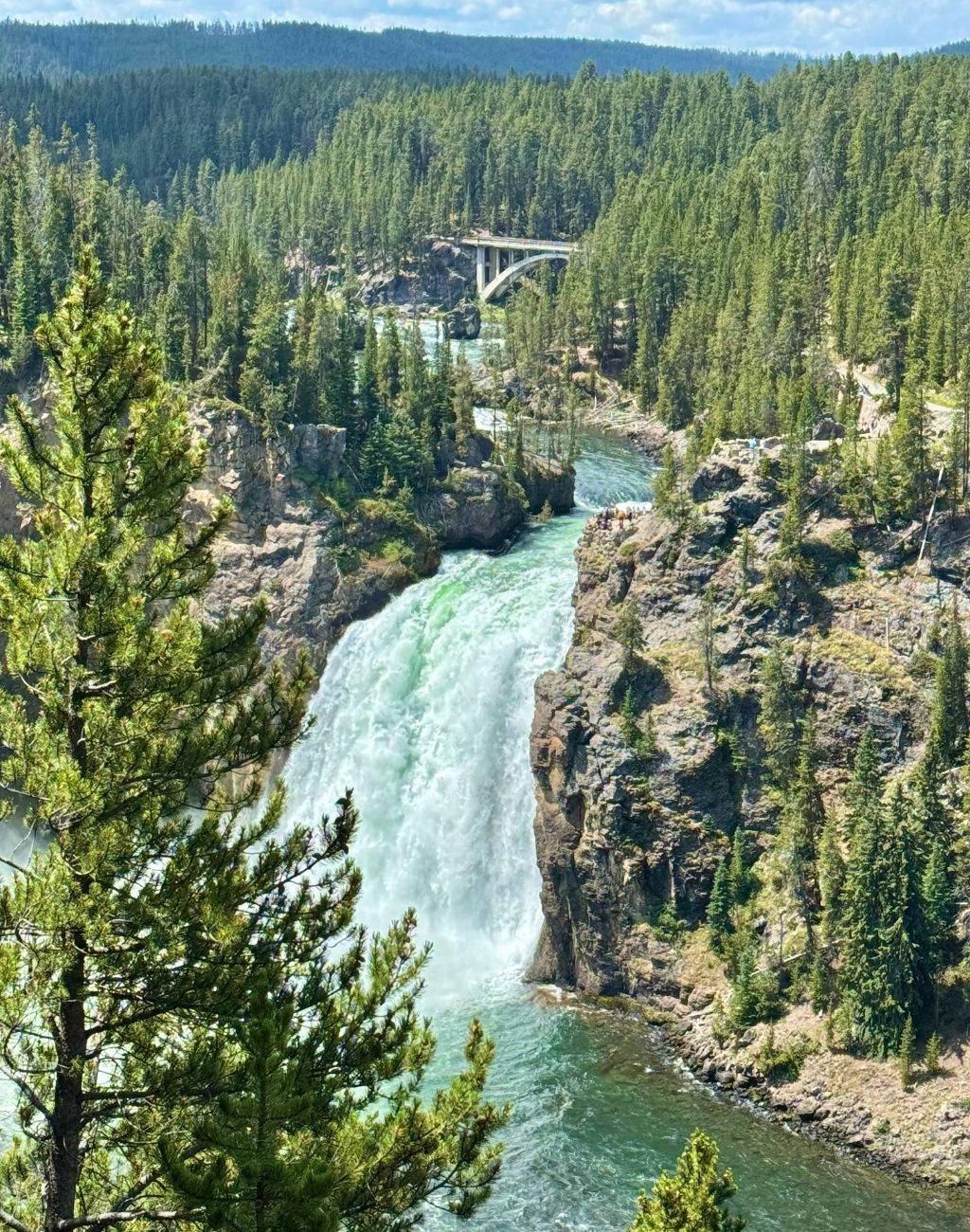
GOOD TO KNOW: This is a big and long day! You will pass the first section of the loop (West Yellowstone to West Thumb) on your way to Jackson tomorrow, so don’t worry if you miss something, you can visit it tomorrow.
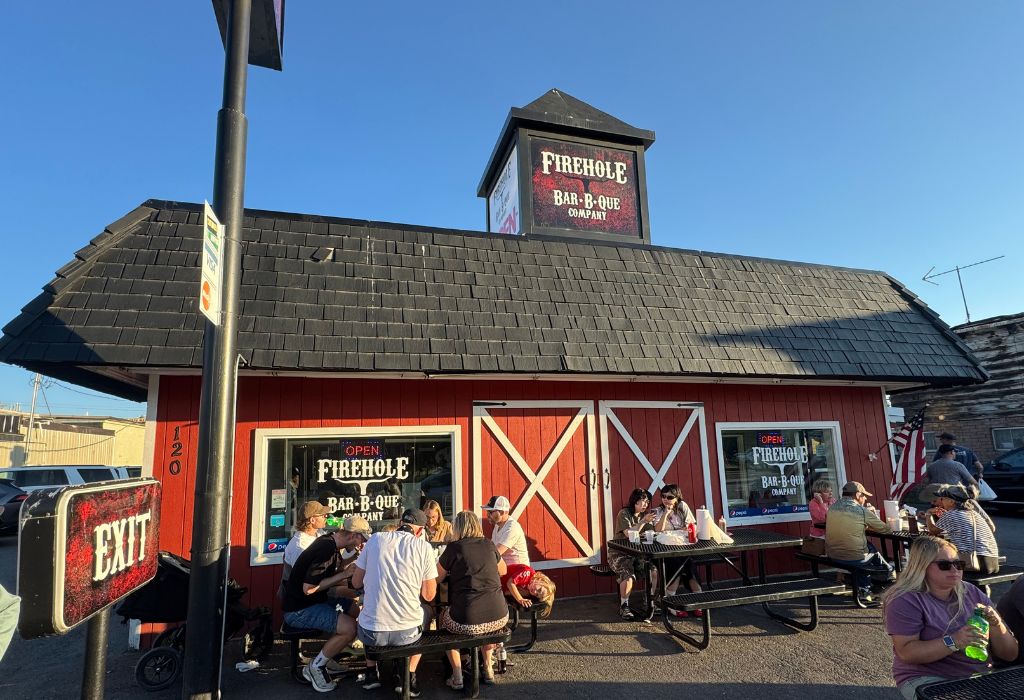
After finishing the loop and returning to West Yellowstone, we took a stroll into town, browsing shops like Eagle’s Store and wandering down the main street. We tried our luck at Firehole BBQ for dinner, but it turns out families on holiday with kids – eat early! By the time we arrived (with our European dinner timings), most of the menu was sold out.
We ended up at Beartooth BBQ, which was quiet at the time, and I enjoyed some delicious pulled pork. During our stay in West Yellowstone, we also tried Hank’s Chop Shop, which was really lovely and a great alternative.
Jackson Hole & Grand Teton National Park
Our next stop was the town of Jackson, nestled in the Jackson Hole valley – which includes Jackson, Teton Village, Wilson, Moose, and the Jackson Hole Mountain Resort.
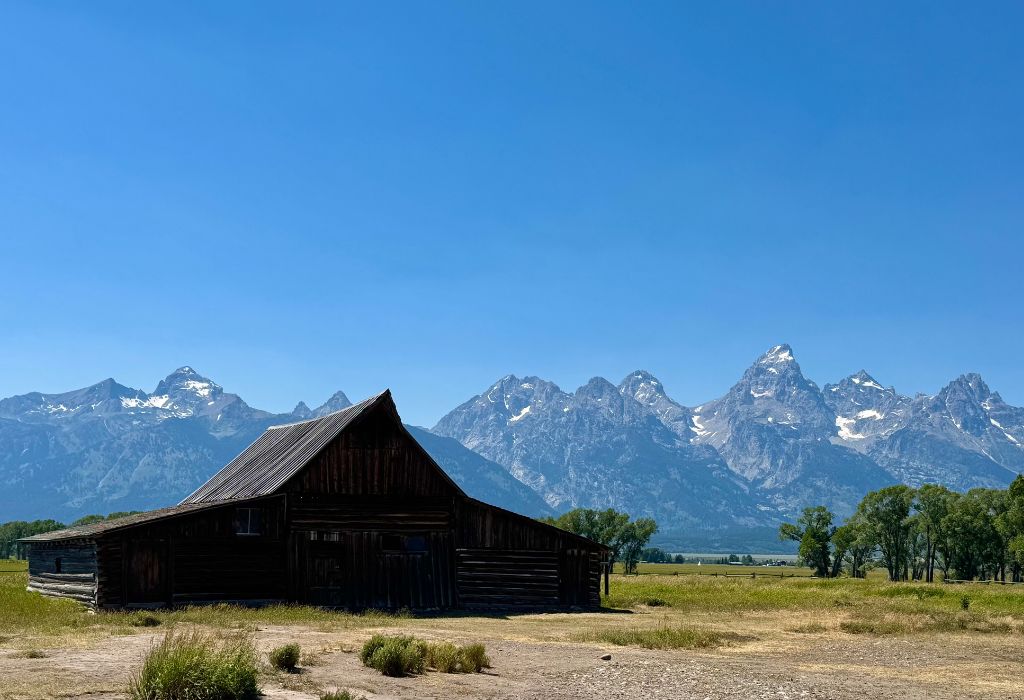
Driving into Jackson Hole is absolutely breathtaking, especially as the dramatic Teton Range rises sharply from the valley floor. This is one of those drives where you’ll be pulling over constantly just to stare at the view.
Grand Teton National Park is smaller and less crowded than Yellowstone, but no less spectacular. Jagged granite peaks, pristine alpine lakes, and a fantastic trail network make it a dream for hikers, photographers, and anyone who loves wide-open spaces.
The town of Jackson blends classic cowboy charm with upscale ski-resort style. Think nightly Wild West shootouts in the square, stylish boutiques, and gourmet restaurants. It’s a fun, lively place to unwind after a day exploring the park, and a great base for wildlife watching or scenic river floats.
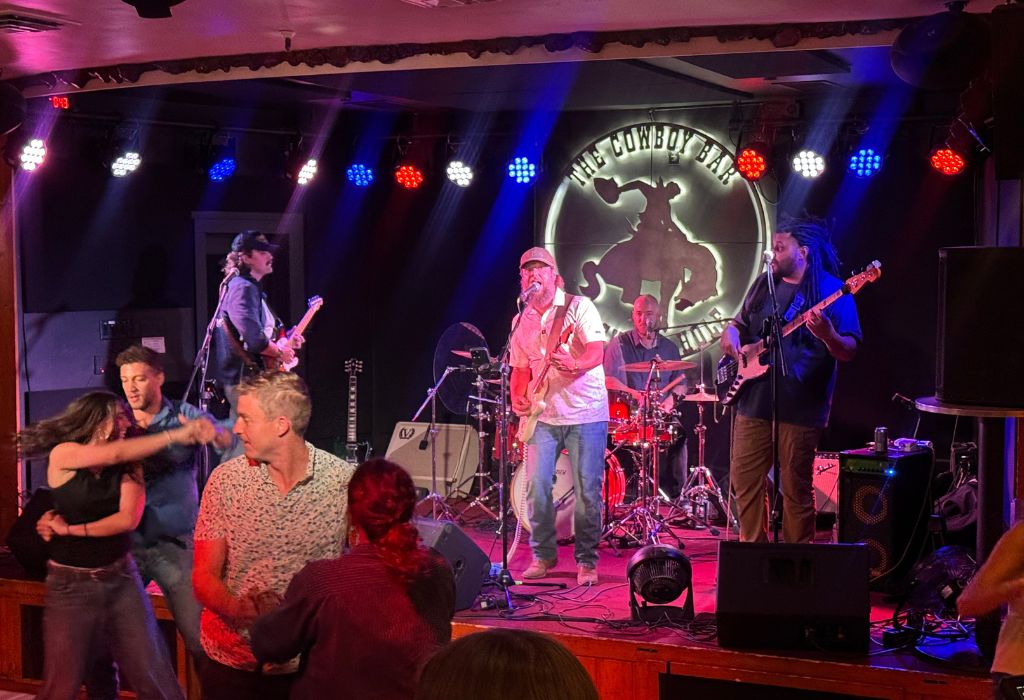
I’d suggest spending at least three nights here. That gives you time to explore the park, soak up the town’s atmosphere, and maybe even dance the night away to a live band at the Million Dollar Cowboy Bar or Silver Dollar Saloon.
Day 8: Arrival in Jackson Hole via Yellowstone
We started the day with a hearty breakfast at the Timberline Cafe, a local favourite in West Yellowstone, before hitting the road toward Jackson Hole and Grand Teton National Park.
We drove back through Yellowstone along the Lower Loop and finally caught Old Faithful’s eruption, having missed it by minutes the day before. From there, we followed the scenic John D. Rockefeller Jr. Memorial Parkway south into the Tetons.
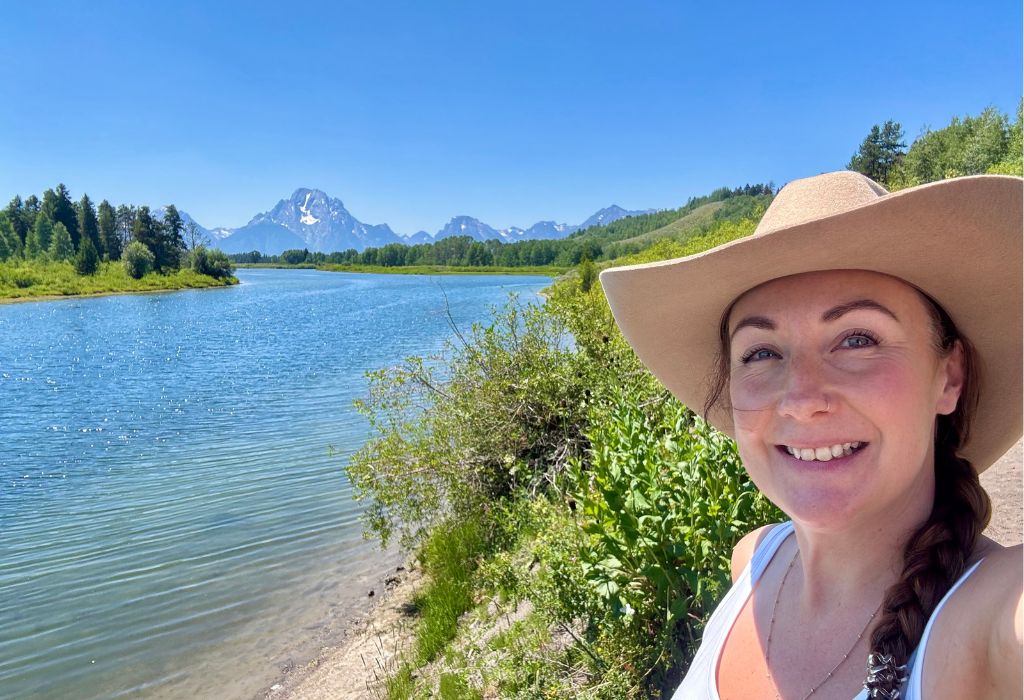
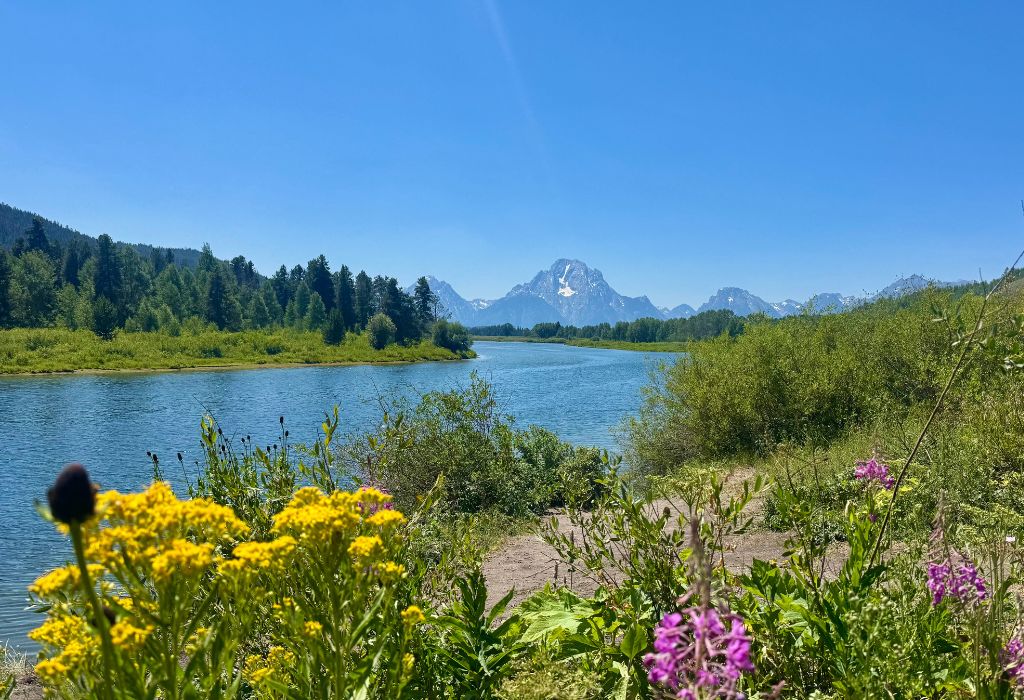
It’s one of those drives where you’ll want to pull over constantly for photos – or even a quick dip in a lake as we saw a few people doing. Stops along the way include Grant Village, the Continental Divide, Lewis Lake, Jackson Lake Overlook, Snake River Overlook, Oxbow Bend, Schwabacher’s Landing, and the iconic Mormon Row, where historic barns are perfectly framed by the towering Tetons.
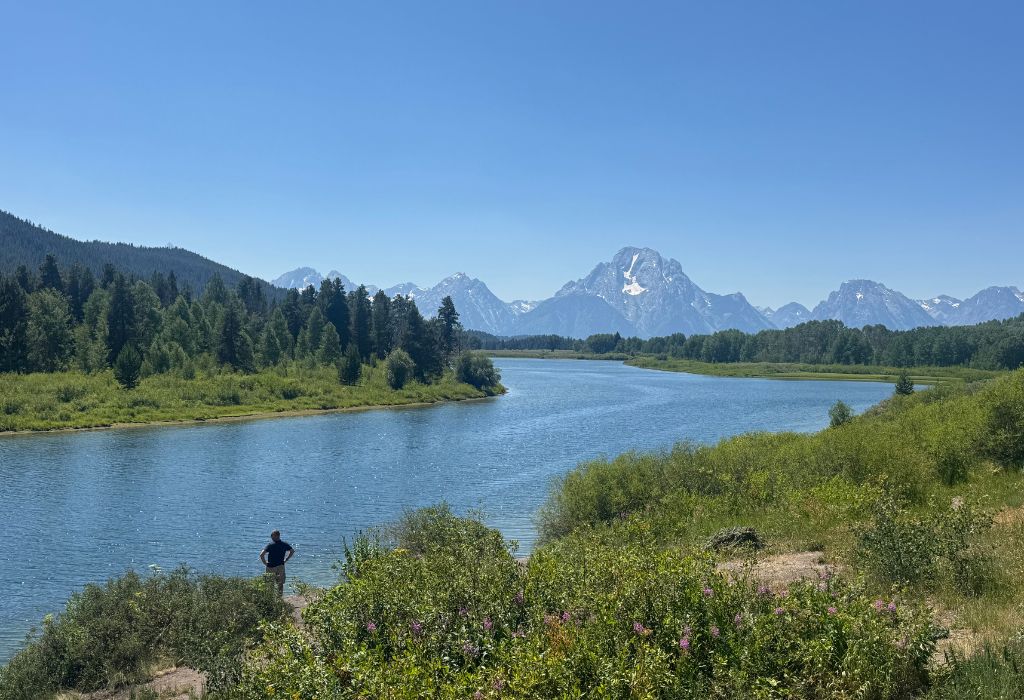
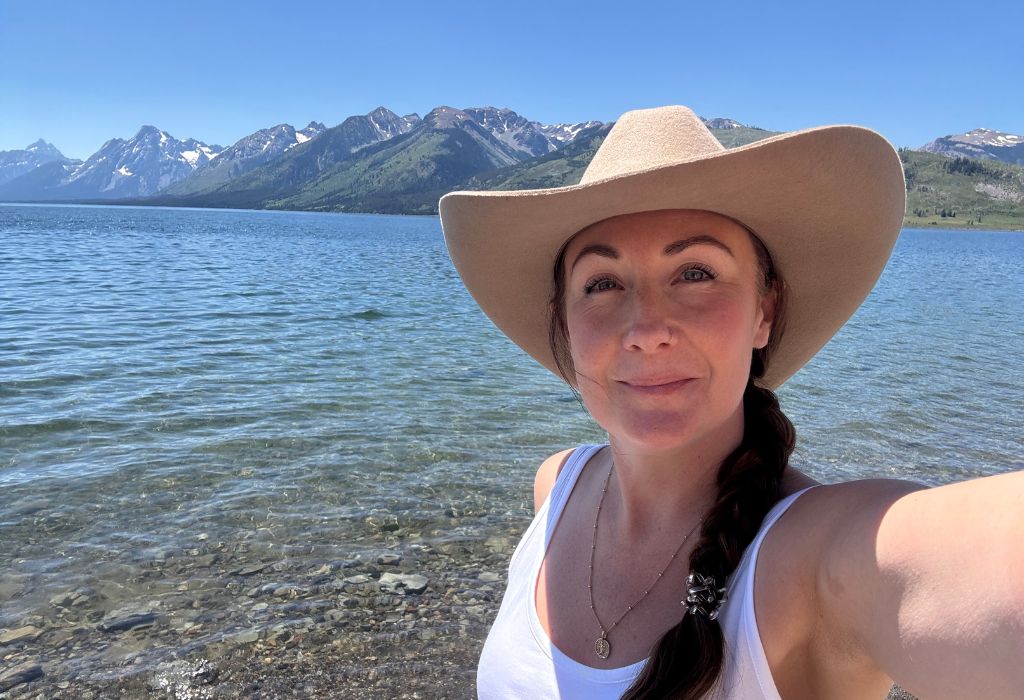
We also stopped at the very lovely Jackson Lake Lodge which had an incredible view over the mountains and would be a great lunch stop. Or overnight stop if time and budget allowed!
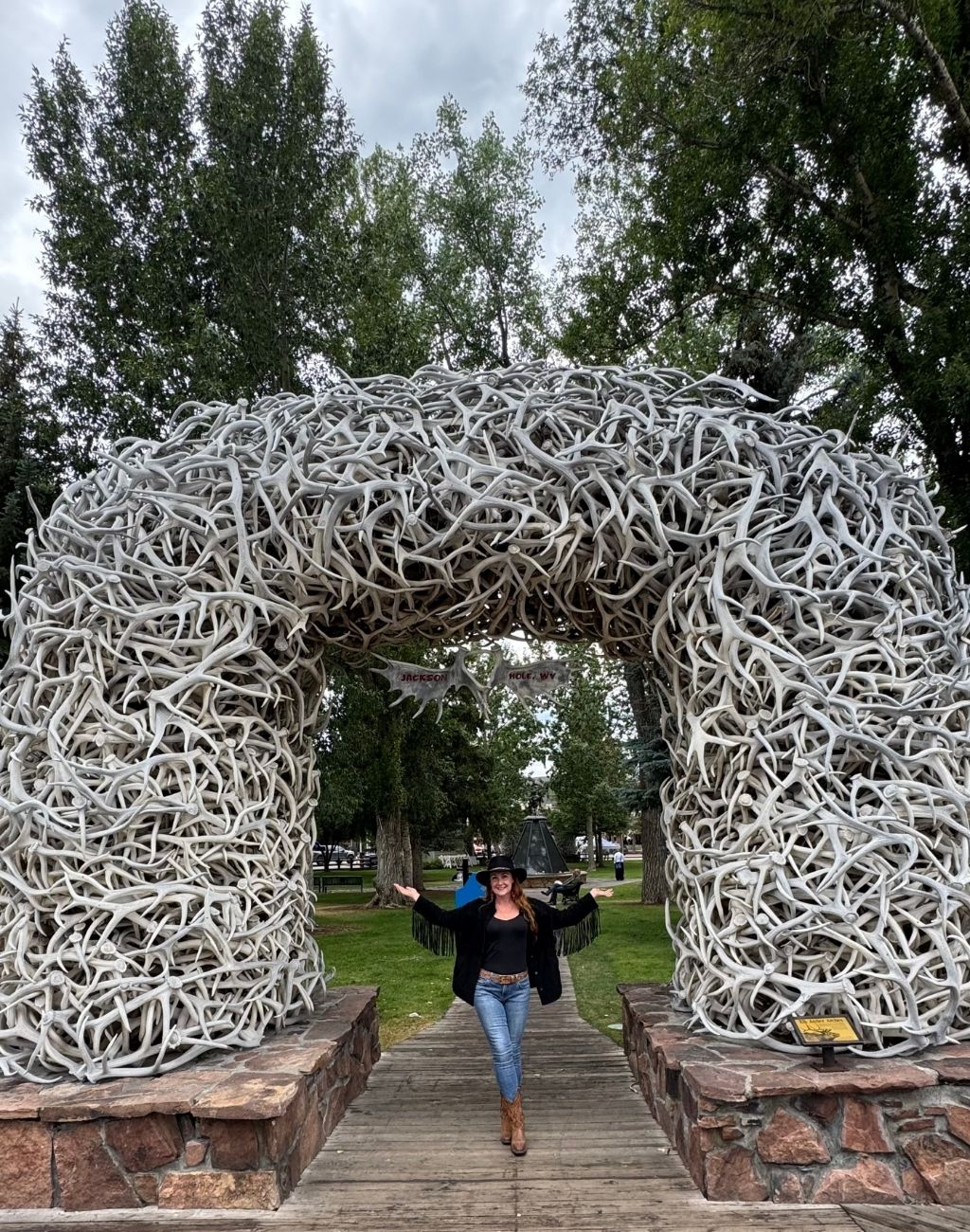
Once in Jackson, settle into your base in this lively Western town with a polished, upscale edge. Spend the afternoon wandering the streets – browse art galleries, go shopping, and snap a photo under the famous elk antler arch in the town square.
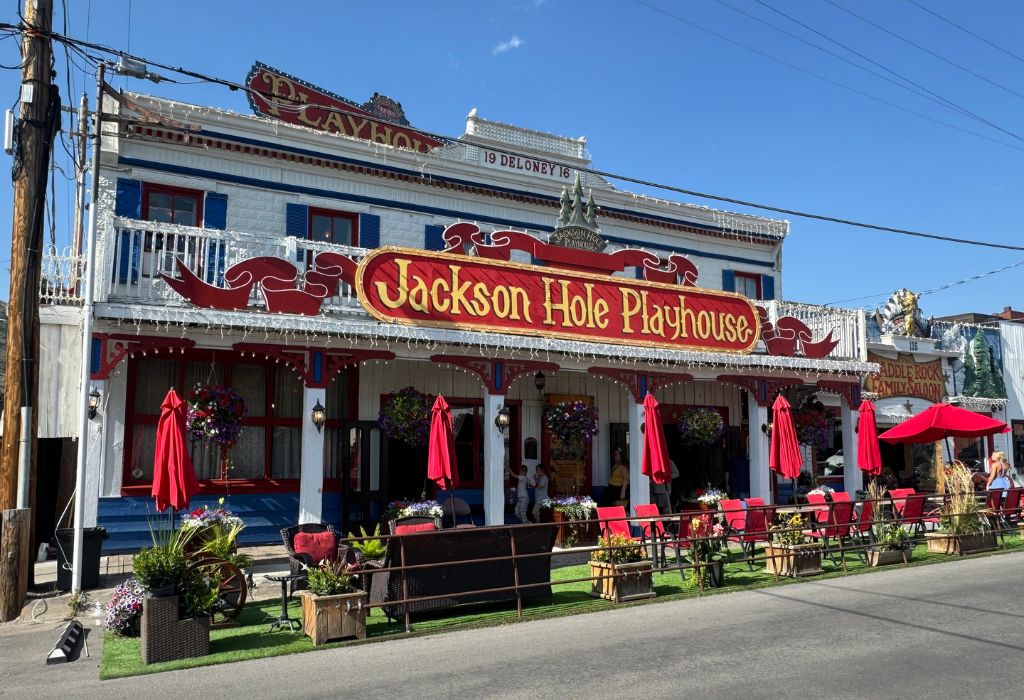
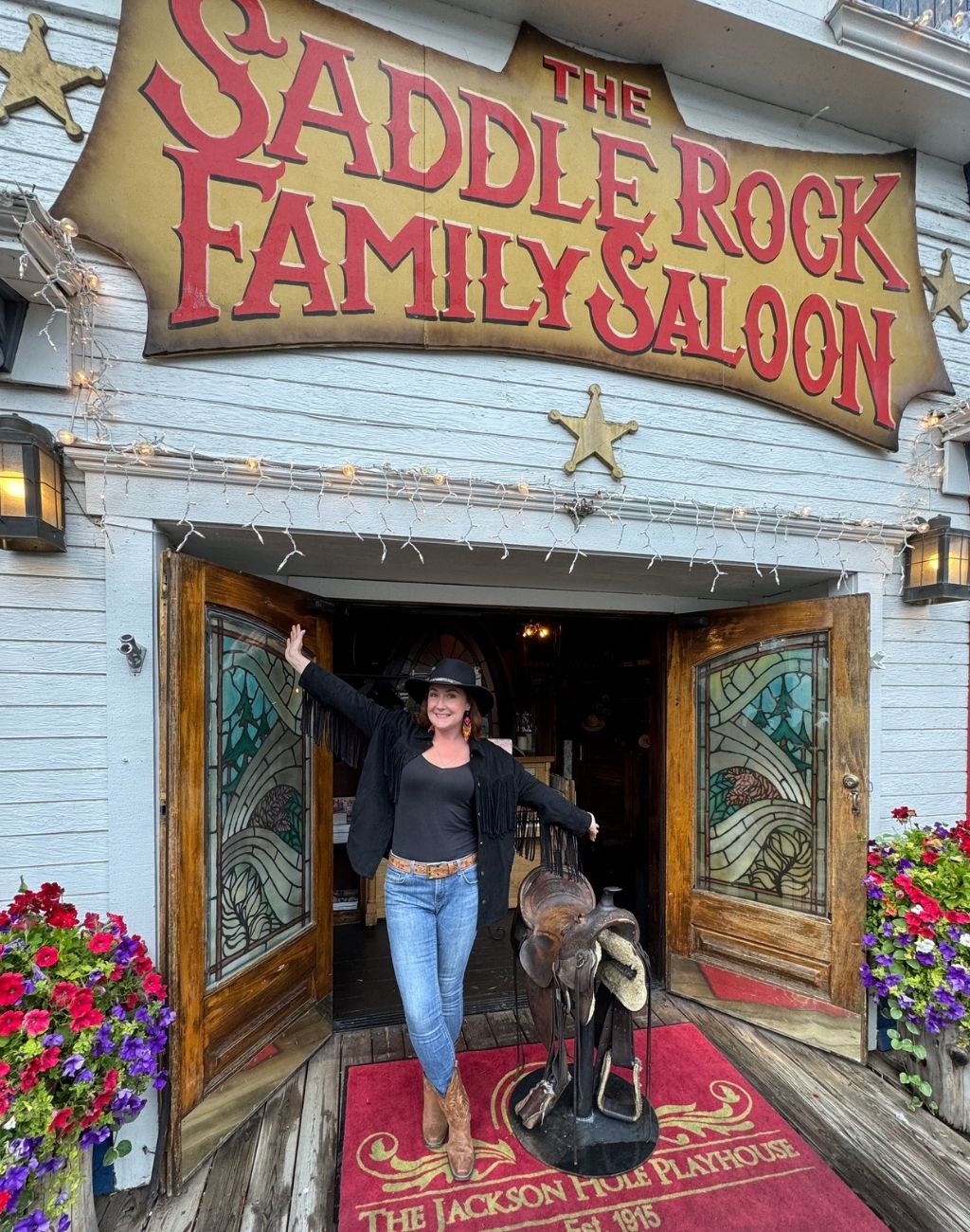
For dinner, we enjoyed the Roadhouse Brewing Co. For something more immersive, the Jackson Hole Playhouse offers a Western-themed dinner theatre.
Afterwards, either get an early night to catch sunrise over the Tetons or check out the town’s lively nightlife – both are well worth it.
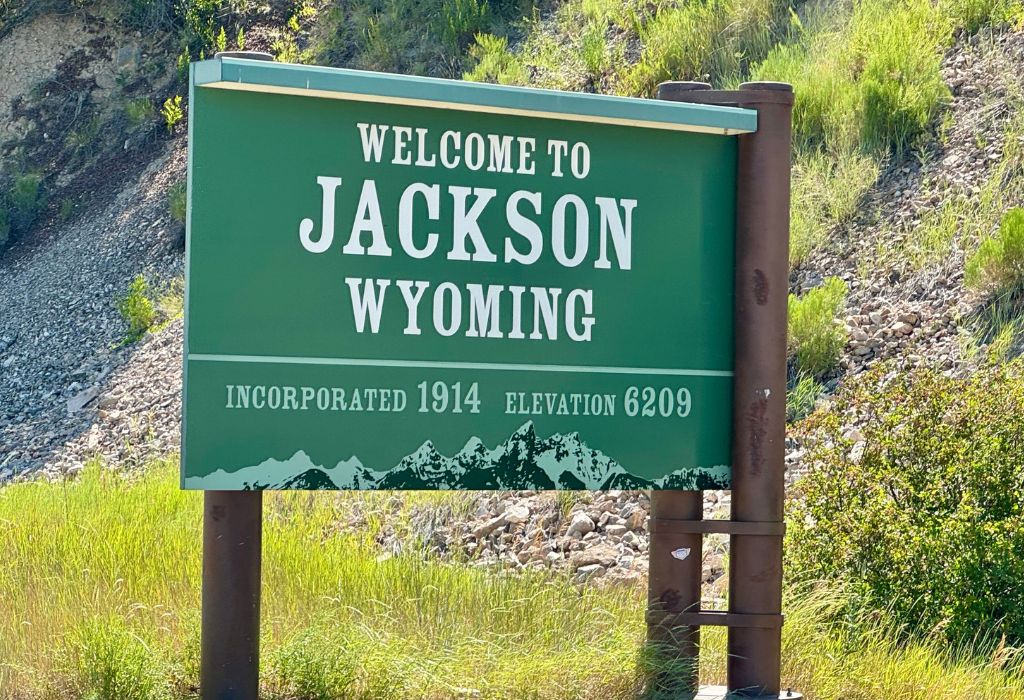
Day 9: Grand Teton National Park & Teton Village
If you’re up for it, wake early to catch sunrise at one of Grand Teton’s stunning overlooks. Both Schwabacher’s Landing and Oxbow Bend offer perfect reflections on the water and a good chance to spot moose or bald eagles in the peaceful morning light.
If sunrise isn’t your thing, a more leisurely start works too. We had breakfast at Persephone Bakery, a local favourite, before spending the day exploring the park’s iconic sights. There are plenty of things to do in Grand Teton National Park including hiking or scenic drive options depending on your energy and interests – Taggart Lake, Jenny Lake, and Hidden Falls are all excellent choices, with breathtaking scenery.
In the evening, if you’ve still got some energy, head to the Million Dollar Cowboy Bar – an iconic Jackson institution with its saddle bar stools and classic honky-tonk atmosphere. Thursday nights are especially lively, with live music, line dancing, and cowboy swing lessons (which, of course, I joined – it’s not too dissimilar to salsa dancing). Even if you don’t two-step, it’s a fantastic spot for a drink and some good people-watching.
Day 10: Snake River Rafting & Farewell to the Tetons
You could start your final morning with a scenic float or rafting trip on the Snake River – a refreshing way to shake off that Million Dollar hangover from the night before. We went rafting which was amazing!
These experiences offer a whole new perspective on the Tetons, with the chance to spot wildlife like bald eagles, osprey, and maybe even a moose or two. Opt for a gentle float if you’re in full relaxation mode, or choose a whitewater section if you’re craving adventure.
If you’re not into water-based activities, head to Teton Village and ride the Jackson Hole Aerial Tram (“Big Red”) to the summit of Rendezvous Mountain. The panoramic views are incredible – on a clear day, you can even see into Idaho. While you’re up there, don’t miss the famous waffles at Corbet’s Cabin.
You could do both in one day, but they’re expensive activities, so you may want to maximise your time on Rendezvous Mountain if you do make the trip.
For the evening, you could catch the golden hour at Mormon Row or Snake River Overlook – both glow beautifully and make for perfect photos.
Alternatively, head into Jackson for a stroll and a relaxed dinner. We wanted something a little different from classic American fare (which we’d eaten a lot of already – I was about to turn into a piece of pulled pork or a chicken tender at the rate I was going), so we tried Annie’s Thai Kitchen, which we really enjoyed and found reasonably priced.
We wrapped up the night at the Silver Dollar Bar at the Wort Hotel. There was a live band, and the place was buzzing with a mix of tourists, locals, and rodeo folks (the rodeo was in town, so a few of them came in for a drink). The atmosphere was electric, with plenty of cowboy swing dancing happening right on the floor – it was the perfect way to end our time in Jackson Hole.
Cody, Wyoming
Cody was a short stop for us, but one of my favourites on the whole trip. Founded by frontier legend William Frederick Cody (Buffalo Bill), the town embraces its Wild West heritage with historic saloons, cowboy culture, and a lively atmosphere.
We only had 1 night in Cody. I could have done 2 nights, but 1 night was fine really, especially if you’re not going to the rodeo.
Day 11 – Drive to Cody & Cody Night Rodeo
We started the morning with a coffee from Cowboy Coffee Co. – it looks great from the outside and has fun merch, but honestly, the staff were a bit rude and the coffee just okay, so I’d probably skip it next time.
Then it was time to head east to Cody, Wyoming, the historic Western town founded by William Frederick Cody, aka Buffalo Bill. The drive from Jackson takes around 4–5 hours depending on your route.
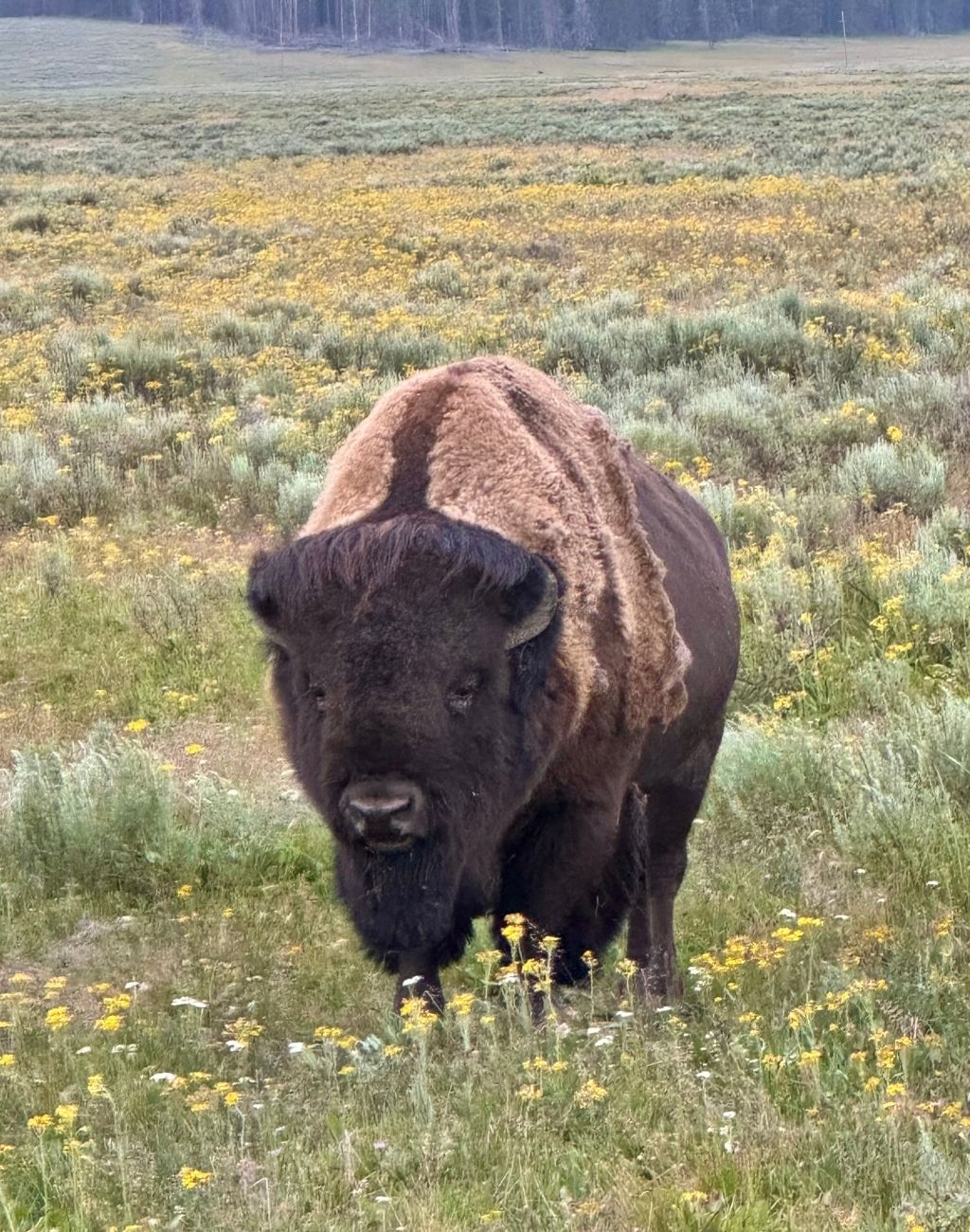
We opted for the route via Yellowstone’s East Entrance. Having a parks pass made it easy to pass through without paying again, and it gave us a few last chances to see Yellowstone’s iconic sights and wildlife one more time. We also passed the historic UXU Ranch, which looks pretty cool if you have the time and money.
Alternatively, you could take a more off-the-beaten-path route via the Wind River Reservation (they also have powwows here in the summer if the timing works). This way, you trade geysers and bison for wide-open plains, rugged mountain scenery, and remote small-town Wyoming charm. Togwotee Pass is a highlight, with panoramic views and far fewer crowds.
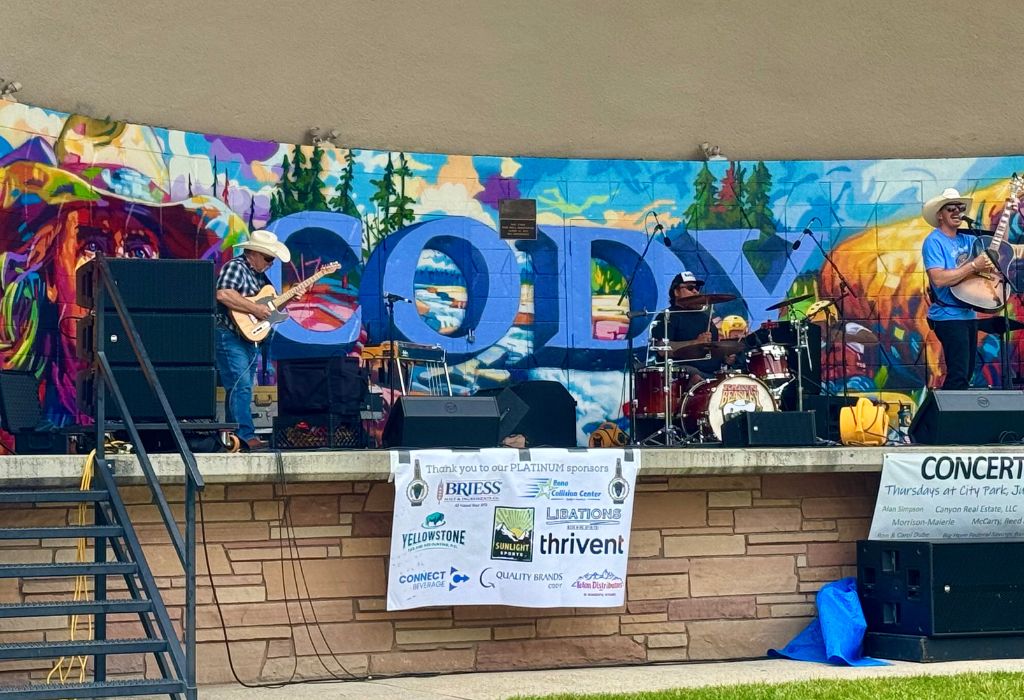
Once you arrive in Cody, be sure to visit the Buffalo Bill Museum of the West and take a stroll through downtown to stretch your legs. The town has a genuine Wild West vibe, with classic saloon-style architecture and some fun shopping. When we arrived, there happened to be a beer festival with live music (on the picture at the top of this section), so we popped in to soak up the atmosphere – it was a perfect introduction to Cody’s energetic, Western charm.
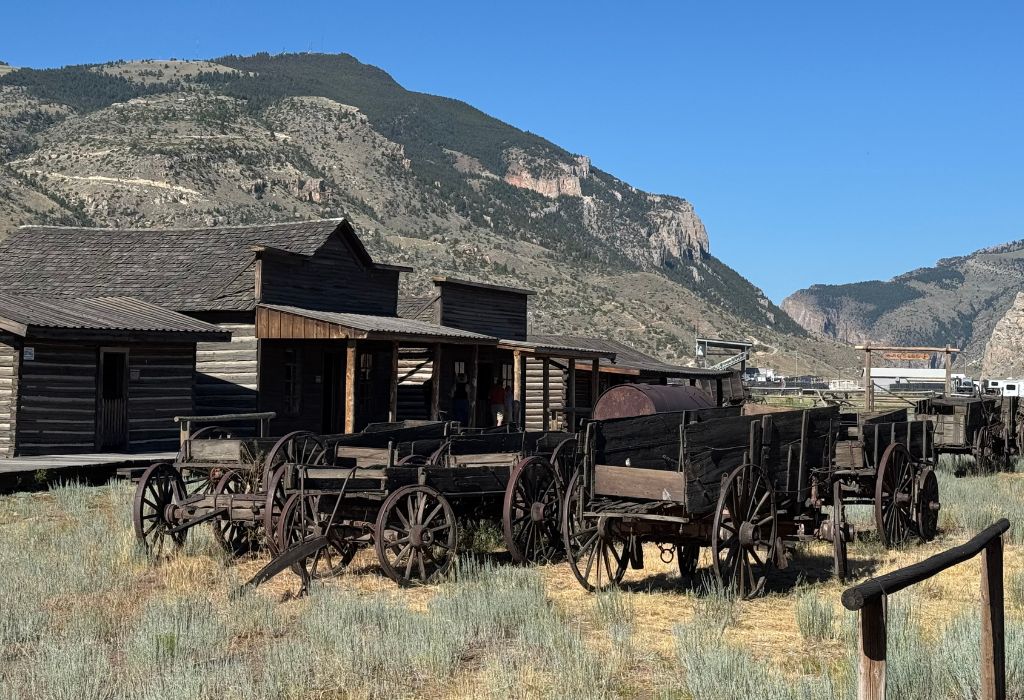
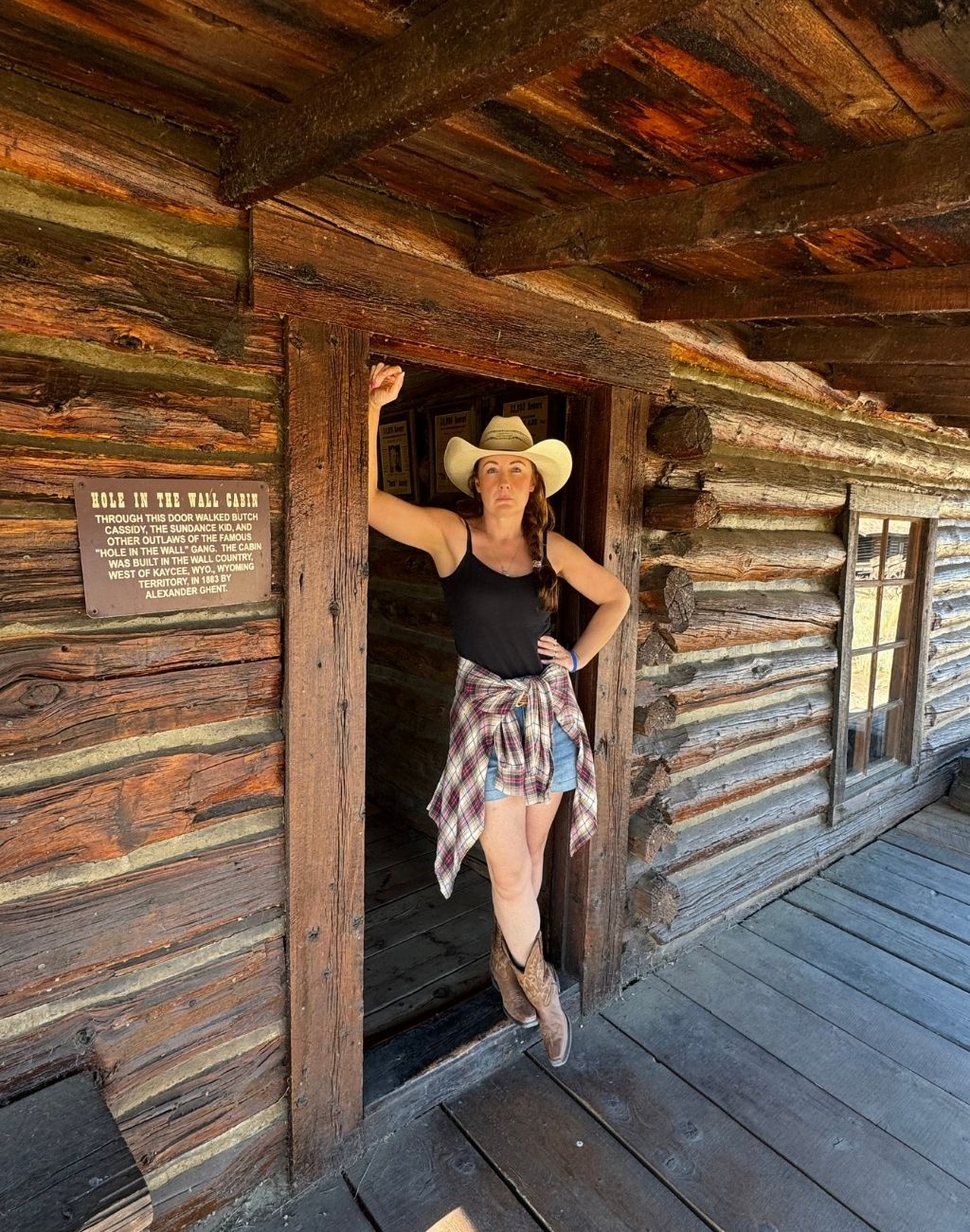
If you have time, you could stop at Old Trail Town in Cody, a lovingly curated collection of 19th-century cabins, wagons, and frontier buildings relocated from across Wyoming and Montana, offering a vivid glimpse into pioneer life on the Plains. We actually went the following morning, but you could also go today, if you have time.
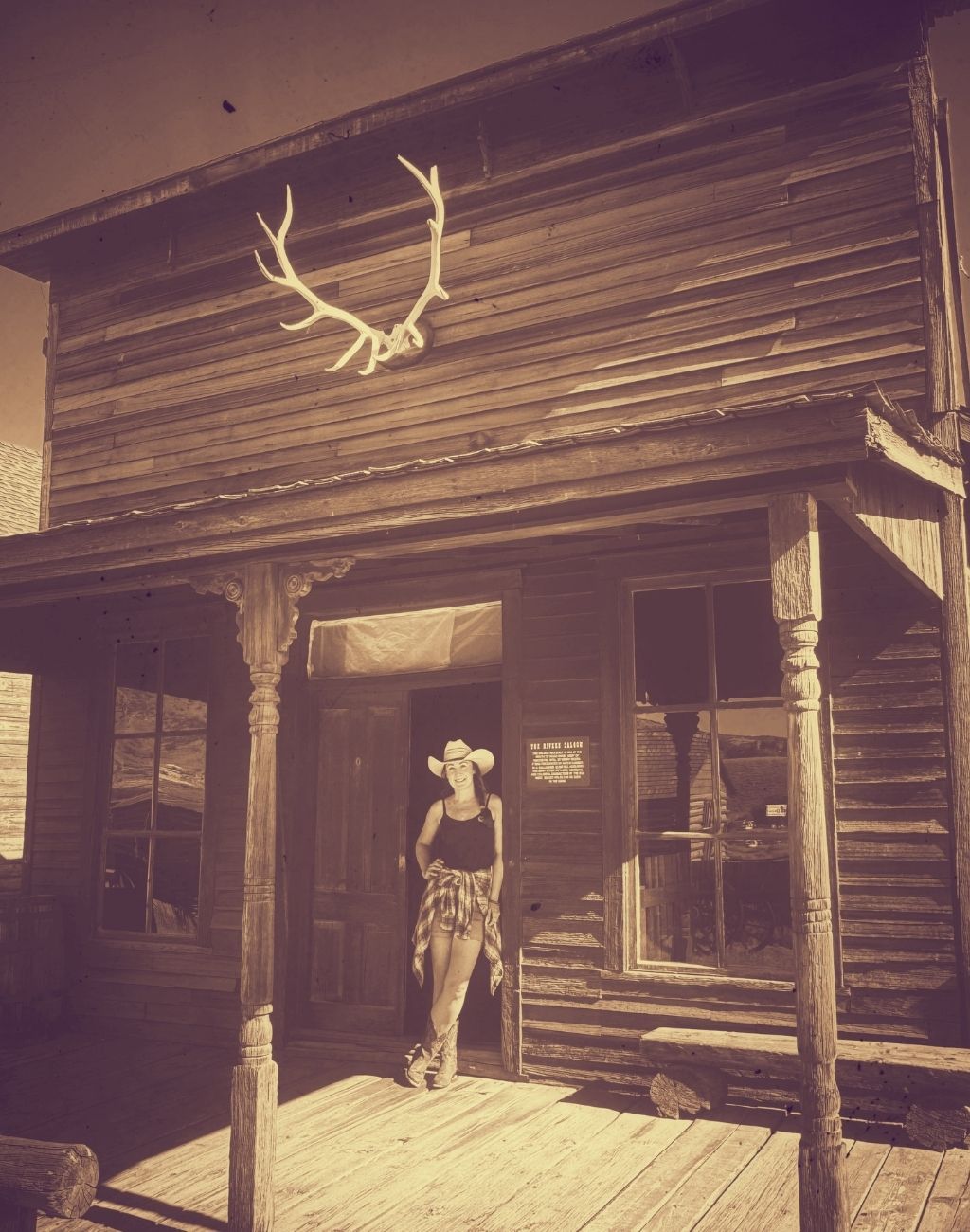
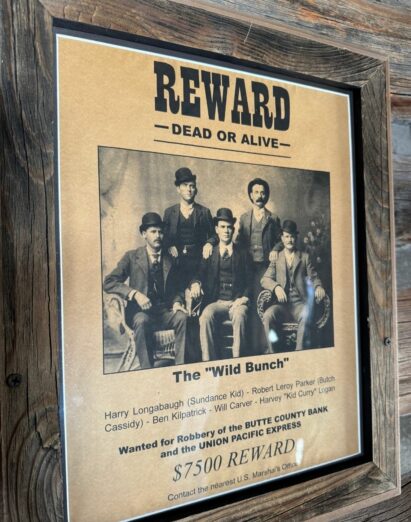
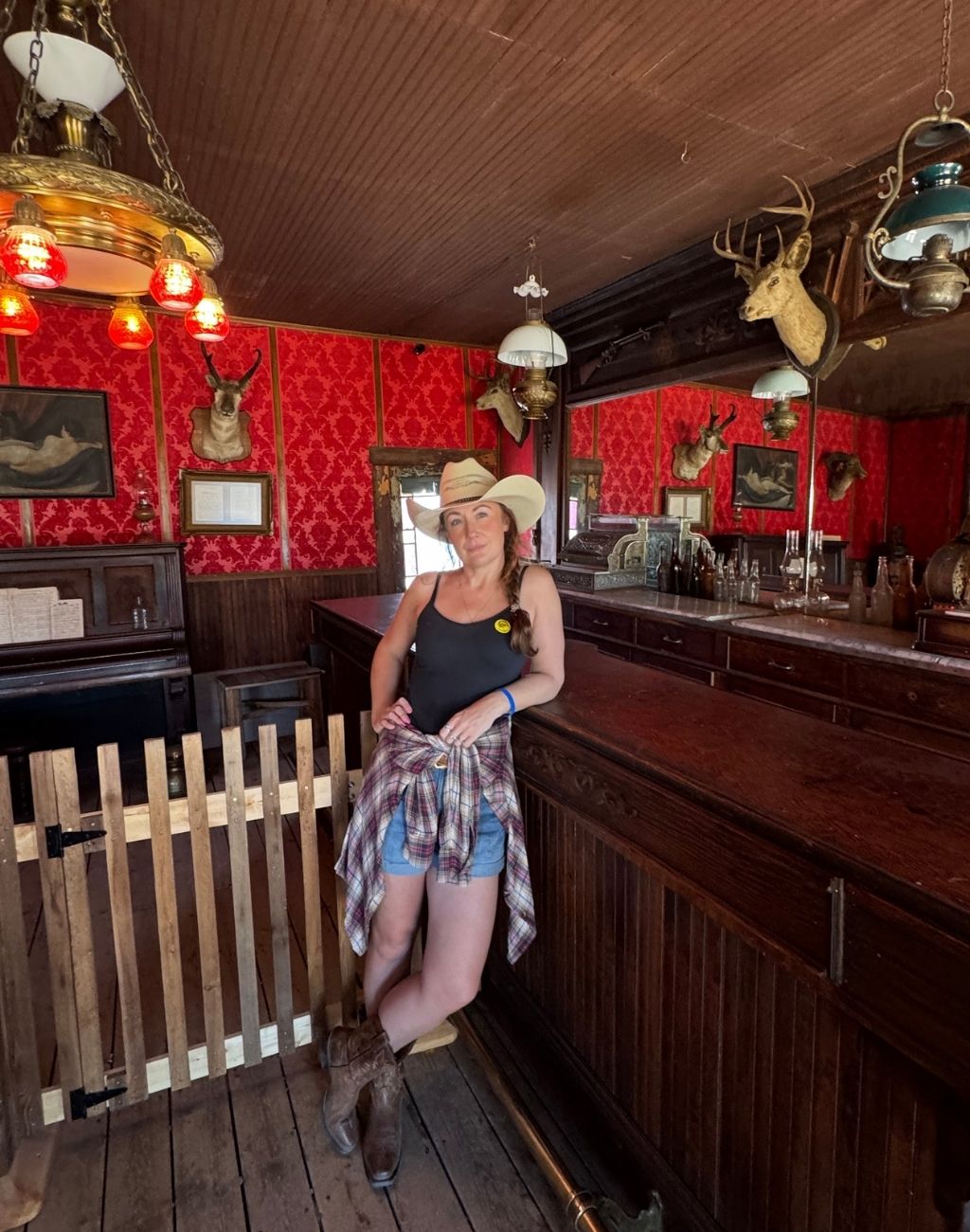
You can walk through original cabins once used by real life outlaws like Butch Cassidy and the Sundance Kid and explore the grave sites of mountain men and infamous gunslingers. It feels more authentic and atmospheric than many other recreated “old towns” – dusty, raw, and steeped in history.
I enjoyed taking photos here (and editing them – if you couldn’t tell) – I basically have a ton of photos of me ‘lounging’ against various door frames and bars doing my best Calamity Jane/brothel madam/Sharon Stone in ‘The Quick and the Dead’ poses.
We had a late lunch/early dinner at the Irma Hotel, a historic spot built by Buffalo Bill and named after his daughter. They offer a popular all-you-can-eat buffet as well as an à la carte menu – my husband had the buffet, whilst I opted for a Caesar salad and we were both pleasantly surprised by how good and reasonably priced it was. We also had a quick drink at the Silver Dollar Bar which was also great.
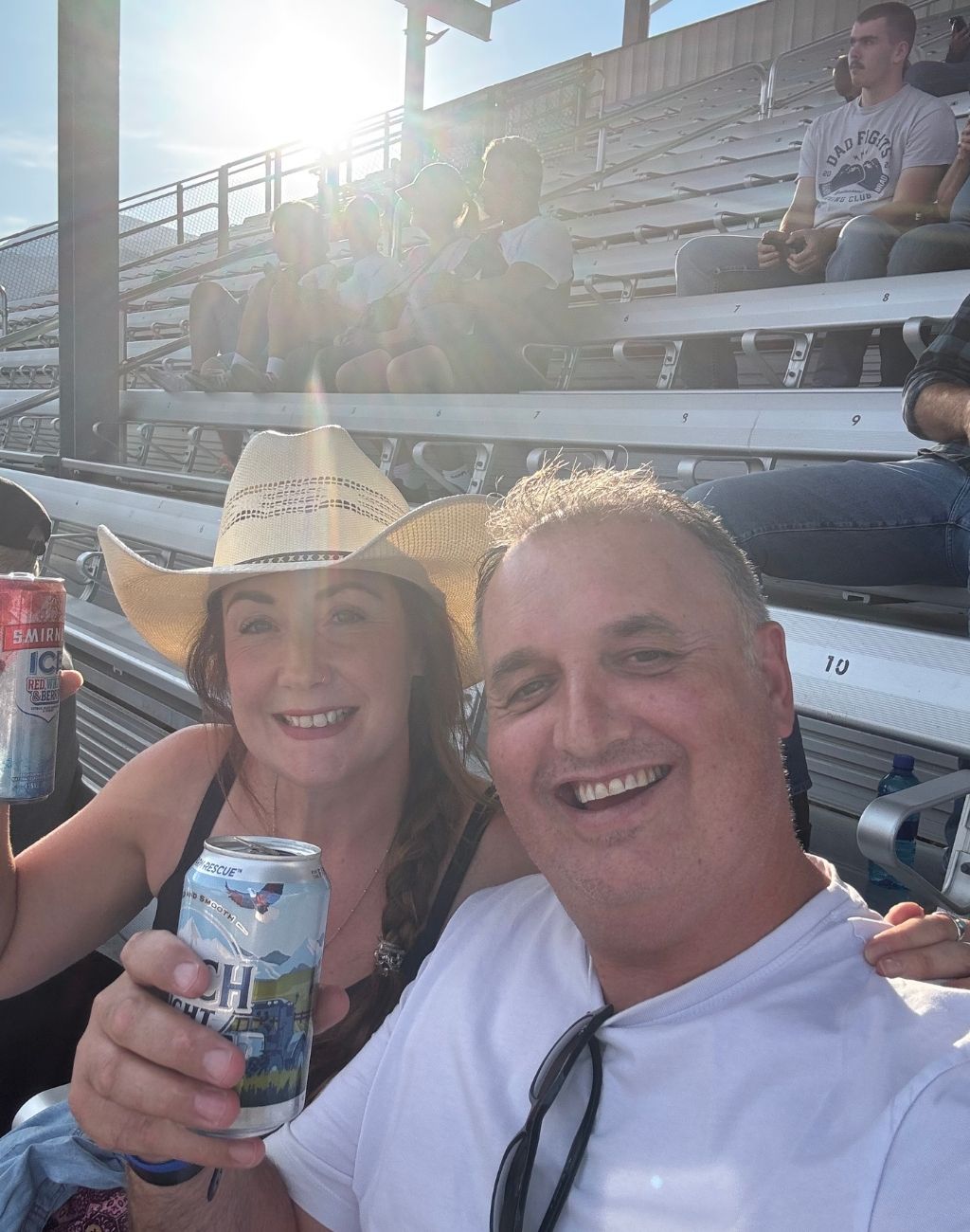
In the evening, we headed to the Cody Nite Rodeo, which runs nightly from June 1 to August 31. Since 1938, it’s been showcasing bronc riding, bull riding, barrel racing, and cowboy showmanship. I didn’t love every event, but the barrel racing and the atmosphere were fantastic – whether you’re a rodeo newbie or a seasoned fan, it’s a lively, fun, and very “Yellowstone” experience.
Afterwards, we popped into the Irma Hotel Bar for a nightcap. The saloon is full of frontier charm, from the cherry wood bar gifted by Queen Victoria to the mix of locals and colourful characters. It’s a perfect spot to soak up a little Wild West history and unwind after a full day of exploring Cody.
There are also plenty of other restaurants and bars which looked great (especially the Blanka Tatanka), but we only had one night, so I’ll need to go back!
Deadwood, South Dakota
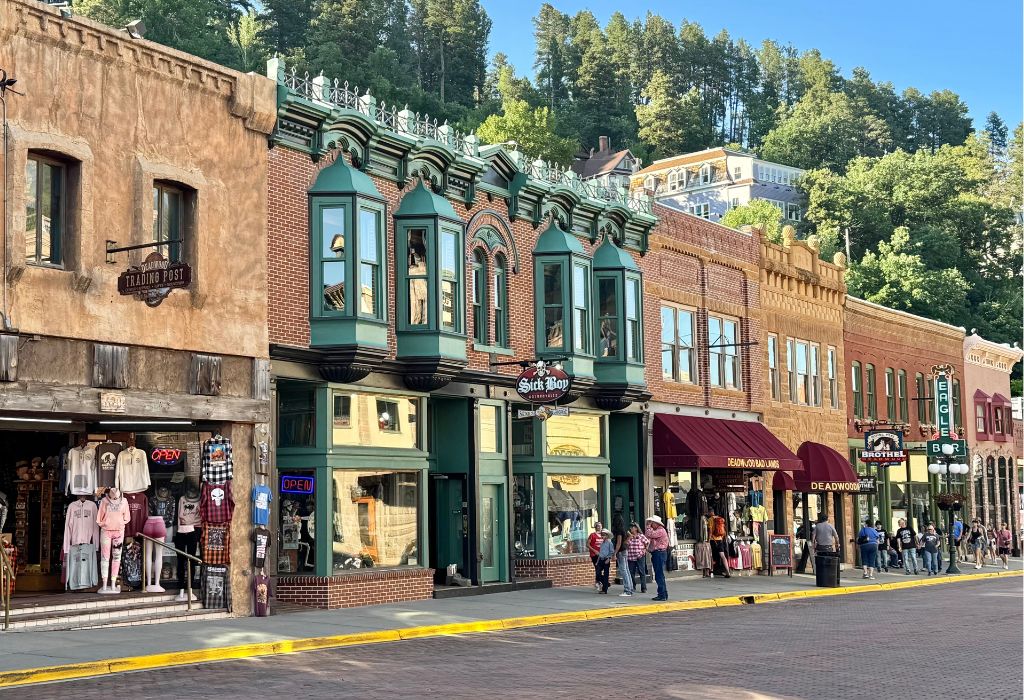
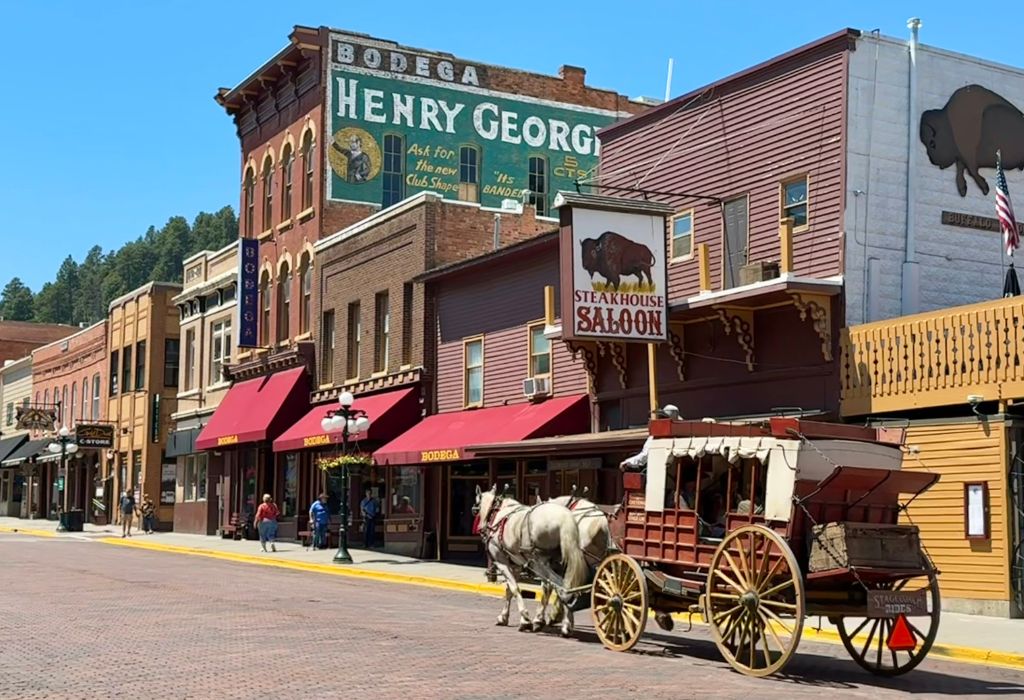
Our next stop was the once rowdy, gunslinging town of Deadwood – a legendary Wild West town where history and kitsch collide. Nestled in South Dakota’s Black Hills, this once lawless gold rush settlement now leans proudly into its colourful past, with saloons, shootouts (all thankfully fake), and storytelling at every corner.
Deadwood is famous for its “Four G’s”:
- Gold: The 1876 Black Hills Gold Rush transformed this quiet gulch into a booming town of dreamers, desperadoes, and get-rich-quick schemes.
- Gambling: From poker tables to modern casinos, games of chance are still very much alive here.
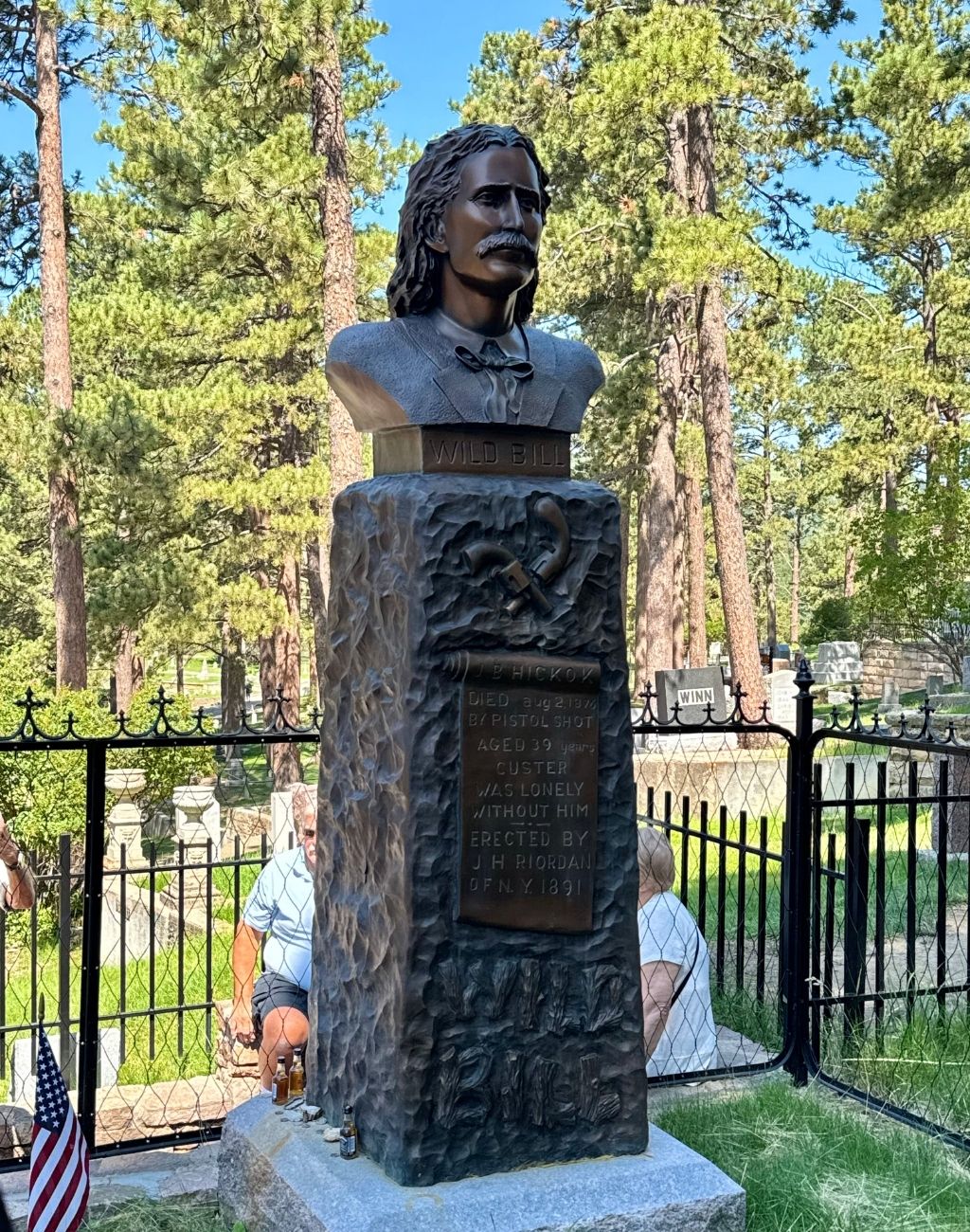
- Guns: Lawlessness was part of the town’s DNA, none more infamous than the murder of Wild Bill Hickok, gunned down mid-hand holding the now-legendary “Dead Man’s Hand.”
- Girls: Like many Wild West towns, Deadwood had its share of brothels. Madame Dora DuFran, one of the West’s most famous madams (and also from Liverpool, like me), ran several here, and the town’s colourful characters also included the legendary Calamity Jane, who lived and is buried here alongside Wild Bill.
Walking through Deadwood feels like stepping onto a movie set – part old-time Western, part mini-Vegas, with a dash of Disney Main Street flair thrown in for good measure.
While I enjoyed Deadwood, I’d say it was probably my least favourite stop on the trip (not because it’s bad, just everywhere else was so good) – it’s fun, interesting, and quirky, but a bit touristy, and could be skipped if you’re short on time.
Day 12: Into the Wild West – Welcome to Deadwood
If you didn’t get a chance the day before, I’d recommend stopping at the Cody Old Trail Town before heading out. It’s a must for Old West fans, with historic buildings and artifacts that really bring the frontier to life. Give yourself about an hour, and try to go early – we arrived at 8 a.m., right after it opened, which was perfect: cool, quiet, and not too busy.
See what I mean about the pictures? I probably would have stayed there all day! 😉
The drive from Cody to Deadwood takes roughly 5.5 to 6 hours, cutting across the wide-open plains of Wyoming before climbing into South Dakota’s Black Hills. It’s a gorgeous, cinematic route – you’ll feel like you’re driving through a Western movie (cue the music from The Good, the Bad and the Ugly….).
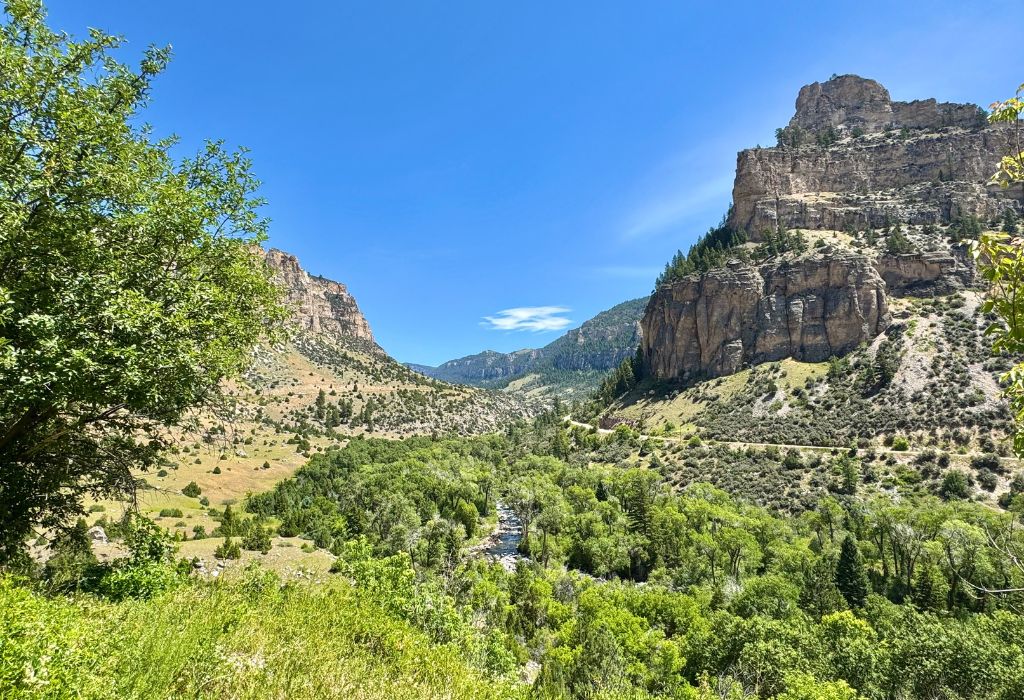
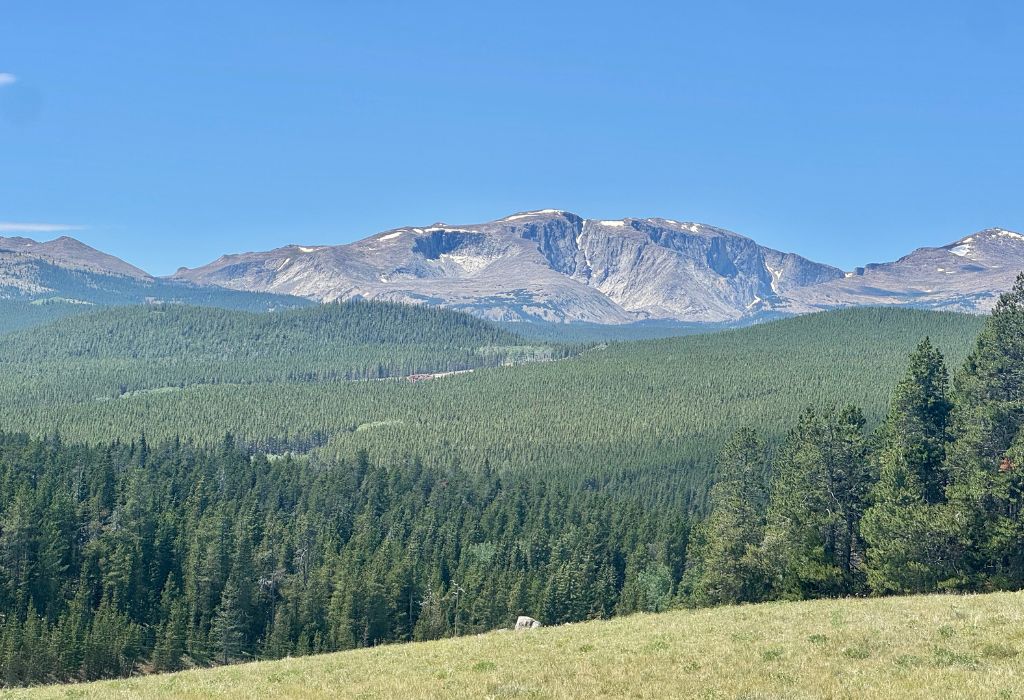
We made a stop at the Loaf Mountain Overlook in the Bighorn National Forest for a stretch and some photos – the views are spectacular.
GOOD TO KNOW: If you have extra time, consider a detour to Devils Tower National Monument. This unusual volcanic formation rises dramatically from the prairie and is totally worth it, though it adds around 1.5 hours to your drive. You could also stay the night here instead of Deadwood to break up the drive between Cody and Custer State Park if you want a more nature-focused trip.
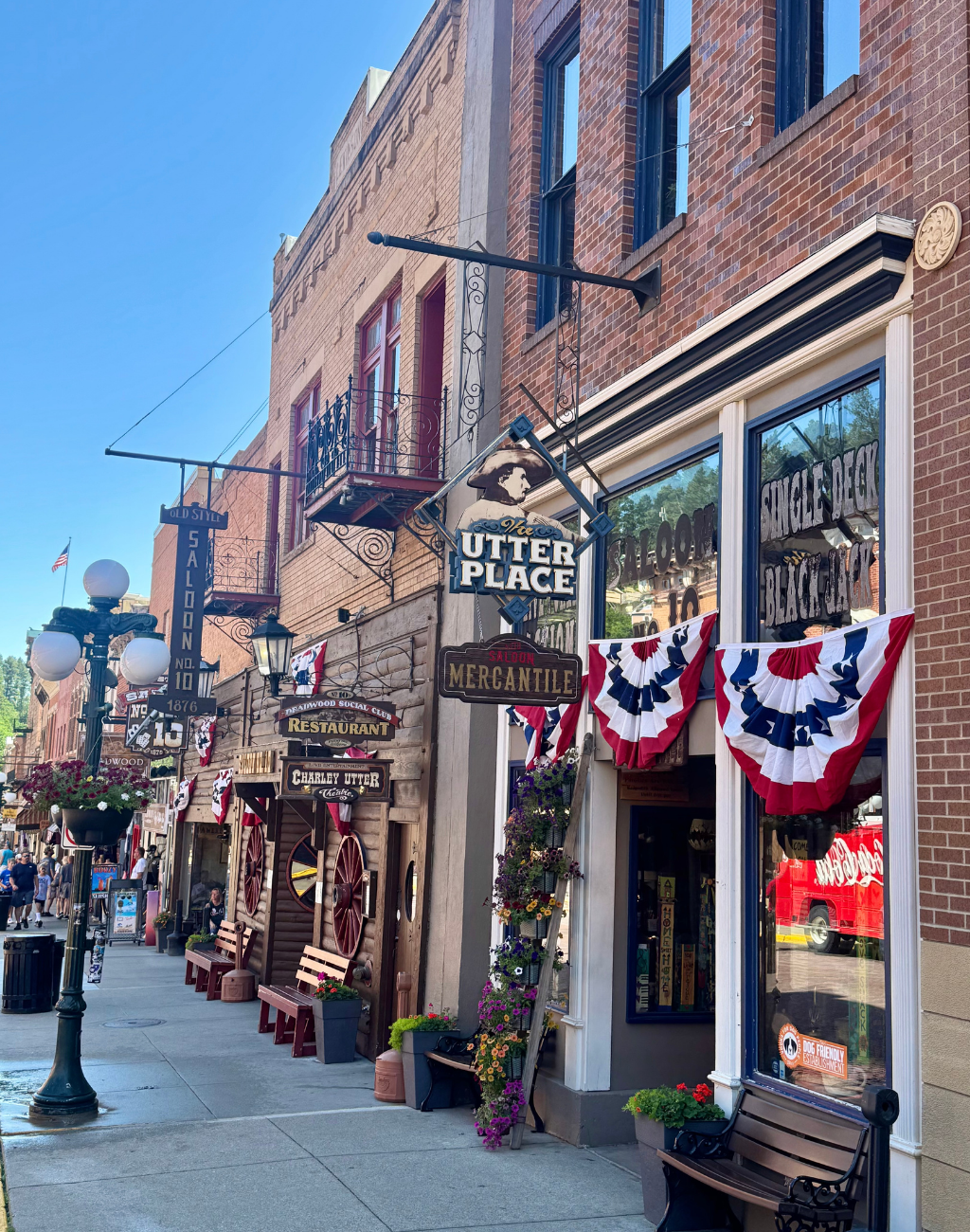
We headed straight to Deadwood, checked into our hotel and had a wander down the pretty Main Street, browsing the shops and checking out the bars and casinos.
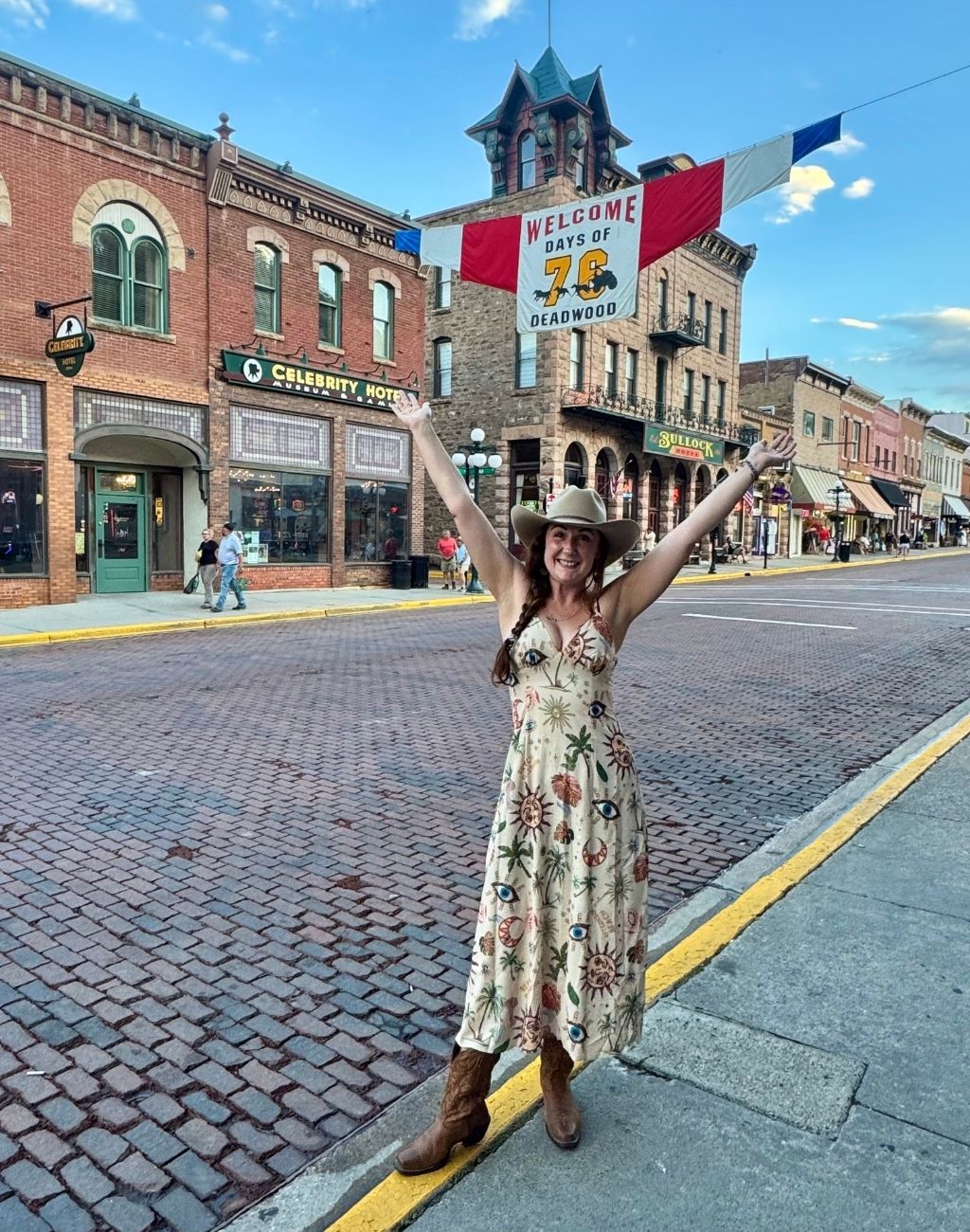
If you’re visiting between May and September, catch one of the daily Wild West reenactments on the street. Yes, they’re a bit cheesy – but also a lot of fun to watch – I enjoyed them anyway. You can pick up a schedule around town.
In the evening, tuck into a hearty dinner (we loved Legends Steakhouse at the historic Silverado Franklin Hotel), then dive into Deadwood’s nightlife – whether it’s live music, gambling, or a whiskey at Saloon No. 10 (which has nightly re-enactments of Wild Bill’s death) or the Wild Bill Bar, which stands on the site of the original Saloon No. 10 (where Wild Bill Hickok met his end).
Day 13: Gold, Ghosts & Scenic Drives
Now, if you’re looking to shave off a day from your trip, this might be the one. Deadwood’s fun, but unless you’re fully invested in Wild West lore, half a day here might be plenty.
Kick off your morning at the Adams Museum, which brings the town’s wild and often tragic history to life – fires, floods, gold booms, and the infamous characters who left their mark. Or perhaps venture into the Broken Boot Gold Mine for a short tour (and maybe even pan for your own gold).
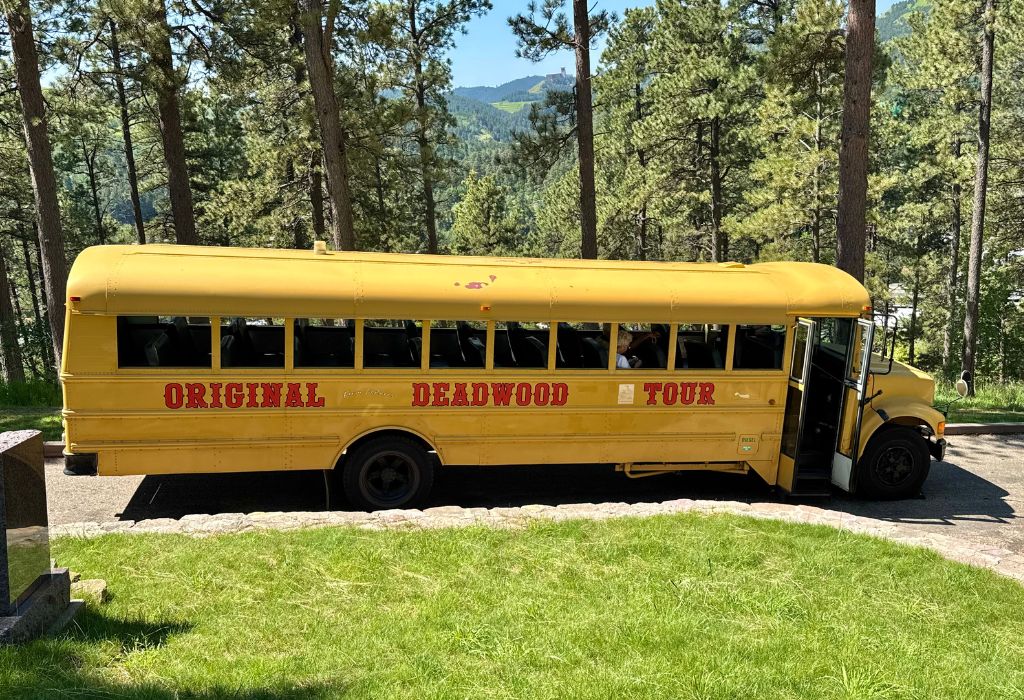
For a bit of cheesy-but-fun sightseeing, hop aboard the Kevin Costner’s Original Deadwood Tour. After filming Dances with Wolves (one of my favourite films – I watched this with my dad in the early 90’s and always dreamed of going to South Dakota) nearby, Costner helped boost Deadwood tourism and still owns a casino here. The tour includes a drive to Mt. Moriah Cemetery, where Wild Bill and Calamity Jane are buried with a view over town.
While in Deadwood, you can also visit the the Deadwood Brothel – which I found particularly interesting because the story is told from the women’s point of view. It offers a unique and often overlooked perspective on this wild frontier town’s colourful history.
Craving some nature? You could head to the Spearfish Canyon Scenic Byway – a peaceful escape with winding roads, waterfalls, and forested trails.
In the evening, I recommend dinner at the lovely Deadwood Social Club, which sits above Saloon No. 10 and serves great steaks and pasta in a cosy, historic setting. I’d heard it gets busy, so I made a reservation earlier in the day.
After dinner, we joined a ghost tour – having loved the ones we did in New Orleans and Savannah last year – but this one fell a bit flat and it didn’t help that there was a big thunderstorm. Still, it was a fun way to end the night and see more of Deadwood after dark.
Custer State Park & The Black Hills
Our final stop on our Wild West road trip was the incredible Custer State Park, tucked into the Black Hills of South Dakota.
The park itself is only about an hour and a half drive from Deadwood, and sits conveniently close to several of the state’s major landmarks – including Badlands National Park, Mount Rushmore, the Crazy Horse Memorial, and Rapid City. This makes it a perfect base for exploring the region.
We based ourselves near Custer town, which sits just outside the park, but there are plenty of other places to stay both inside the park and around it.
Custer State Park turned out to be one of the unexpected highlights of the trip for me. We had just three nights here, but I could easily have spent four or even five nights soaking in the wildlife, scenic drives, and open spaces. If it’s the end of your trip, it’s also a wonderfully relaxing way to wind down.
Day 14 – Drive from Deadwood to Custer State Park (via Mount Rushmore and/or Crazy Horse Memorial)
After breakfast, we set off on the scenic drive to Custer State Park. I’ll share what we did, but if you’re staying in a different location or have more days than we did, you may want to adjust the itinerary to suit what makes the most sense geographically. You can see our route here but I’ll list some alternatives below.
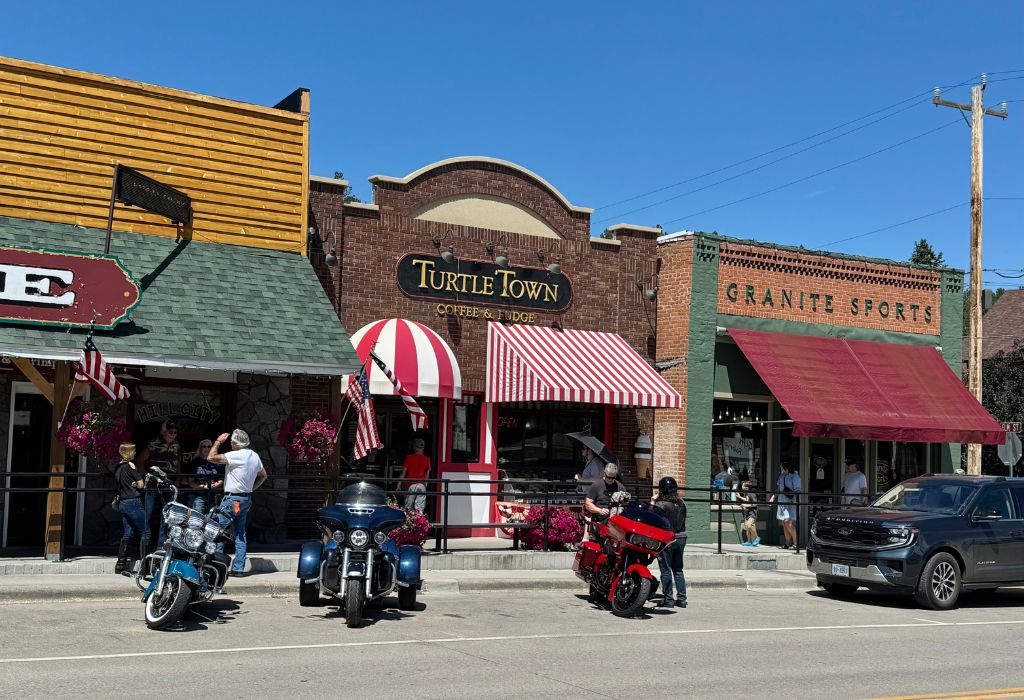
On the way to Custer State Park, we passed by the pretty Pactola Lake and through a charming town called Hill City – a great place for a quick coffee, snack, or to stretch your legs (or an alternative place to stay).
This is also where you can catch the 1880, a historic steam train that runs between Hill City and Keystone. We didn’t do it, so I can’t say much more about it, but it looks like a great experience (I’d be living out my best Back to the Future 3 life on there). The round trip takes about 2.5 hours, but if you want time to explore Keystone before catching the return train, it will take 5 – 6 hours in total – so it’s probably best saved for a separate day.
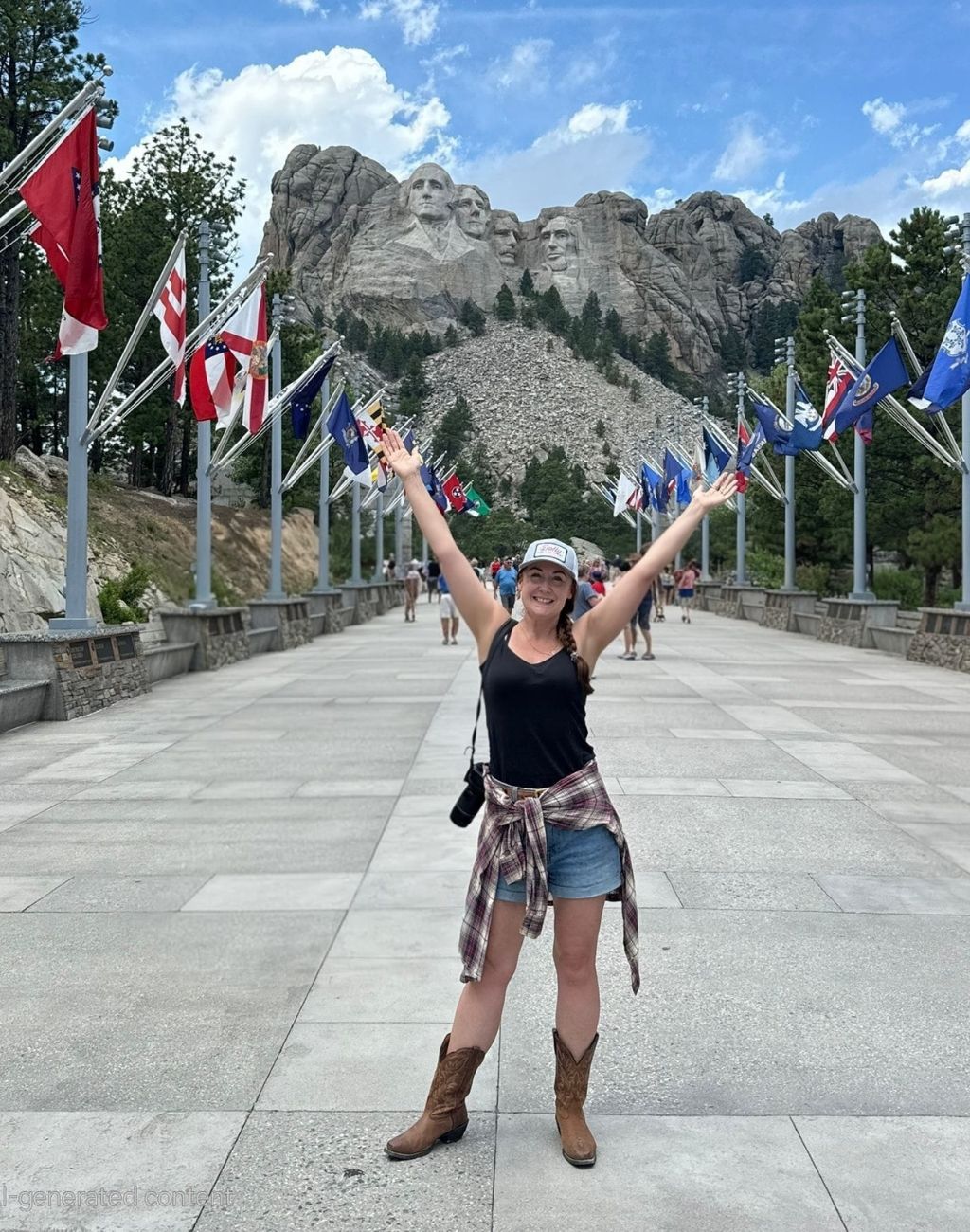
Our first major stop was Mount Rushmore. The monument celebrates four U.S. presidents carved into the granite in the 1920s–1940s: George Washington, Thomas Jefferson, Theodore Roosevelt, and Abraham Lincoln. Entry to the memorial grounds is free, though parking costs around $10 per vehicle. It’s impressive up close, with walking paths, a museum, and viewpoints of the iconic faces.
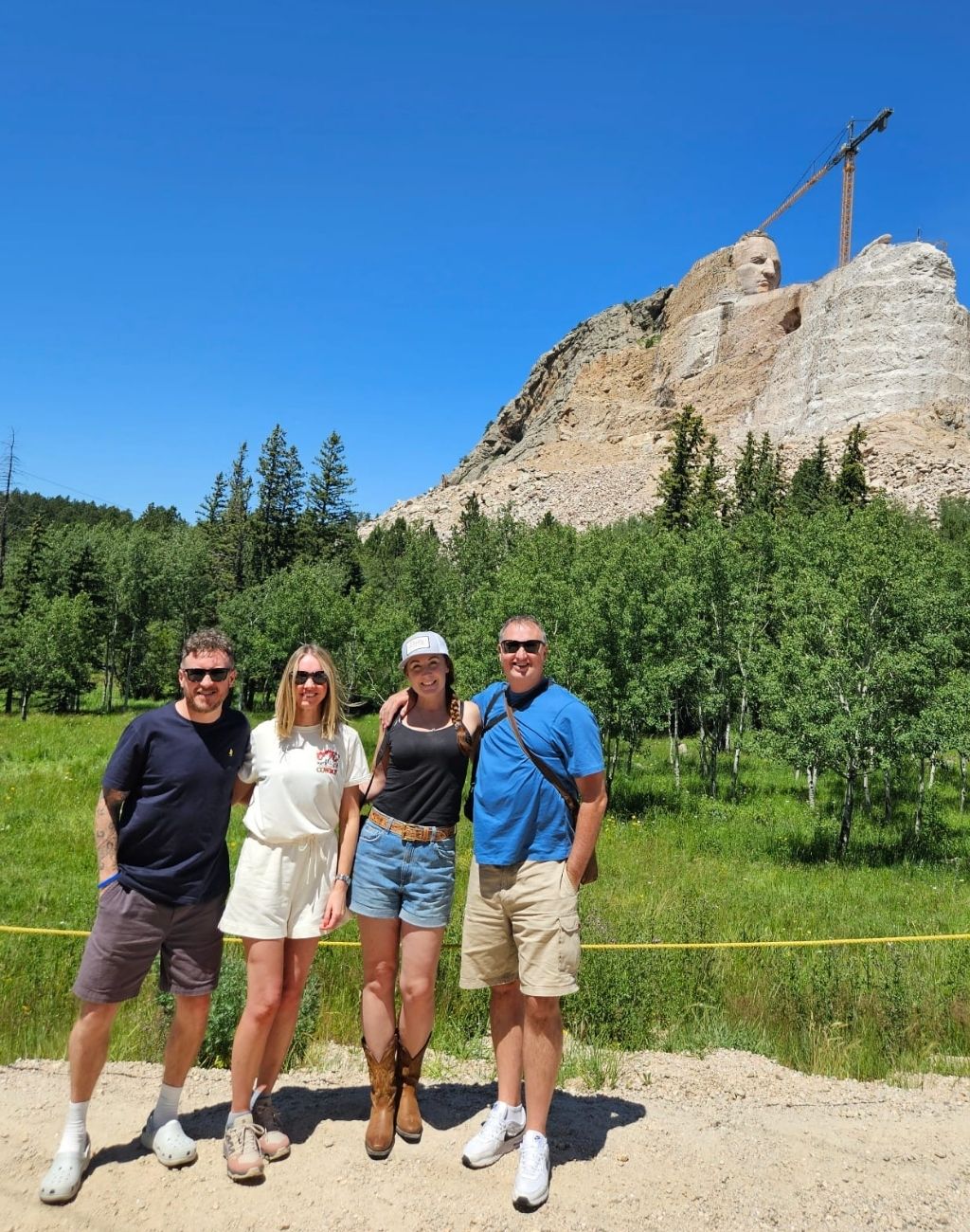
Next, we went to the Crazy Horse Memorial, which honours the Lakota leader. At Crazy Horse, I would suggest taking the $5 shuttle for a closer view – it’s far more impressive than just seeing it from the visitor centre. Keep in mind that the sculpture is still a work in progress (construction began in 1948), so it will likely be decades before it’s complete.
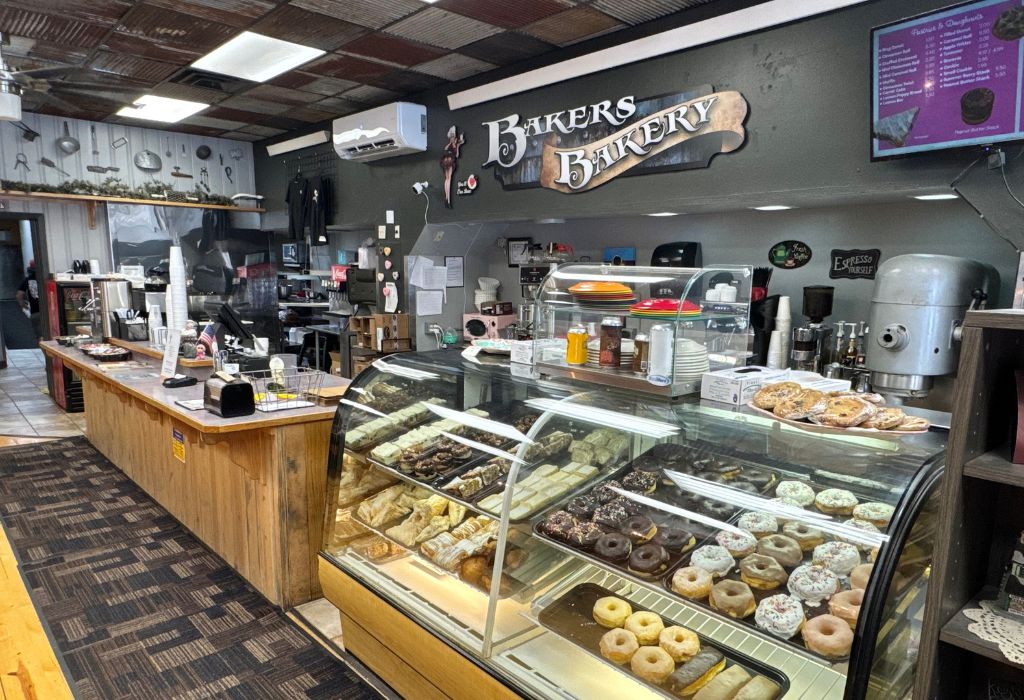
We then drove into Custer town to pick up supplies at Lynn’s Dakotamart and grabbed a bite at Baker’s Bakery & Cafe before heading to our gorgeous Airbnb, nestled in a wooded area about 10 minutes away.
This proved to be an ideal base – secluded and peaceful, with easy access to Custer State Park and a good selection of restaurants, shops, and local amenities.
Alternative routes after Mount Rushmore, if you wanted to do something different on the way to Custer…
- Continue onto Iron Mountain Road, a scenic, twisting drive through the Black Hills. A photographer’s dream, it features pigtail bridges, tunnels framing Mount Rushmore, and pull-offs with sweeping views of the forests and hills. The road naturally guides you south toward Custer (see map here).
- From the Iron Mountain Road, you could continue up the Peter Norbeck Scenic Byway up to Sylvan Lake then down to Custer, but that would be a lot in one day – especially if you want to stop and have a wander at Sylvan Lake, but could be do-able (see map here).
- Or, from Mount Rushmore, head back along the Needles Highway via Sylvan Lake to Custer (we drove this on our last day instead and I’ve written more about this route below). Then from Sylvan Lake you could go direct to Custer down Route 89 (see map here) or continue down the Needles Highway then onto the Peter Norbeck Scenic Byway and on to Custer (see map here).
There are plenty of options for this route, so take a look at what works best for you. A lot will depend on how you plan to spend your time in Custer State Park and how many days you have. We chose to visit Mount Rushmore National Memorial and the Crazy Horse Memorial along the way, but it’s entirely up to you – there’s lots of flexibility here. I’ve shared more detail on exploring Custer State Park on Day 16.
Day 15 – Badlands National Park & Wall Drug
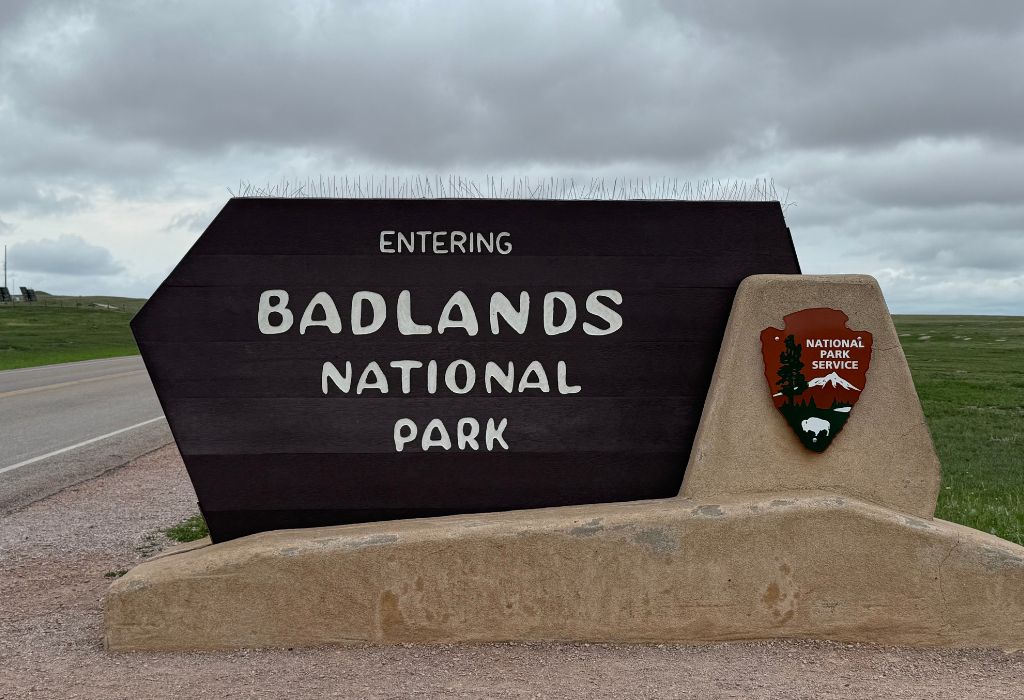
We set off early for a day trip to Badlands National Park, about a 1 hour 45-minute drive from Custer. It’s a bit of a trek (it’s much more easily accessed from Rapid City), but we really wanted to go and it’s well worth the journey for the surreal, almost otherworldly landscapes – so an early start is key to make the most of the day.
The park’s striped rock formations, dramatic canyons, and wide-open skies make it one of the most striking places in the region. It has also been a popular filming location for Westerns (some of Dances with Wolves was filmed here) and nature documentaries, thanks to its rugged, untamed terrain that perfectly captures the spirit of the frontier.
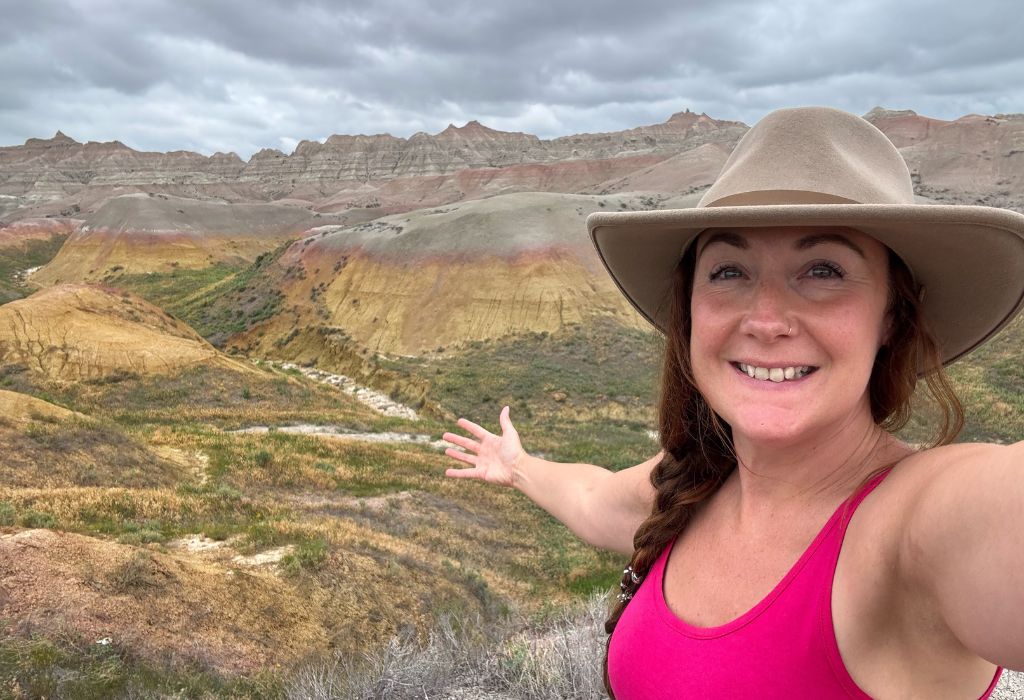
A loop drive through Badlands offers plenty of chances to stop at must-see viewpoints, including Big Badlands Overlook, Panorama Point, and Yellow Mounds. There are also some short walks worth taking – Notch Trail is especially rewarding for those who don’t mind a bit of scrambling and want stunning cliffside views.
Wildlife spotting is excellent in the park. One of the best areas is Sage Creek Rim Road, a scenic gravel road where bison, prairie dogs, and even bighorn sheep often appear. For prairie dog encounters, stop at Roberts Prairie Dog Town, and for bighorn sheep, Pinnacles Overlook is one of the most reliable spots.
Badlands combines dramatic scenery with abundant wildlife, making it a full-day adventure that’s both visually stunning and very “Wild West.” Again, you could spend more time here, staying close by, but we only had one day so we made the most of it.
GOOD TO KNOW: There were lots of biting midges in Badlands, so take bug spray!
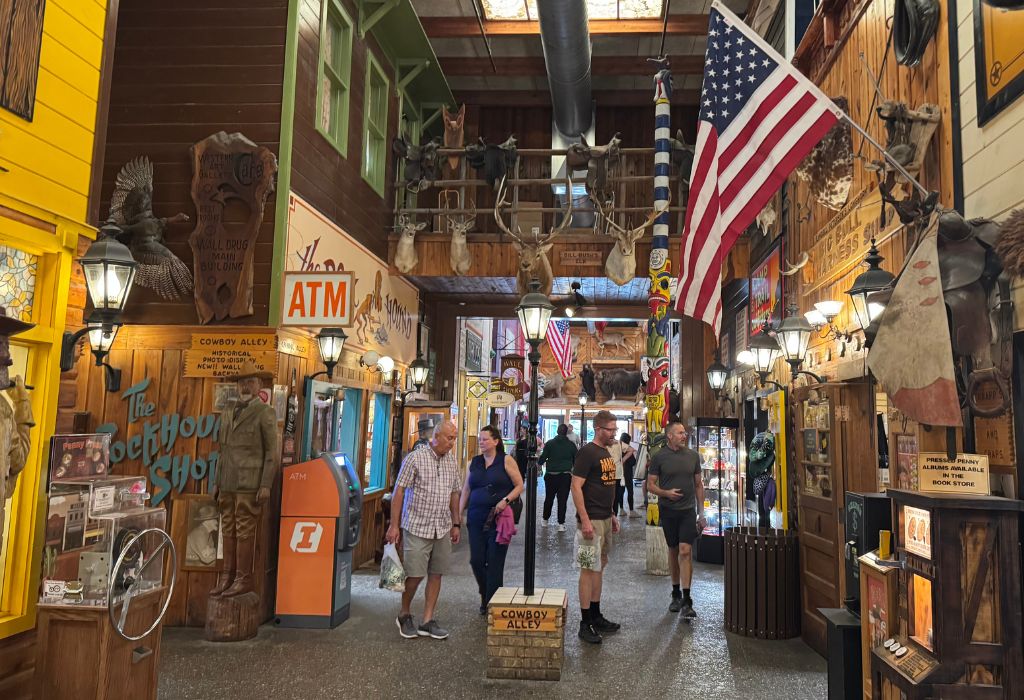
On the way back stop at the legendary Wall Drug Store – you really can’t miss it, thanks to the endless billboards dotting the highway for miles (and miles). It’s definitely a tourist trap, and for me, it felt a bit like an American version of a British garden centre – minus the plants, but packed with quirky souvenirs, cowboy fashion and novelty items you probably don’t need.
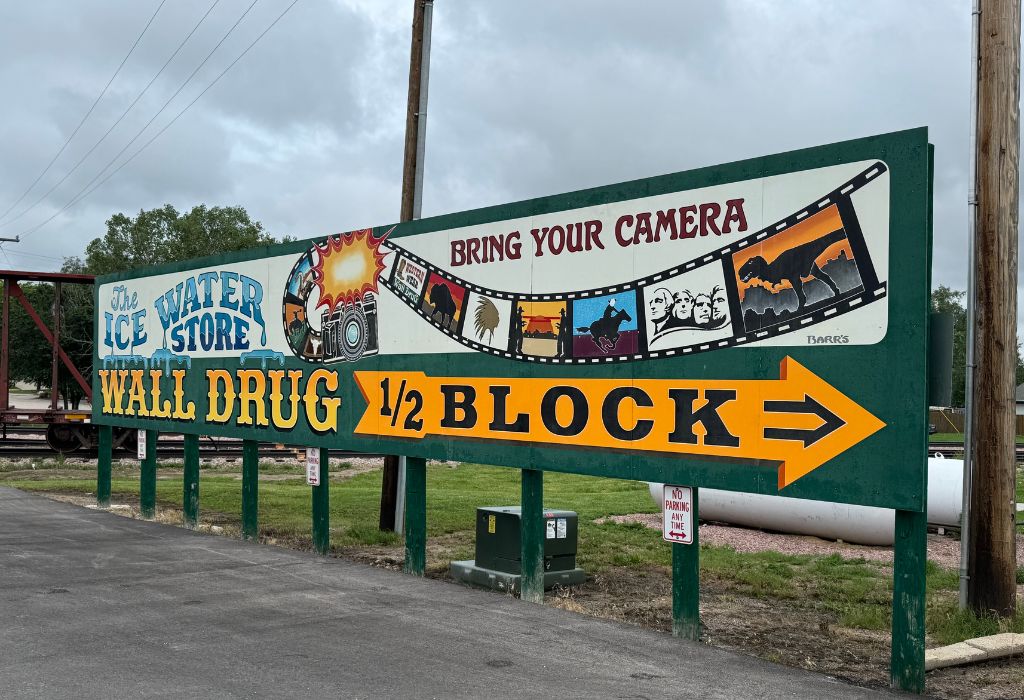
But it does have lots of nice stuff, so it’s great if you like shopping and the 5-cent coffee is worth it for a quick caffeine boost and it’s a good loo stop. It’s kitschy, chaotic, and a fun place to stretch your legs and grab a bite before continuing the drive back to Custer.
This makes for a long but memorable day, with landscapes totally different from the forests and granite peaks we’d seen so far and was a real highlight of the trip for me.
GOOD TO KNOW: If you want a more chilled trip, you could skip Badlands. It’s incredible, but it’s far and there’s plenty of places to explore close by.
Day 16 – Custer State Park: Sylvan Lake, Scenic Drives & Wildlife
We spent our final day exploring Custer State Park, one of South Dakota’s most scenic and wildlife-rich destinations. As mentioned above, there are lots of options, which is why I would have preferred more time here.
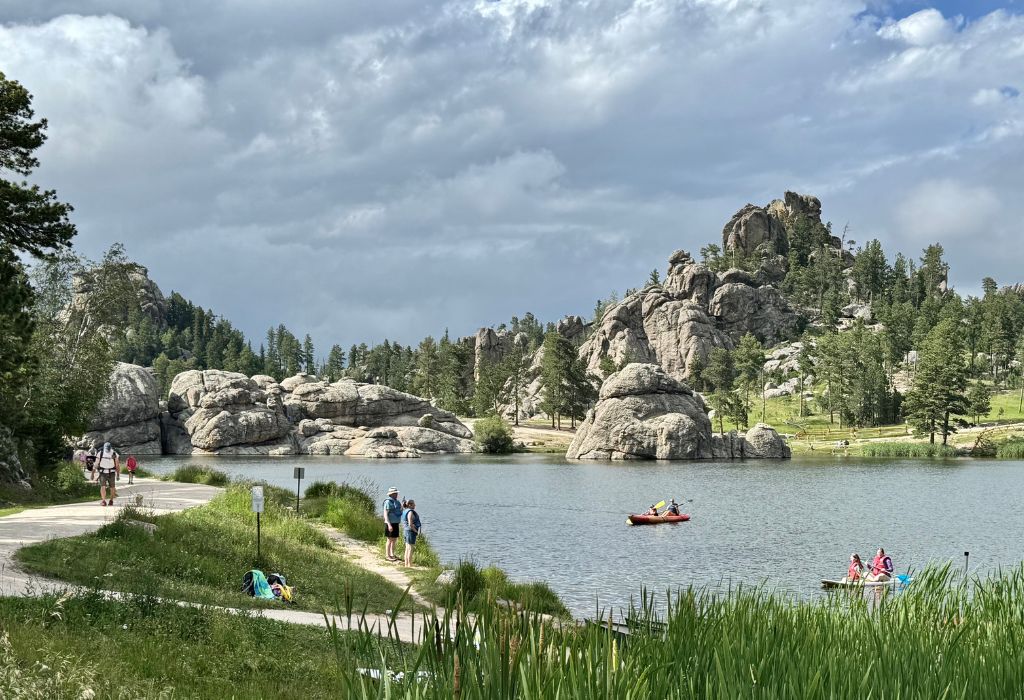
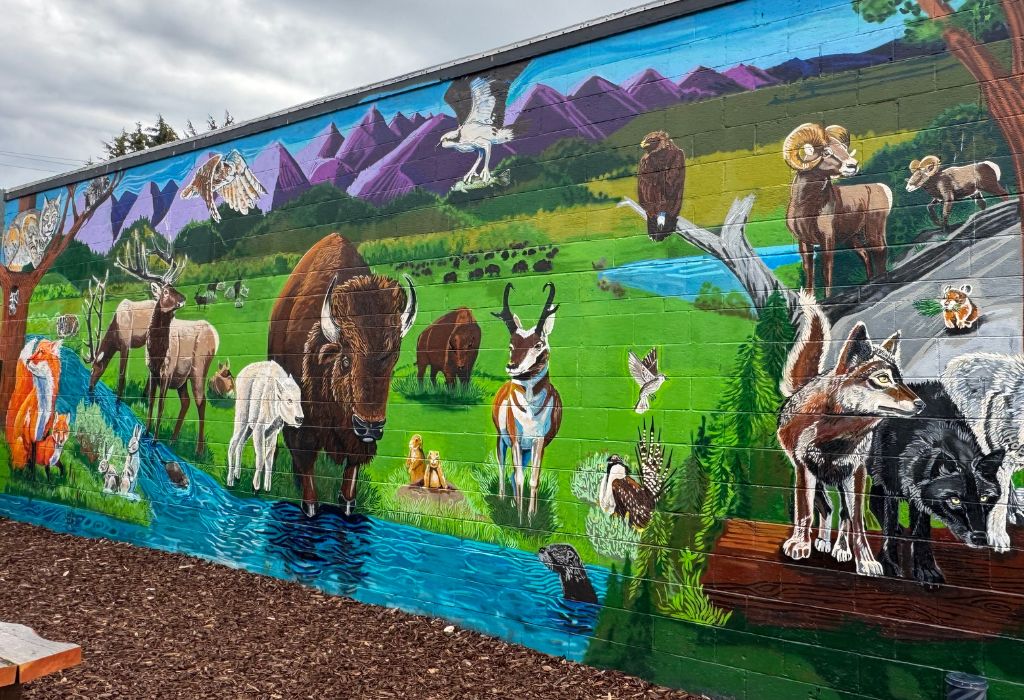
We drove the Needles Highway, winding past dramatic granite spires, tunnels, and scenic pull-offs perfect for photos. Keep an eye out for the park’s abundant wildlife, including bison herds, pronghorn antelope, and the cheeky “begging” burros (wild donkeys) that often wander the roads.
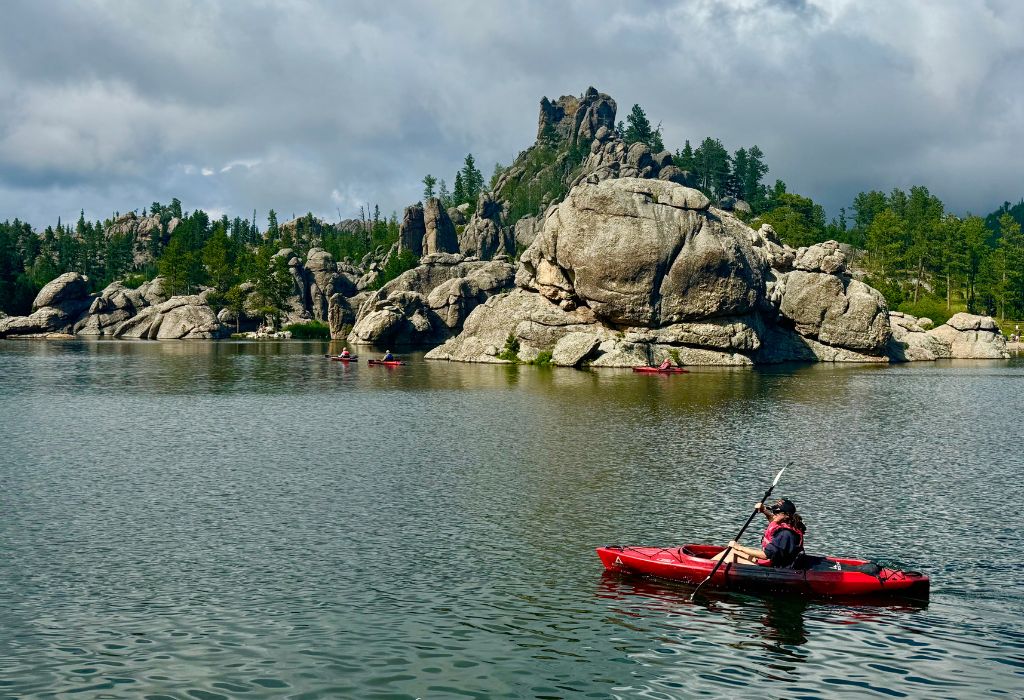
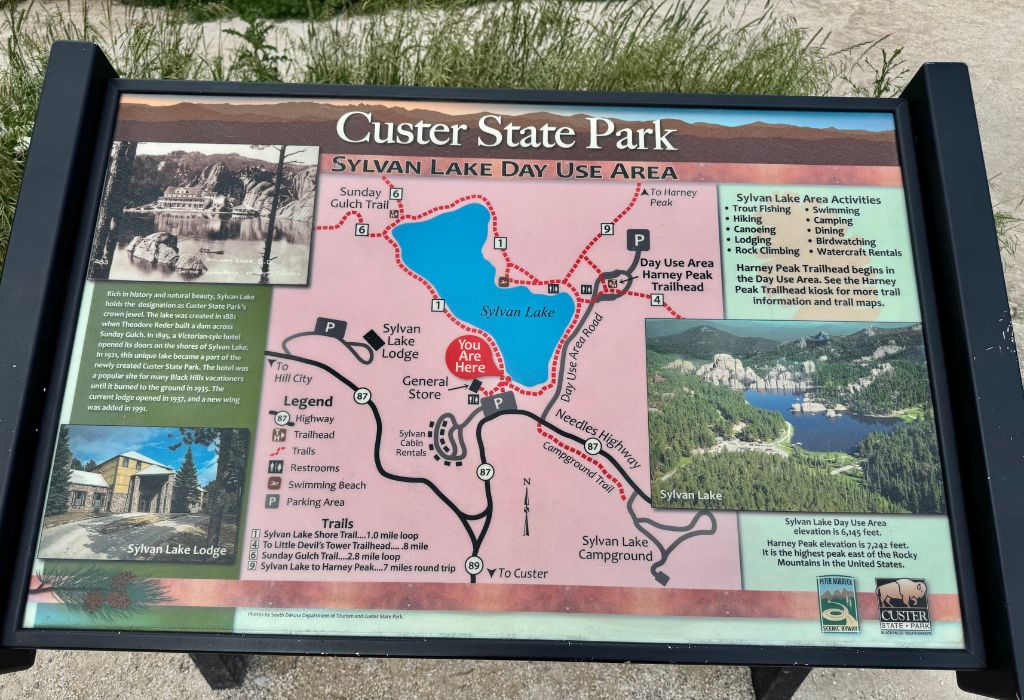
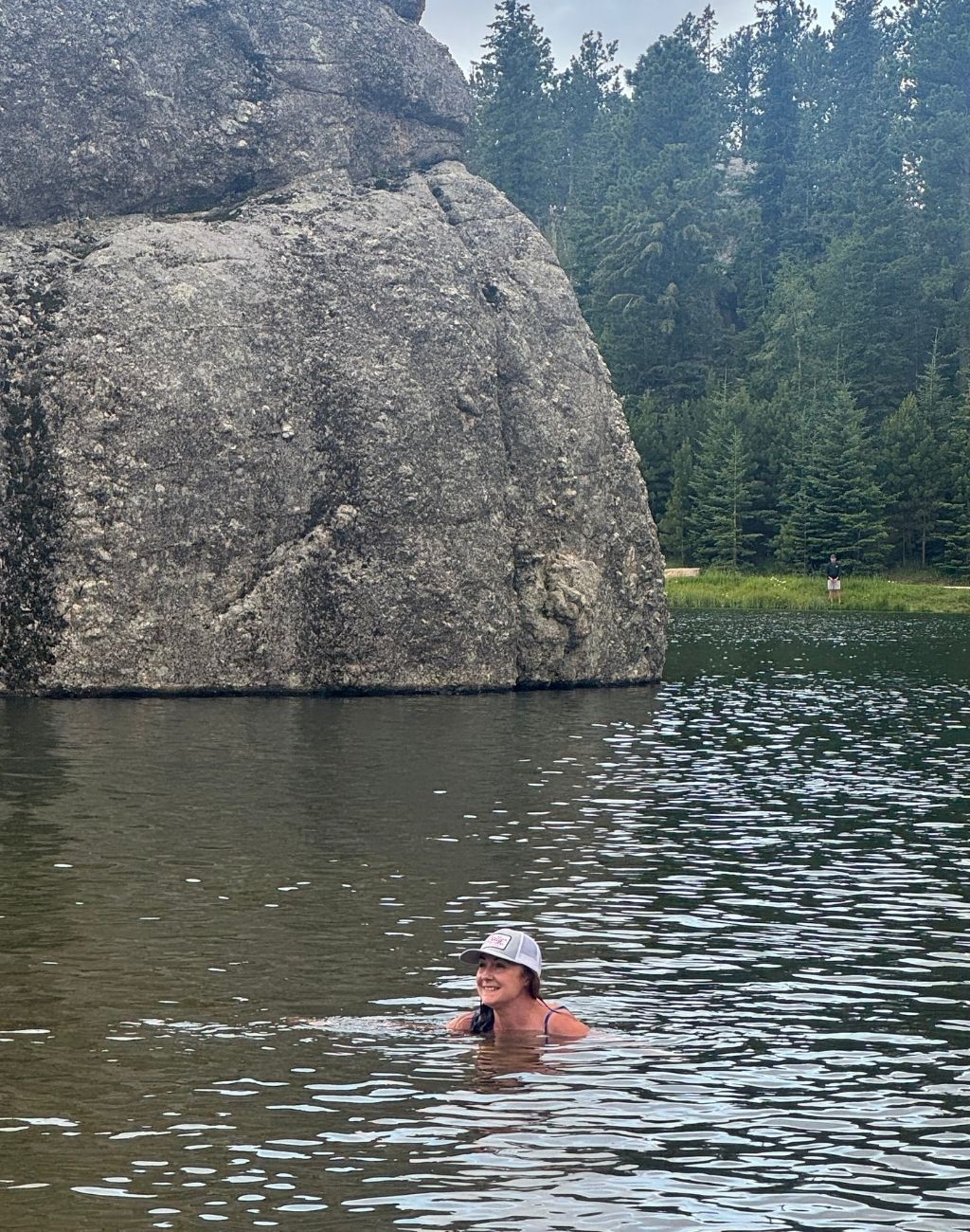
I highly recommend Sylvan Lake, a tranquil mountain gem surrounded by giant boulders and pine trees. We stopped here to do the easy one-mile loop trail around the lake and go for a swim – you can also go kayaking or stand up paddle boarding. It’s a beautiful place to soak in the stunning Black Hills scenery before continuing your journey.
If you haven’t been already, you could stop at the Crazy Horse Memorial on the way or on the return leg if doing the loop in the opposite direction.
Alternatively, you could drive the Iron Mountain Road, the Peter Norbeck Scenic Byway or the Wildlife Loop Road, an 18-mile scenic drive perfect for spotting bison, pronghorn, elk, and prairie dogs.
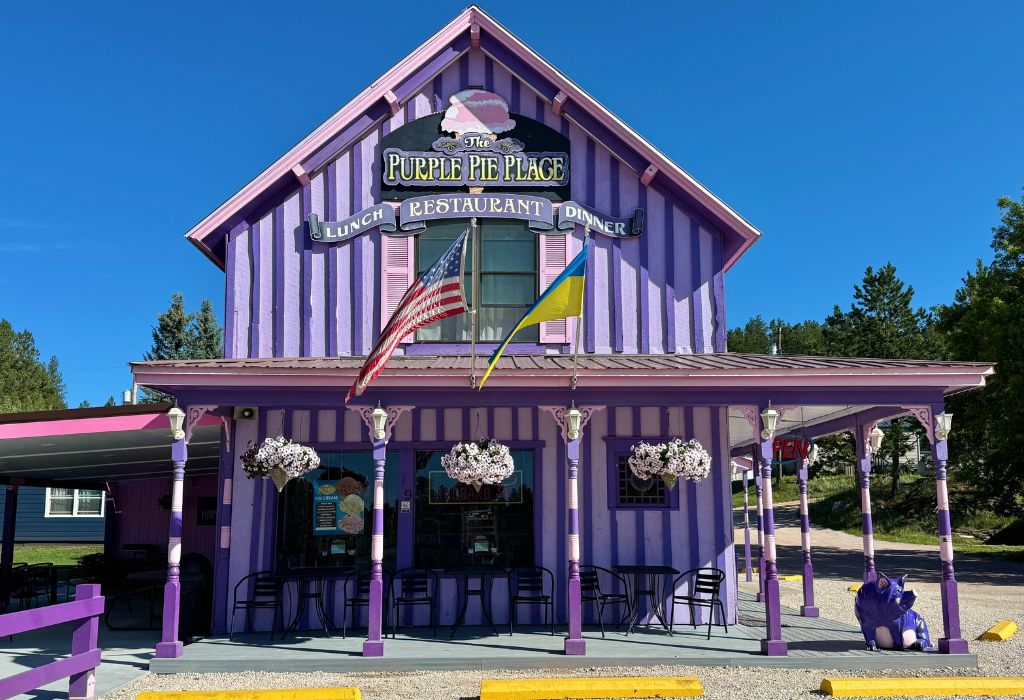
On the way back, we picked up a piece of pie at the Purple Pie Place then in the evening, we had our final meal in Custer at Calamity Jane’s Kitchen, (which was ok, but not out of this world – I’d check out The Custer Wolf or Skogen Kitchen next time) followed by a drink at the Gold Pan Saloon.
Day 17: Departure from Rapid City
As you know, after leaving Custer we continued on to Boulder, Colorado, but if you’re following this itinerary, I’d recommend wrapping up your trip here.
After an incredible couple of weeks exploring the rugged landscapes, wild frontiers, and historic towns of Montana, Wyoming, and South Dakota, it’s the perfect place to say goodbye to the Wild West.
If you don’t have an early flight, you could spend your final day exploring Rapid City or if your schedule allows, it might even be worth adding an extra night there.
If you still haven’t had quite enough of the Wild West, consider booking the Chuckwagon Dinner Show in nearby Fort Hayes. Expect hearty cowboy grub around a campfire, along with lively music, storytelling, and demonstrations of traditional cowboy skills. It’s a fun and immersive taste of frontier life – and a memorable way to round off the trip.
Useful Wild West & USA Road Trips Tips
- Most nationalities need to apply for the visa waiver programme, ESTA – don’t forget to apply before you go, as they won’t let you in otherwise. Once approved, it lasts for 2 years. Just ensure that you are covered for your entire stay and of course, check the passport requirements for your nationality.
- The legal drinking age in the US is 21, and you’ll often be asked for ID for carry it with you.
- Remember that price you see isn’t usually the price you pay – they usually add tax on after!
- Remember tipping is customary in America – usually 18 – 25% in restaurants.
- Paying for meals when you’re in a group can be a bit of a pain, as they put tax on after. To make it easier, we tended to have one person pay the bill. Then we used Splitwise to divide it up. We each paid for what we ate and then split the tax and tip equally.
- Travel insurance is super important anyway, but especially in the US where medical bills are outrageously expensive. Check out World Nomads travel insurance.
Packing Tips & What to Wear on a Wild West Road Trip
Clothing
In general, this was a pretty casual trip, but we did have a few opportunities to dress up in the evenings (mostly in Whitefish, Jackson and Deadwood) – the other places were a little more casual.
July was generally warm during the day, although I did need a light jacket/fleece in some places.
During the day I mostly wore shorts, check shirts, tank tops, and leggings. On my feet I switched between trainers and cowboy boots depending on how much walking I was doing.
Some evenings I just wore the same outfit as during the day, but other nights I dressed up a bit – usually dresses with cowboy boots or jeans with a nice top.
I went full-on Beth Dutton for this trip, well, that’s what I was aiming for. There are plenty of people walking around in cowboy hats, so go for it!
Shoes
For shoes, I brought one pair of trainers, two pairs of cowboy boots (one for dancing, one for every day – slightly excessive), my Birkenstocks and a pair of water shoes. If you’re planning to do a lot of hiking, you may want to bring proper hiking boots.
And if you want a genuine cowboy hat or boots, you’ll find plenty of great shops along this route. I bought 4 (yes, 4) cowboy hats!
Other Items
A reusable water bottle is essential, especially during the summer when temperatures can get very warm and you’ll likely be spending a lot of time outdoors. Sunscreen, a hat, and sunglasses are also musts, as many viewpoints and trails have very little shade.
If you plan on hiking, bring a small daypack for snacks, water, and layers. Even in July, mountain weather can change quickly in places like Grand Teton National Park and Yellowstone National Park, so a light rain jacket or extra layer is always a good idea.
You’ll definitely want a power bank or car charger, since your phone will be working hard for photos, navigation, and park maps throughout the trip. If you’re coming from outside the U.S., don’t forget your adapter.
A cooler bag is also a lifesaver – perfect for drinks, picnic supplies, or road-trip snacks on long driving days.
Finally, don’t forget binoculars if you have them. They’re fantastic for spotting wildlife such as bison, elk, and bears in Yellowstone National Park and the surrounding area and if you’re bringing a camera, one with a good zoom will be beneficial for wildlife photos.
Final Thoughts
This trip ended up being one of my favourite road trips in the U.S. – a mix of jaw-dropping landscapes, wildlife encounters, quirky Western towns, and a good amount of cowboy culture.
From the mountains of Glacier National Park to the wide-open landscapes of Badlands National Park, with stops in places like Cody, Jackson, and Deadwood, it felt like stepping straight into the American frontier.
I hope this post helps you build your own Wild West itinerary through Montana, Wyoming and South Dakota. If you have any more suggestions, write them in the comments below.
Other USA posts you might enjoy…
- The Ultimate Deep South USA Road Trip Itinerary
- An Epic (and Affordable) Two-Week Hawaii Itinerary: Oahu, Maui & the Big Island
- An Epic 2.5 Week California Road Trip Itinerary (with Las Vegas)
- My 2.5-Week California & Las Vegas Budget
- 50 Great Songs for Your American Road Trip Playlist
- The Day I Met Jedward, Went to the Playboy Mansion & Saw Madonna’s Bush
- 14 Cool Things To Do in San Francisco, California
Pin This Post For Later