
35 Awesome Things to Do in Nairobi, Kenya

Last updated on March 7th, 2026 at 03:11 pm
The first time I visited Nairobi, I didn’t like it much.
I’d spent the previous months in Livingstone, Zambia, then in the relatively quiet town of Bagamoyo in Tanzania, then climbing Kilimanjaro. So when I arrived in Nairobi, I felt that it was too hectic, big and intimidating.
But now, I love Nairobi and I think Kenya is one of the best countries to visit in Africa, especially for your first trip to the continent. Nairobi feels like a second home to me. Isn’t it funny how things change?
I still hate the traffic, but once you spend a bit of time in the city, you’ll realise just how cool it is and how many great things there are to do in Nairobi. Kenya’s capital is an exciting city, with lots of art and culture, fantastic social initiatives and a great nightlife scene.
Plus it has a national park on its doorstep, how many other cities can claim that? So with this list, I aim to give you some ideas for the best things to do in Nairobi!
Please Note: Some of the links in this post are affiliate links, which will earn me a small commission at no extra cost to you. Affiliate sales help with the running costs of this site, so thank you for your support!
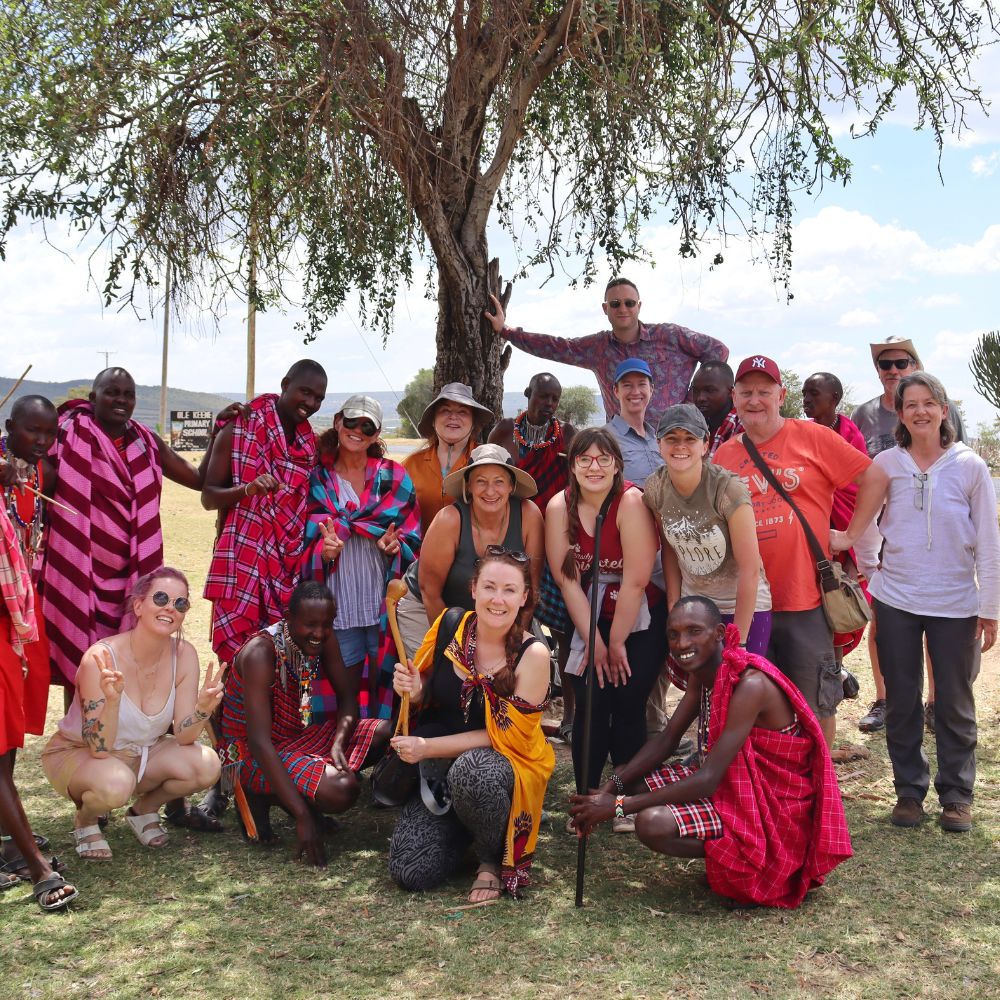
Want to visit Kenya? Join me on one of my small-group Africa adventures!
VIEW UPCOMING TOURS
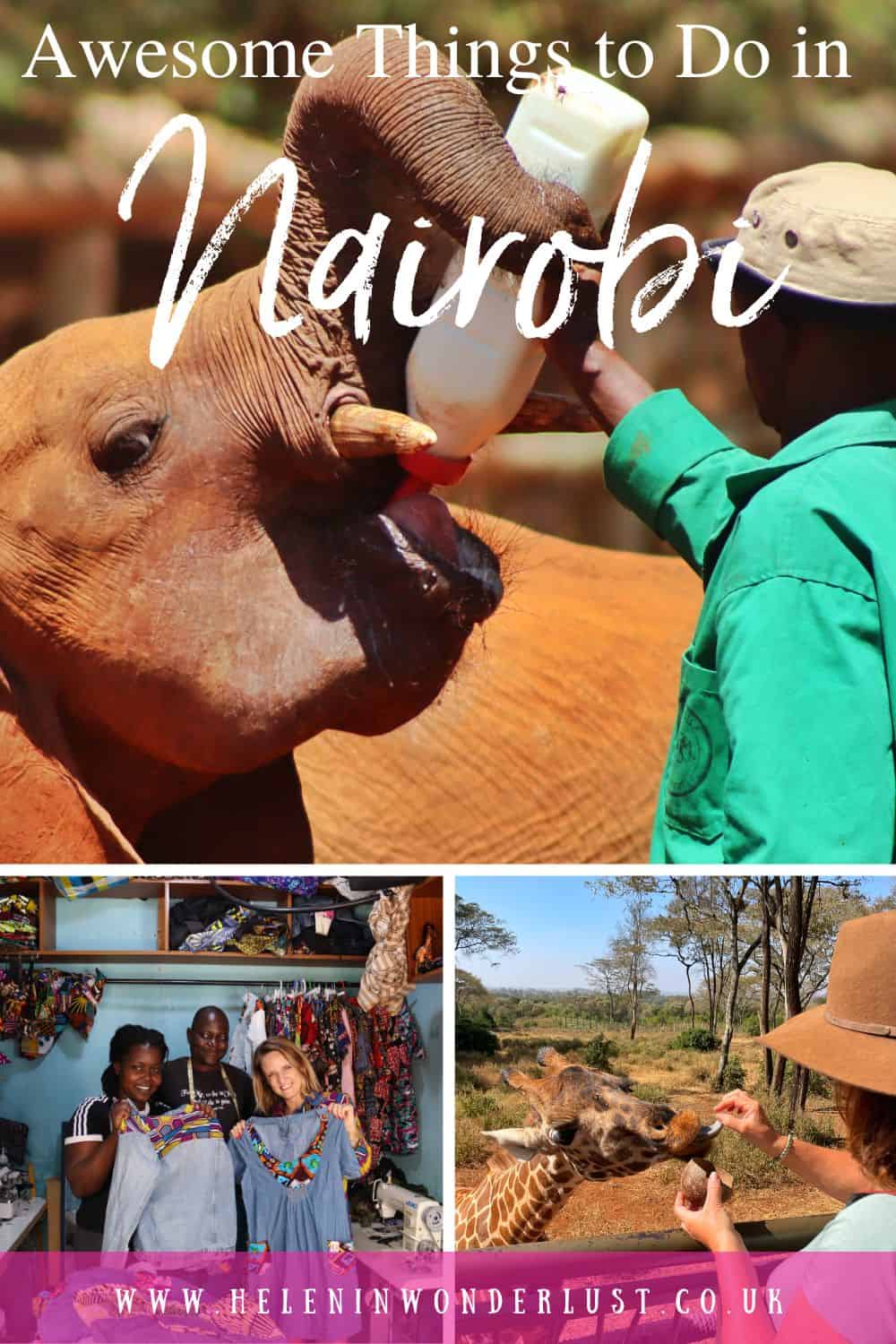
Awesome Things to Do in Nairobi, Kenya
1. Go On a City Centre Tour with Nai Nami
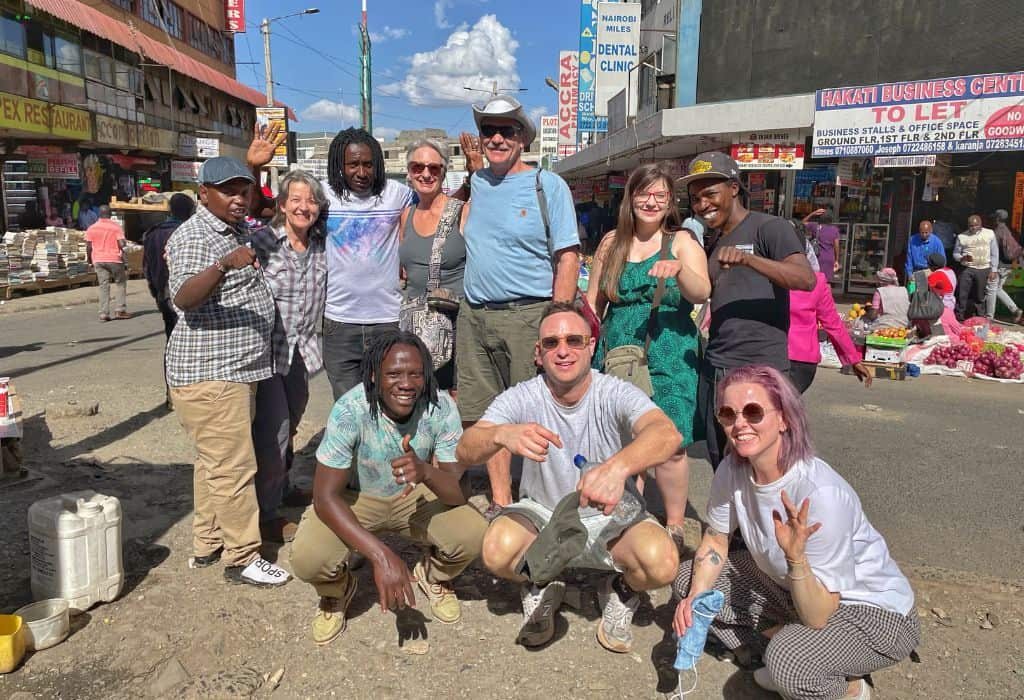
One of my favourite things to do in Nairobi is to go on a city tour with Nai Nami – Mrembe, Donga, Cheddaz, Kissmart, Typhoon, Tsunami & Quick.
They’re all former street boys, each with their own interesting story to tell about their lives on the streets of Nairobi. This is different from a normal Nairobi city tour for the fact that the tour is more about them individually, rather than the history of the city.
They walk you through the streets of downtown Nairobi, down streets where tourists probably wouldn’t (or shouldn’t) go alone, due to it being a notoriously dangerous part of the city. But these are their streets and you always feel like they have you in their care.
As you walk, they’ll tell you their stories which are truly inspiring. In their words “This encounter is a unique opportunity to get inspired by people from a different world”.
MY TIP: Wear comfy shoes, you’ll do a lot of walking. But don’t wear gold/expensive jewellery and don’t take your big cameras as you’re not allowed to use them in the city centre.
2. See the Baby Elephants at the Nairobi Elephant Orphanage
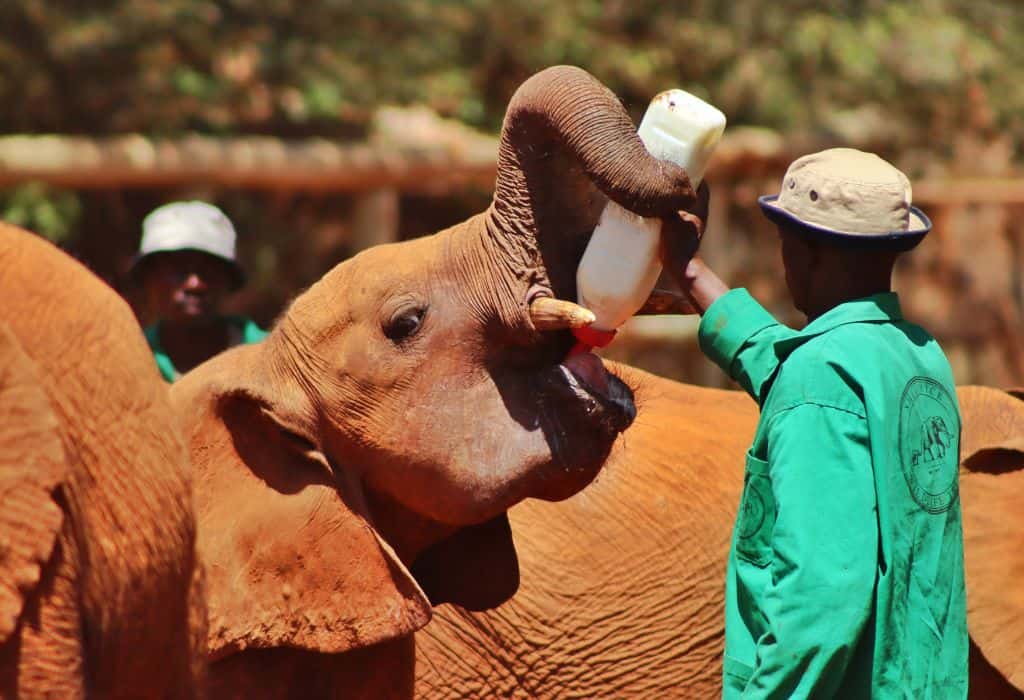
One of my favourite places to visit in Nairobi is the Sheldrick Wildlife Trust, (formerly the David Sheldrick Wildlife Trust) a rehabilitation centre for abandoned or orphaned baby elephants (and other animals, occasionally rhinos) who are too young to survive in the wild on their own.
The elephant orphanage in Nairobi was started by the late Dame Daphne Sheldrick in memory of her late husband, David, a legendary ranger of Tsavo National Park. The elephants are cared for and then released back into the wild when they are old enough.
Visitors are allowed in at 11 a.m. each day for approximately 1 hour to see the elephants and listen to a talk by one of the keepers. Sometimes the baby elephants come up to say hello and I’ve had my foot trodden on many times! You can adopt a baby elephant for as little as $50 a year.
You now have to book to visit. Bookings open 3 months in advance via the website and fill up quickly, so plan ahead. It costs $20 to visit plus the Nairobi National Park fees ($80), so you may as well combine with a Nairobi National Park safari, as you’re paying to get in anyway!
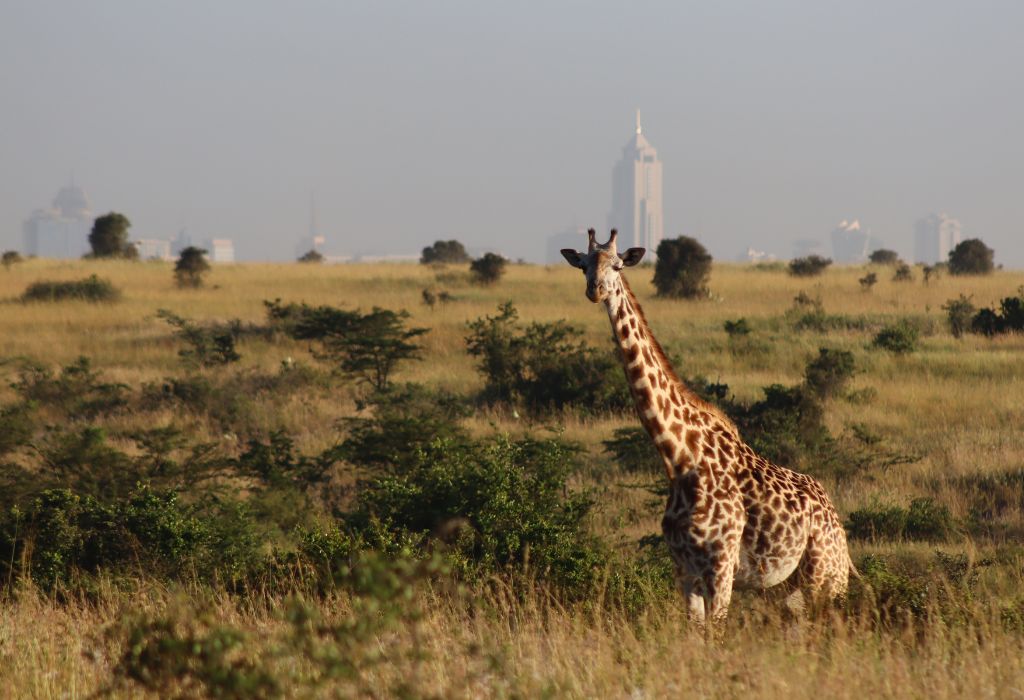
3. Go on Safari in Nairobi National Park
Just outside the city, lies Nairobi National Park, one of the coolest things to do in Nairobi and one of the best places in Kenya to see the endangered black rhino, plus a ton of other animals including lions and giraffes. Plus, you get the Nairobi skyline as a backdrop!
If you’re in Nairobi for a short time this is an awesome way to go on safari without having to travel too far. Plus, you get the city of Nairobi as a backdrop. Even if you only ave half a day and you will still likely see a lot.
You can find and book Nairobi National Park safaris here.
4. Take Part in a Kenyan Cooking Class
Learning to make local Kenyan and East Africa food is a great way to make local friends and learn about Kenyan culture.
There are several cooking classes on offer in the city and many of those include a visit to the local market where you will do some shopping, visit a local’s home and see what everyday life in Kenya is like.
5. Take a Kibera Township Tour
People are often torn about going on Kibera slum tours, but I think it’s a personal choice but I lean towards the pro side – if done with respect for the local people and the right organisation. I think Kibera tours can be good, as they are usually set up by people who have lived in Kibera their whole lives, providing employment and income for some of the residents.
Plus they can show the positive sides of Kibera. Many tourists to Kenya won’t have been exposed to places like Kibera before, but going on a tour will likely change your opinions of people who live in slums/townships – which I think is a good thing.
These tours can also highlight issues to people who could potentially help create change. And if you buy from shops when you’re in Kibera, you’re supporting local businesses too.
On the other hand, these tours won’t benefit everyone and if not done with respect and care, they can leave some residents feeling angry, degraded, and exploited.
If you go, listen, observe, and interact, but don’t be an insensitive camera-wielding asshole.
Whether you take a tour is up to you, but if you do, research the company/guide you go with and remember that a lot of the responsibility lies on you. Don’t always believe the reviews.
My friends went on a tour that had great reviews on Airbnb, but the guy basically pressured them into buying things, lied about where he lived, and lied about his sick wife staying with her aunt after complications from a c-section.
He had shown them a picture of the wife and they later spotted his wife and the baby and his real house on the tour (it was next door to his ‘pretend’ house). She tried to hide but it was too late. They left feeling a bit weird about the whole thing.
But I went on an amazing Kibera tour with OAC Kenya, which was thoughtfully run and respectful throughout. I came away with a really positive impression of Kibera – it felt vibrant, creative, and full of community spirit. You can also find another highly rated Kibera tour here.
On a recent Nairobi trip, I went with my friends at Nai Nami to the Mathare slum to visit the Roots Institute Centre that they support, and it was an incredible and inspiring experience!
For more reading on the ethics of slum/township tourism in Kenya, click here, here and here and then make your own mind up.
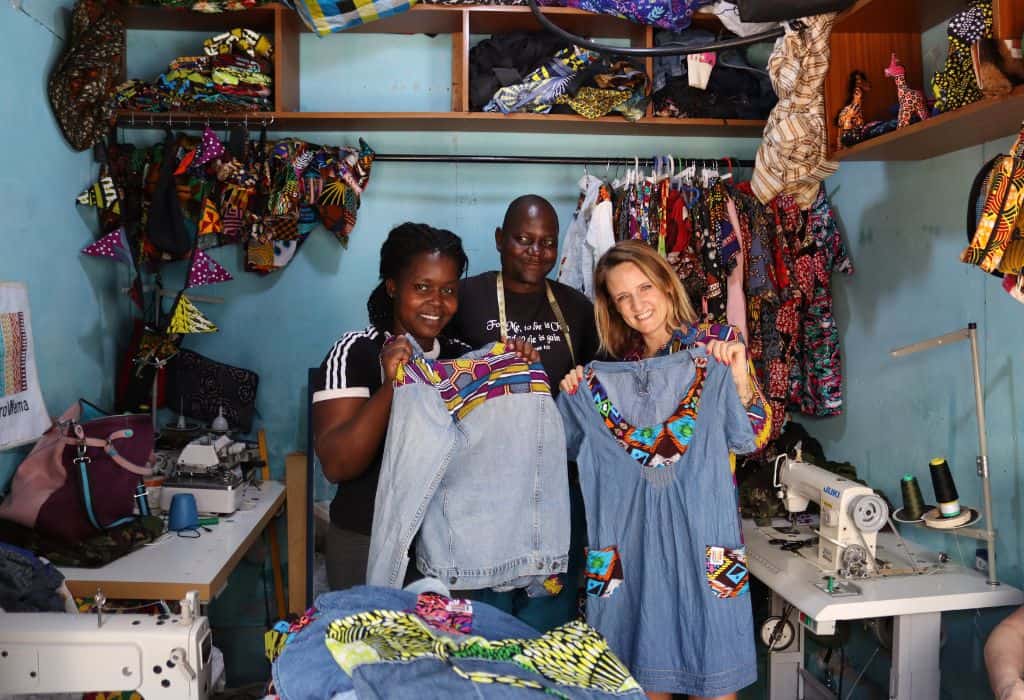
6. Buy Beautiful Upcycled Clothes by AfroWema
Whilst you’re around Kibera, I would highly recommend you visit AfroWema. They work with local artisans to make beautiful jewellery and upcycle clothing! Their motto is ‘Save the Planet with Style’.
I am in love with their incredible denim jackets! They don’t have a physical shop yet, but you can get in touch with them via Facebook or Instagram. Most of their artisans work in and around Toi Market, the largest second-hand clothing market in Kenya (you can find some great bargains there too). The ultimate thrift shop.
7. Take a Street Art Tour with the Sun Valley Art Collective
Nairobi’s streets are alive with colour, stories, and creativity, and one of the best ways to see it is on a street art tour. If you’re interested in discovering murals, hidden pieces, and the stories behind them, the Sun Valley Art Collective offers highly rated tours that guide you through the city’s vibrant street art scene. It’s a fantastic way to experience Nairobi’s contemporary culture from a local perspective.
8. Take a Historical Nairobi City Tour
You may also want to take a more historical/political tour of the city itself, through the CBD and to some of the important historical landmarks in the city, like the parliament buildings, the Sarova Stanley, KICC and Uhuru Park.
MY TIP: Be careful about taking photographs – even on your phone. You are not allowed to take pictures of government buildings or in the CBD and the police have started fining people who do.
9. Stop for a Coffee at the Thorn Tree Cafe (of Lonely Planet fame)
At the bottom of the Savova Stanley Hotel, you will find the original Thorn Tree Cafe, which inspired the name for Lonely’s Planet’s Thorn Tree Forum. In the middle of the cafe, there is a huge acacia tree where travellers can pin notices for each other – pretty romantic, hey?
Hence why the name inspired the Lonely planet online forum. Grab yourselves a cup of tea and a slice of cake and whilst you are there, you can also take a little tour of this historic hotel which has hosted politicians, movie stars and visiting royals (including the Queen) since opening in 1902.
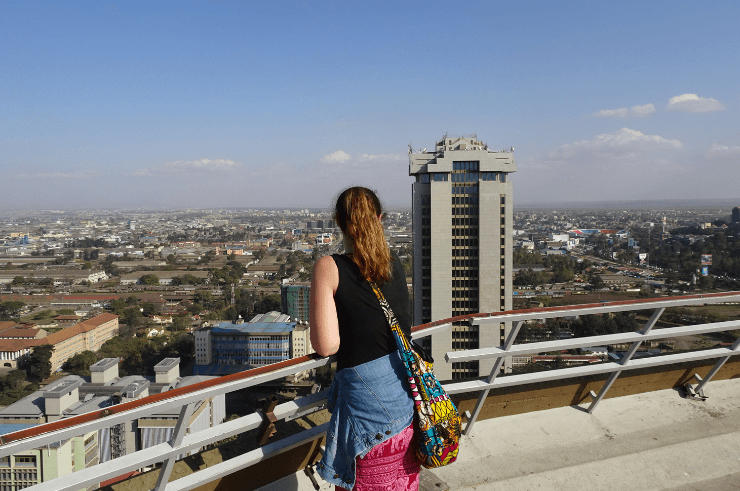
10. Take in the Views from the Top of the Kenyatta International Convention Centre
The Kenyatta International Convention Centre (KICC) is the 6th tallest building in Kenya, located in the CBD. For a small fee, you can take a lift up to the top of the tower for one of the best viewpoints in the city. It’s a popular spot for tourists, as well as couples on dates as it’s also a nice place to watch the sunset in the city.
11. Picnic in Nairobi’s Uhuru Park
Uhuru Park lies right in the centre of town and is a popular hangout spot for Nairobians, especially on the weekends. Uhuru means ‘freedom’ in Swahili. I especially like it here on Sundays, when there are lots of families about, ice cream vans and fairground rides, creating a nice and vibrant atmosphere. Take a picnic to get the most out of the experience.
MY TIP: Avoid Uhuru Park after dark or during any kind of political rallies when it is not safe to visit and stick to public areas.
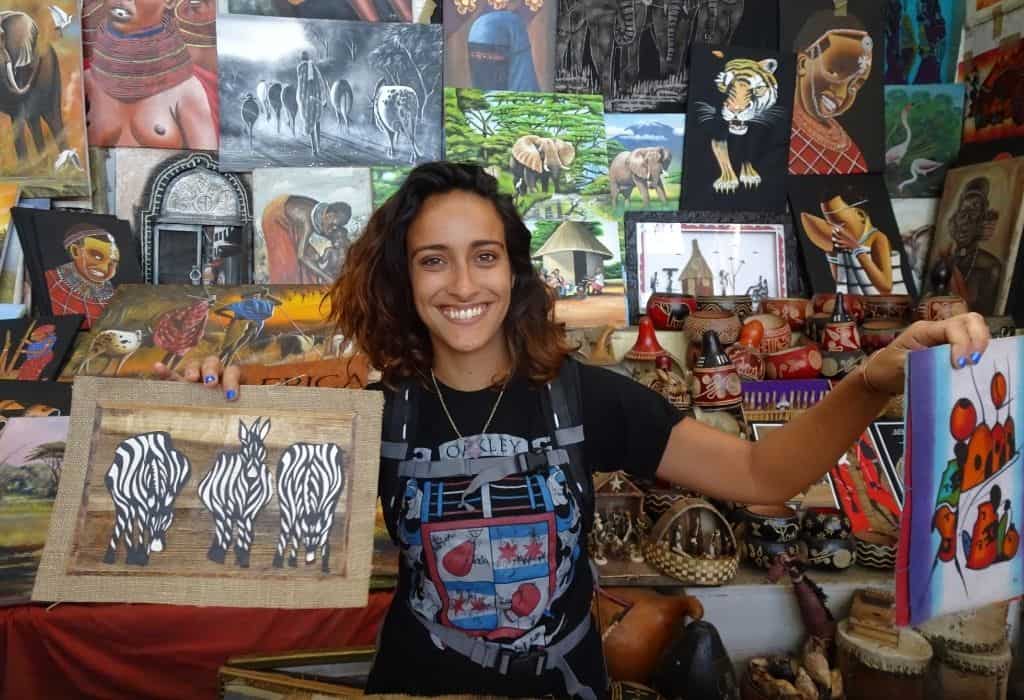
12. Shop ‘Til You Drop at the Village Market
Nairobi has no shortage of malls and one of the best is the pretty Village Market in Gigiri. You can literally buy anything you need here, from designer clothes to Kenyan souvenirs and there are tons of restaurants and cafes for when you get tired of shopping.
My Tip: The other malls I tend to go to are The Hub in Karen and Galleria in Langata. Good places to go to the supermarket, pharmacy, ATM and pick up SIM cards.
13. Get Away From It All in Karura Forest
Near the CBD lies Karura Forest, a great place to get away from the hustle and bustle of Nairobi. There are plenty of things to do there, whether you just want to take in the serene environment or do something more active like walking, mountain biking or horse riding.
Visitors can get involved with tree planting and there’s also a pretty waterfall you can go and see. There are a few picnic sites so you could take one with you to make the most of your visit (just watch out for the monkeys) or eat at one of my recommended restaurants nearby such as Amaica or About Thyme.
14. Go Cheese Tasting at Brown’s Cheese Co.
Did I have you at cheese? To me, there are few things that sound better than going cheese tasting at Brown’s Food Co.
An afternoon at the farm including a cheese tasting, factory tour, and 3-course lunch (with 2 glasses of wine or beer) costs 4,500 KES (around $35). For kids, it’s 1,000 KES for over 5’s and 2,000 KES for over 12’s which includes pizza and ice cream, as well as lunch.
You can also try milking a cow too! If you don’t want to make the journey out to the farm, you can also order cheese platters! Book ahead!
15. Go Shopping at Spinner’s Web
Spinner’s Web is known as Kenya’s biggest arts and craft shop where you can all sorts of beautiful, locally made things, including handicrafts, pottery, home decor, jewelry, furniture, lighting, and accessories.
The showroom is currently open 9.30am – 6pm (but you can check here to be sure).
16. Take a Tour of a Coffee Estate
Kenya is one of the world’s leading coffee producers, so when you’re in the area, why not visit a coffee farm?
There are a couple of different coffee estates near Nairobi – the Fairview Coffee Estate and Karunguru Coffee Estate, both of which are Kenyan-owned, with Fairview around 30 minutes from the city centre, and Karunguru around 45 minutes away.
You can find coffee tours here to learn about the coffee-making process and enjoy some delicious coffee!
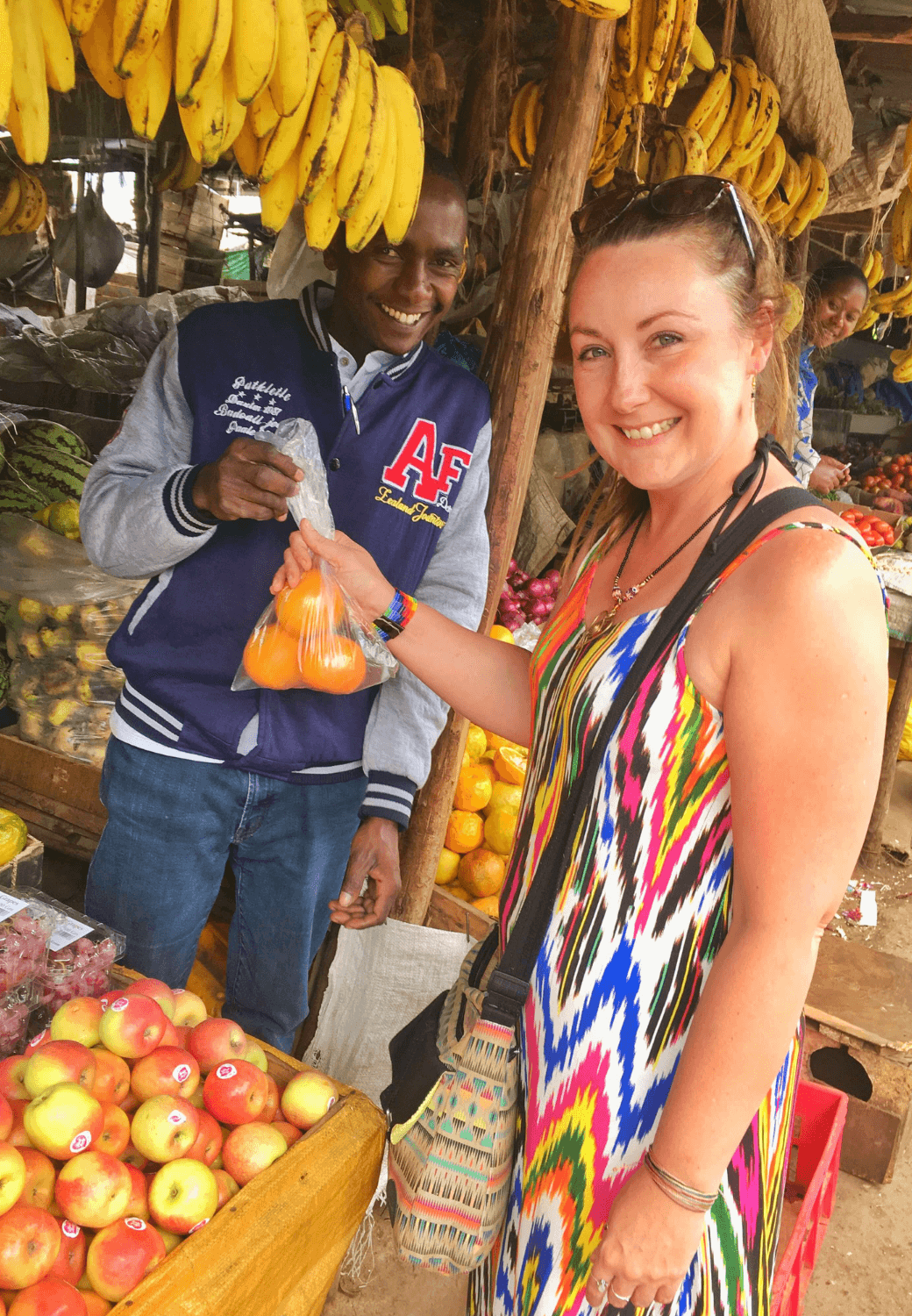
17. Buy Your Fruit n’ Veg at City Park Hawkers
Up near Westlands and Parklands, you’ll find City Park Market (or City Park Hawkers). There’s nothing majorly special about this market, lots of fruit and veg etc, but it is a great place to just get a feel for everyday life in Nairobi.
Around the back of the stalls, there are some small local restaurants serving nyama choma (roasted meat) with ugali (maize porridge, the staple food of Kenya) and kachumbari (onion/tomato salad/chilli salad).
MY TIP: Please ask before taking any photos of the stalls.
18. Learn About the History of Kenya at the National Museum
Visit Nairobi’s National Museum where you can learn about Kenya’s rich heritage including culture, nature, history and art.
As well as the museum, here you will find the Nairobi Snake Park, art galleries, shops, botanical gardens, and a nature trail.
19. Shop for Beautiful Souvenirs at Wasp & Sprout
Wasp & Sprout is an amazing fair-trade initiative selling all kinds of wonderful things, like furniture, homeware, crafts, and beautiful African fabric cushions!
My particular favourites are the items by Kangarui. I’m obsessed with their artwork! They also have a lovely cafe selling breakfast, brunch, sandwiches, and salads, as well as some nice cocktails, coffees, soft drinks, and desserts.
20. Visit a Tea Farm
Kenyans love their tea and Kenya is also one of the biggest tea-producing nations in the world.
One of the best tea farms near Nairobi, is the Kiambethu Farm near Limuru town. Arriving at 11am, you’ll be offered a cup of tea (or coffee) and learn about the tea-making process and history of the farm, before taking a walk through the indigenous forest where you may see Colobus monkeys.
Afterward, you’ll have a 3-course buffet lunch prepared with food from the garden, whilst enjoying the incredible views. The cost is 4,200 KES per person, and children under 12 are half price.
Also nearby is the Kawamwaki Farm, where you can go horse riding! You can find more tea farm tours here.
21. Support a Social Enterprise at Kazuri Beads
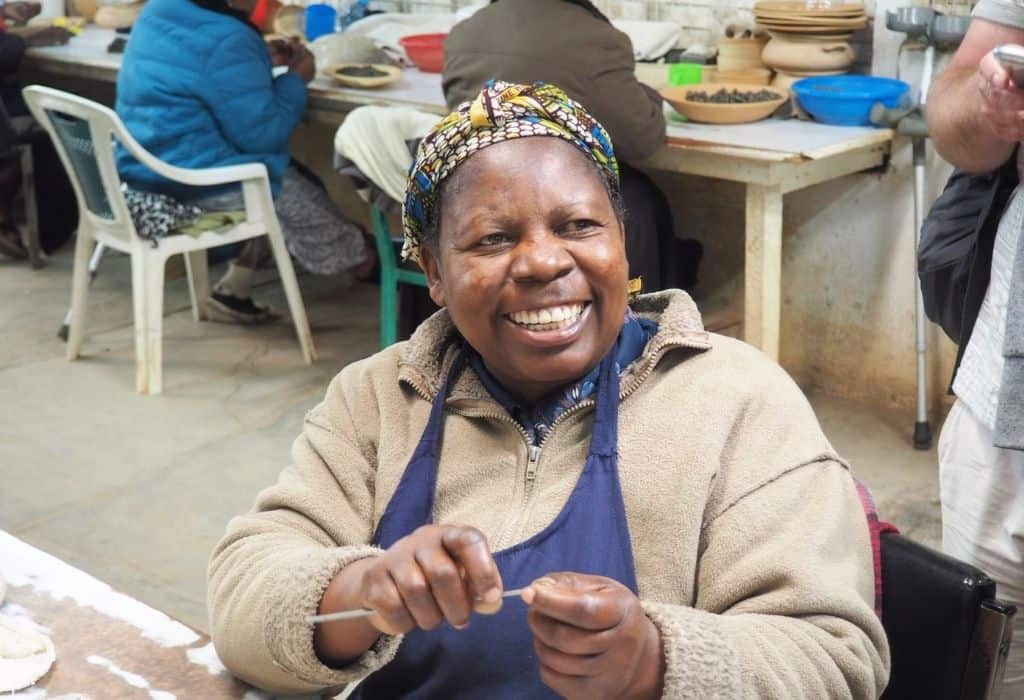
Kazuri Beads is a social enterprise, employing mostly women from disadvantaged backgrounds. They mostly make jewellery and pottery and sell them to tourists and when you visit you can take a tour of the factory and meet the women who work there.
22. Stay at the Luxurious Giraffe Manor
The ultimate ‘things to do in Nairobi’ bucket list item surely has to be a stay at the luxurious Giraffe Manor. This iconic hotel is home to endangered Rothschild’s giraffes, who freely wander the grounds – and might even poke their heads into your breakfast window!
It’s a magical, once-in-a-lifetime experience… but with prices starting at around $1,400 per adult per night, it’s definitely on the splurge side.
My friend Brenna wrote an awesome and honest post about her stay at Giraffe Manor if you want to know what it’s really like and, most importantly if it’s worth the cost.
23. Feed a Giraffe at the Nairobi Giraffe Centre
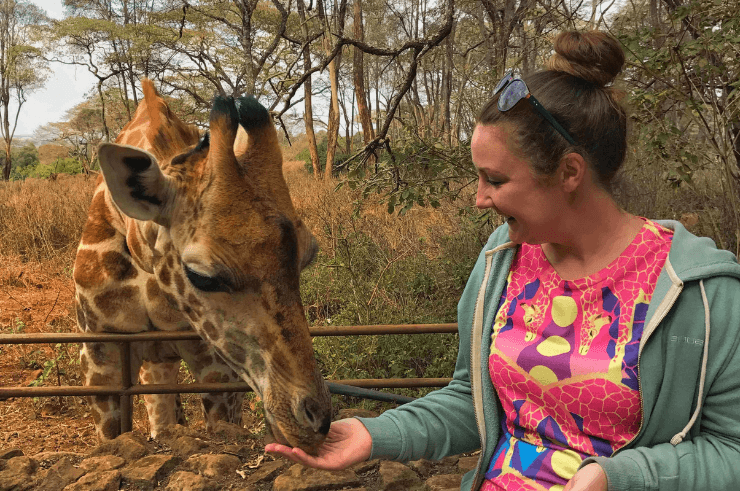
If your budget doesn’t stretch to a stay at Giraffe Manor, do not worry! One of the best places to visit in Nairobi is the Nairobi Giraffe Centre, which is just next door to Giraffe Manor and is part of the same sanctuary.
Visitors can spend time with the giraffes and they also give really good, informative talks about the species too. You can stay as long as you like and it only costs $15… absolute bargain.
It’s open from 9am – 5pm daily and there’s no need to book in advance.
24. Visit a Farmers Market
Nairobi has some great farmer’s markets that you can visit!
On Saturdays, the KSPCA (Kenyan Society for the Protection & Care for Animals) holds a farmers market in Karen which is fun for all the family. There are stalls selling locally-made goods (jewellery, honey, jams, cakes etc) as well as bars, food stalls, and a kids play area and entertainer.
Whilst you’re there you can also see some of the cats and dogsd up for adoption.
There’s also The Organic Farmers Market which takes place from 9am – 4pm on Saturdays at 16 Marula Lane, Karen and then on Sundays at Kilimani Primary School. They have all sorts of cool things for sale such as food, essential oils, granola, spices, nut butter, and fresh produce.
25. Learn All About the ‘Out of Africa’ Writer at the Karen Blixen Museum
If you’ve ever read or watched ‘Out of Africa’ (as I did whilst writing this post) you’ll want to visit the Karen Blixen Museum. The museum at ‘the foot of the Ngong Hills’ is the former home of Danish writer and coffee farmer, Karen Blixen.
While here you can take tours of the museum, learn about Kenya’s colonial past, and get a cup of coffee or some food at the Karen Blixen Coffee Garden. I had a really good parmigiana here – it was really delicious! I’d go back just for that, but the museum was good too!
26. Go Hiking in the Ngong Hills
Going hiking in the Ngongo Hills is one of the most outdoorsy and active things to do in Nairobi. Situated a little way out of the city, near Ngong town, the Ngong Hills are a series of 7 hills with fantastic views of the surrounding area.
If you want to walk the whole way, it takes between 4 – 6 hours, depending on how fast you go. There’s also a nice picnic site at the top where you can relax after all that exercise.
Entry fees are very reasonable, at 696 KES (around $5) to enter. Just be aware that all payments are cashless, meaning you need to pay by card or Mpesa.
If you’re feeling extra adventurous, you can also go zip lining in the Ngong Hills with Kompass. they also have a restaurant, as well as other activities such as archery, zip lining, and paintballing.
MY TIP: You can’t bring plastic bottles on the hike, so make sure you have a reusable bottle.
27. Visit Langata Links Shops
A great place to visit on your trip to Nairobi is Langata Link Shops, which sells lots of different items from local producers.
This includes some of my favourite kenyan brands, Kangarui, Natural Lamu, Lulu Kitolo Studio, and Ocean Sole. Ocean Sole is a cool social enterprise that recycles old flip-flops that wash up on the beaches of Kenya and make them into cool objects – both art and more functional things!
This is also where you’ll find the Tin Roof Cafe Langata (there’s also one in Karen) which serves delicious food.
28. Buy Beautiful Souvenirs at Utamaduni – Artisans of Africa
Located in Langata, Utamaduni has an amazing array of African crafts.
They sell all kinds of things from African-inspired fashion and jewellery, to homeware and fabrics. Including my favourite Kangarui cushions! There’s also a restaurant & garden where you can take a well-earned rest from all that shopping.
29. Visit Bomas of Kenya to Learn About Kenyan Culture
If you’re looking for one of the best places in Nairobi to learn about Kenyan culture and history, take a visit to Bomas of Kenya. The centre was set up to educate people about the different ethnic groups found in Kenya and to help preserve and celebrate the Kenyan culture.
Visitors can watch music and dance performances and see the many exhibits. There are a number of tours that visit Bomas of Kenya, along with the Giraffe Centre, Elephant Orphanage and sometimes Nairobi National Park.
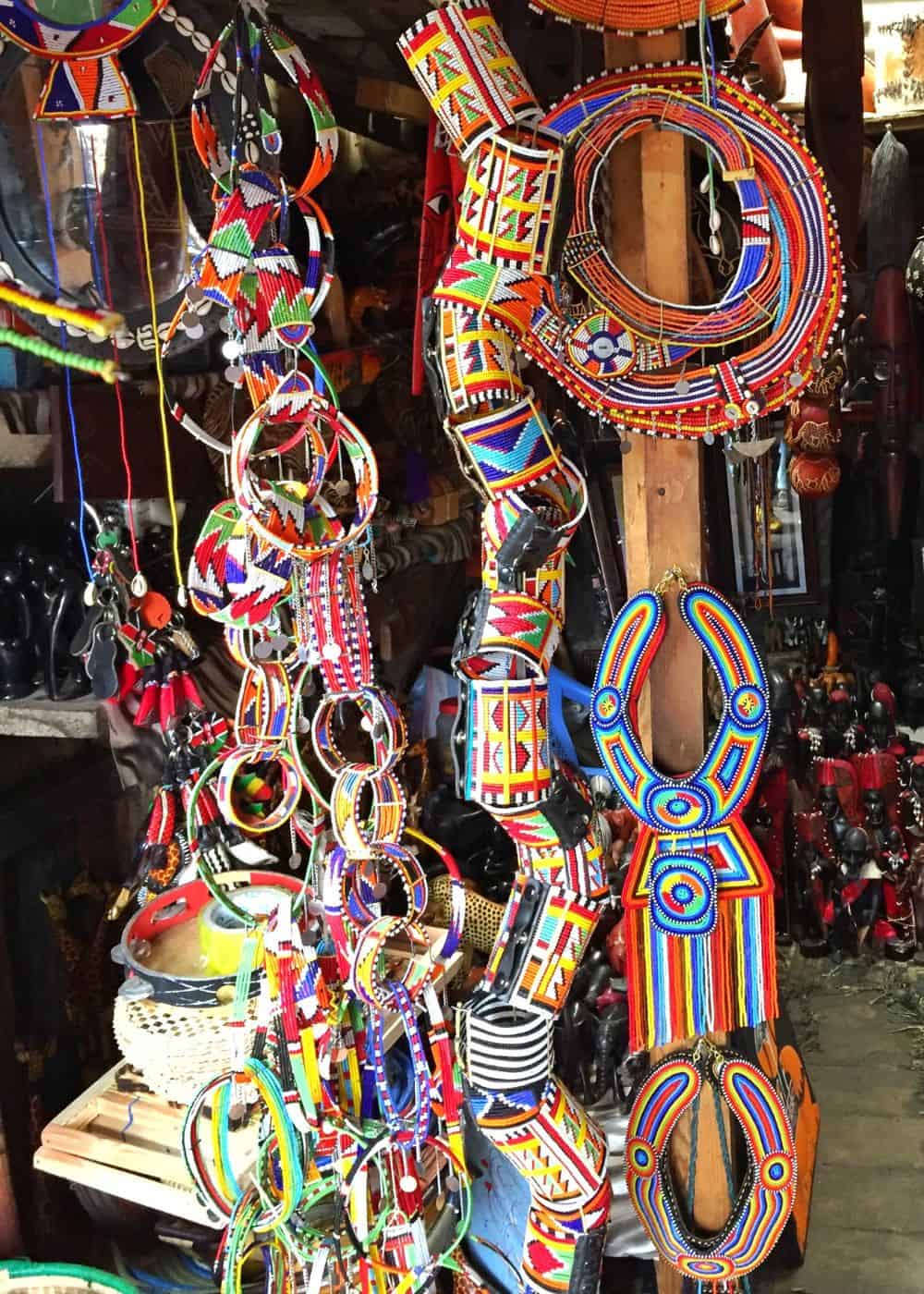
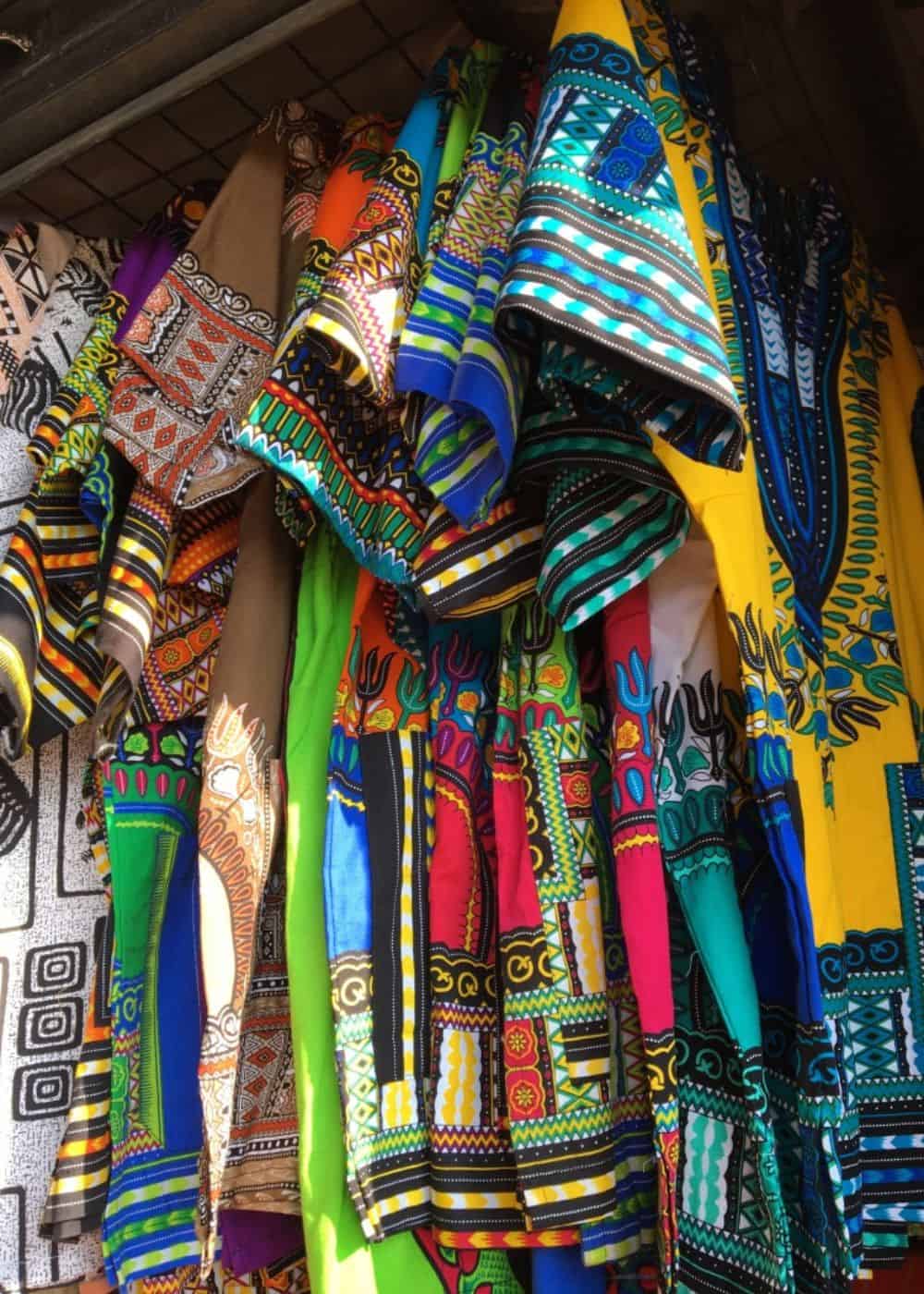
30. Barter Hard at the Maasai Markets
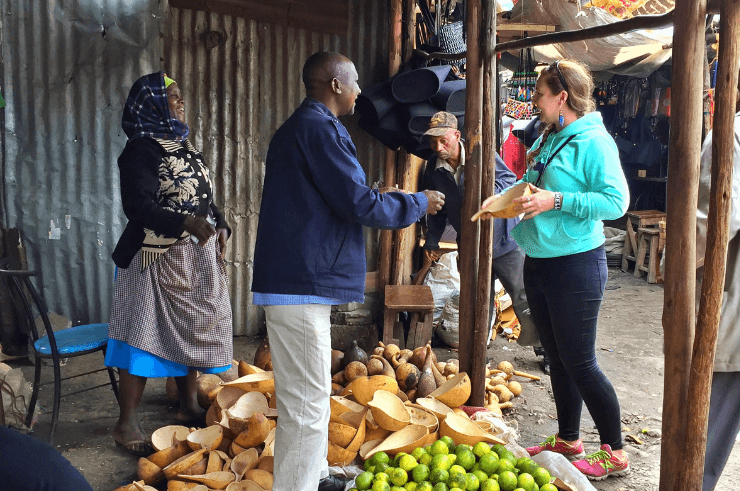
One of my favourite things to do is go to the colourful Maasai markets to pick up some souvenirs including jewellery, wood carvings and clothing. Each day the Maasai Market takes place in a different spot around the city between 8 am – 6pm.
- Monday: No market.
- Tuesday: Prestige Plaza on Ngong Road.
- Wednesday: Capital Centre on Mombasa Road.
- Thursday: Junction Mall on Ngong Road.
- Friday: Village Market in Gigiri.
- Saturday: High Court car park in the city centre.
- Sunday: Yaya Centre in Hurlingham.
If you go, just be aware that there are lots of touts around who will offer to ‘help’ you, but really they’re in cahoots with the stall owners and just out to get as much money from you as they can – I once caught up with one of my tour group as they were about to be charged $500 for some wooden bowls and a few bracelets.
So whilst I think it’s important not to go too low, people need to make a living, it’s ok to bargain and it is expected. I usually start at about half what they say, and then meet in the middle.
Try not to appear too interested and keep the conversion rates in your head. The stallholders will never let something go for less than it’s worth. I usually think I’ve gotten a great bargain, but when I tell my Kenyan friends what I’ve paid, they usually tell me I paid too much.
My favourite Maasai Market, though not part of the main Maasai Markets, is the one at the Galleria Mall. It’s on every day and is much, much calmer and you can generally browse in peace, although you will hear a lot of ‘Come into my shop, looking is free.’
Don’t get me wrong, you may still get ripped off if you’re not careful but, it’s a lot less hassle.
31. Dine at One of the Many Restaurants in Nairobi
Nairobi has an exciting and diverse food scene, with everything from traditional Kenyan dishes to modern farm-to-table spots and international cuisine. Whether you’re after grilled nyama choma, a perfect brunch, or a cosy garden café, the city has you covered. I’ve put together a full guide to my favourite places to eat in Nairobi check it out here.
32. Eat Some of the Best Ethiopian Food Outside of Ethiopia
I feel like the Ethiopian food in Nairobi deserves it’s own spot on the list.
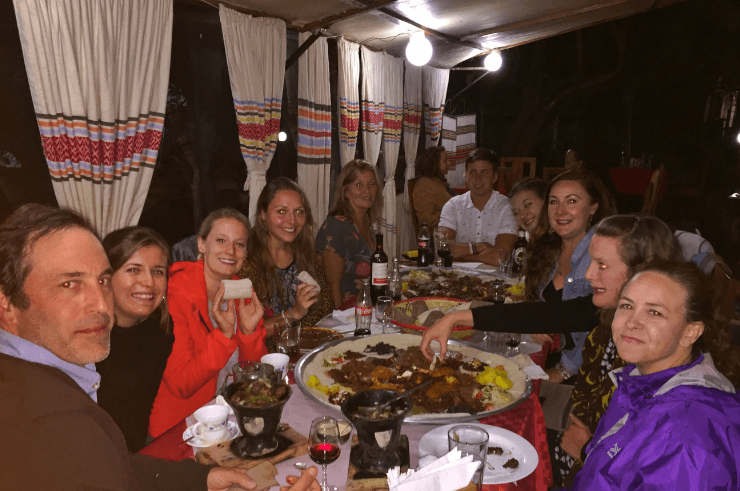
One of Nairobi’s culinary highlights is its incredible Ethiopian food – the city is home to some of the best Ethiopian restaurants outside of Ethiopia itself. If you’ve never tried injera with spicy wot, this is the place to do it. I’ve included my top Ethiopian spots in my full Nairobi food guide.
33. Experience the Awesome Nairobi Nightlife
Nairobi is a vibrant, fast-paced city that truly comes alive after dark. Kenyans love to socialise, dance, and enjoy life – and the city reflects that energy every night of the week. Whether you’re in the mood for laid-back cocktails with a view, live music, a local pub with great vibes, or dancing until the sun comes up, Nairobi has something for everyone. From trendy rooftop bars to quirky hangouts and buzzing clubs, the nightlife scene here is as diverse as the city itself.
If you’re wondering where to go out, I’ve put together a list of my favourite bars, lounges, and party spots in Nairobi – check it out here!
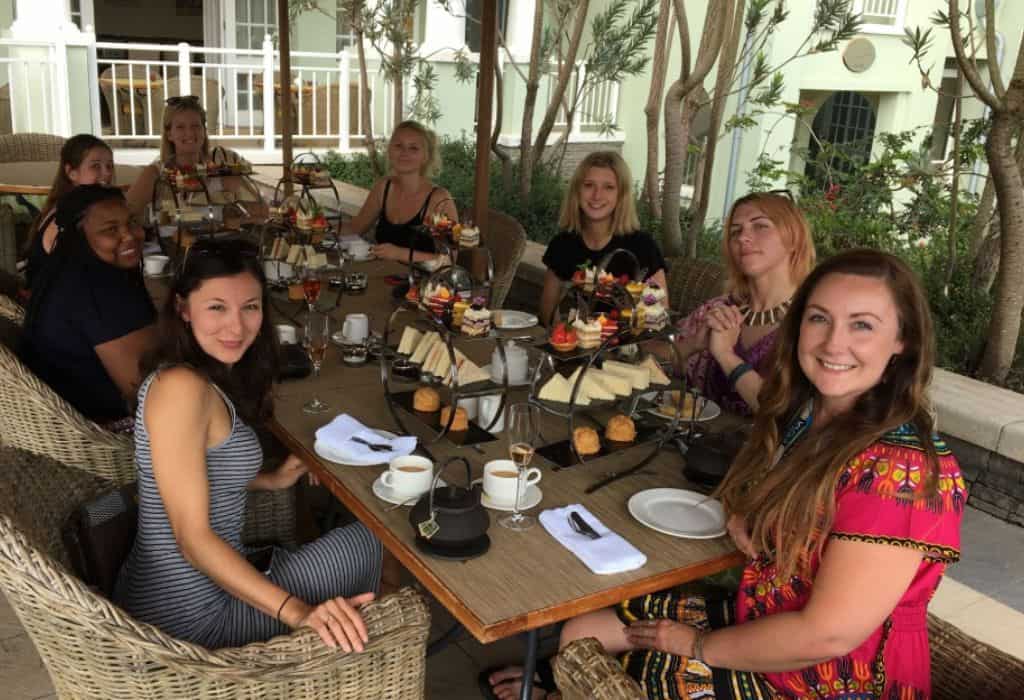
34. Go for High Tea
There are lots of things that the colonial British brought to Kenya and one of the better ones was high tea (or afternoon tea as we usually call it these days) which is usually served between 3pm – 5pm.
Many hotels in the city serve high tea, which usually consists of sandwiches, cakes, scones (with jam and cream) and of course tea. Usually, there’s an option to add a glass of something fizzy on the side.
The best places to find high tea in Nairobi are:
- K Lounge at Villa Rosa Kempinski
- Hemingways (where we are above)
- The Lord Erroll
- The Lord Delamere Terrace at Fairmont The Norfolk
- Cocoa Cafe
- Giraffe Manor (but… you have to be a guest there, unfortunately)
35. Visit the Kuona Artists Collective
If you want to experience Nairobi’s vibrant art scene, a visit to the Kuona Artists Collective is a must. Founded to support and showcase local visual artists, Kuona is a creative hub where painters, sculptors, and mixed-media creators share their work with the public. You can explore exhibitions, meet the artists, and even pick up unique pieces to take home.
Every first Saturday of the month, Kuona hosts First Saturday, a lively event celebrating the best of visual arts from the collective. It’s not just about art – there’s also fashion, local food, and live music, making it the perfect way to experience Nairobi’s creative energy in one evening.
I hope this helps you plan your trip to Nairobi! And let me know if you have any other recommendations I can add to the list!
Other Kenya posts you might enjoy…
- Where to Eat in Nairobi: My Favourite Restaurants, Cafes & Street Food Spots
- Where to Find the Best Nairobi Nightlife – Bars, Clubs & Places to Party
- Planning a Safari in the Masai Mara – Everything You Need to Know
- A Guide to Samburu National Reserve in Kenya
- How to Visit the Umoja Women’s Village in Kenya
- A Little Guide to Lamu Island in Kenya
- Planning a Trip to Ol Pejeta Conservancy in Kenya – Everything You Need to Know
- A Magical Kenya Itinerary – Safaris, Cities & Beaches
- 10 Unique Places to Visit in Northern Kenya
- The Perfect 2-Week Kenya & Tanzania Itinerary
If you’d like to join the Rock My Kenya & Tanzania Adventure you can find out more here.
Pin This Post For Later


Wonderful information . I am a former resident of Kenya and am visiting Nairobi for family reasons. I will be here until end of January 2021. I want to do some city tours and one short adventure country tour. Am not sure what is available due to Covid restrictions. Please advise. Looking forward to hearing from you and hopefully do something worthwhile during this visit.
These all look amazing! I have a brother who visits Africa frequently and loves it. Thanks for this!
I can’t believe you’d put going to “areas tourists shouldn’t go” to hear people talk about how difficult their lives were/are. Povery porn much? People aren’t tourist attractions.
Hi there,
Thanks for taking the time to share your thoughts — I appreciate the conversation.
I completely agree that people are not tourist attractions. That’s incredibly important. But that’s not what this experience is about.
The tour I’m referring to is run by Nai Nami in Nairobi. It’s a city walking tour led by former street boys who, on their own terms, choose to share their lived experiences. They are not being observed – they are leading. They are guiding. They are earning an income through storytelling and advocacy.
When I mention “places tourists probably wouldn’t (or shouldn’t) go alone,” I’m referring to safety – not poverty. The area is in downtown Nairobi and is known for high levels of street crime. Even the guides themselves are very open about this. That’s precisely why the tour operates in small groups with local leaders who are well known and respected in the area.
This isn’t about taking photos of people’s hardship or sensationalising struggle. In fact, we don’t actually even take manyphotos on the tour, and the focus is on dialogue, dignity, and understanding. The experience is about hearing directly from people who have transformed their own lives and are now working to help others do the same.
To me, that’s the opposite of “poverty porn.” It’s about agency, entrepreneurship, and human connection.
I’ve known these guys for several years now. I’ve seen the impact their work has – not just on visitors, but on other vulnerable kids they mentor and support. They are proud of what they’ve built, and I’m proud to support them.
It’s absolutely okay to question tourism ethics – we should. But I also think it’s important to understand the context and intent behind something before dismissing it.
If you ever find yourself in Nairobi, I’d genuinely encourage you to experience the tour firsthand. It’s thoughtful, respectful, and – in my opinion – deeply inspiring.
Wishing you all the best,
Helen
Very well said, Helen. I am planning a trip to Nairobi and have found your site very informative and I am very interested in taking a tour with these boys. I think what they are doing is fantastic. I will be traveling with my husband and our 11 year old and I think this would be a fantastic experience for her.
In your opinion, would she be able to handle a Kibera Township tour? I would like her to understand how privileged we are to have all we have but I have no idea what these areas might be like. I would very much appreciate your thoughts.
Also, would we be better off doing a safari in SA or in Kenya (we will be traveling to both)?
Thank you so much.
magda
Hi Magda,
Thank you for reading and commenting!
I’ve not done a Kibera township tour, I’m sure she could handle it, but I’ve not personally been, but have been to other similar places, like Soweto in South Africa. Like I say in the post, I think it’s a personal decision and obviously you just need to be respectful, which I’m sure you would be. 🙂
Taking a tour with Nai Nami is a great thing to do and the boys will look after you.
In terms of safari, both Kenya and South Africa are great. I love the Maasai Mara. Where in South Africa are you going? Kruger is good, but I personally prefer the Mara. But generally you can’t go wrong with a safari in either country – maybe do both if you can! 🙂
Hi Helen. I don’t quite agree with you top suggestion of “things to do in Nairobi”. I can certainly appreciate that you’ve built a relationship with the men from Nai Nami, and I think that’s really valuable. Of course having local guides in an area you’re traveling in can really help you understand an area you’ve perhaps never been to before. That being said, as I’ve been researching for an upcoming trip to Kenya, I’ve been quite off-put and frustrated by the number of websites that suggest outings very similar to Nai Nami (I do however recognize the subtleties of it being a tour of downtown with locals, which I’ll come back to in a moment).
The issue in my mind is really the way that most people respond to such an experience. Perhaps you are not one of such people, perhaps you are. But the majority of people that I know, bloggers, and instagrammers who went to almost any African country, came back talking about “how lucky they feel, how blessed they are, how much their eyes were opened” etc etc etc. And that is the consistent narrative about Africa. Poverty. Violence. Lack of development. And those things are there. But Africa is also a continent of rich culture and development and experiences far outside of the Western World–and that should be the narrative.
I recognize that you know these guys and this experience and you’re of course helping them out by suggesting that people do this outing, which I totally get. But I think it walks a very thin line that many, if not most people, are not equipped to handle correctly.
Take Magda for example (no offense Magda you seem very sweet and supportive and I’m glad you’re taking your 11 year old to Kenya)–she’s suggesting that visiting one of Africa’s largest slums might be a good way to show her daughter “how privileged we are”. And your only suggestion was to “just be respectful” which doesn’t do much to help your case on understanding the subtleties of the situation. I don’t think it’s possible to choose to GO ON A TOUR of an incredibly impoverished community in order to impress upon a child the wealth discrepancy between themselves and a child growing up in Kibera and have that be respectful in any way shape or form. *This* is the reason I take issue with this tour being the first suggestion of things to do in Nairobi.
Hi Appalled,
Thank you for taking the time to respond again. I genuinely appreciate that your second comment was expressed in a much more thoughtful and considered way.
My initial issue wasn’t that you disagreed with me — differing opinions are completely valid. It was that your first comment felt like a snap judgement about something you hadn’t researched, and it was delivered in a way that came across as dismissive and hostile.
It’s easy to forget there’s a real person on the other side of a screen. I welcome constructive debate, but there’s a difference between asking questions or offering perspective and assuming the worst without context.
To clarify again: the Nai Nami tour in Nairobi is not a slum tour. It does not take place in Kibera. It is not centred on observing poverty. It’s an inner-city walking tour led by former street boys who choose to share their stories and who earn a living through that work. The focus is on their resilience, entrepreneurship, and the impact they’re now having in their own community.
Magda’s separate question about visiting Kibera with her daughter is a different discussion entirely.
You mentioned broader frustration about how Africa is portrayed by media and influencers. On that point, we are actually aligned. If you read my blog or follow my work, you’ll see that challenging the “poor, dangerous Africa” stereotype has been central to what I do for over a decade. I’ve been travelling and working across the continent for 12 years, and my entire platform exists to show its nuance, culture, innovation, humour, creativity, and brilliance — alongside its challenges. Africa is not a monolith, and it certainly isn’t a single narrative.
Regarding township or slum tours more broadly — I agree this is a complex topic. In an ideal world, informal settlements wouldn’t exist. But they do. The question then becomes: what role, if any, can tourism play?
In my experience, when tours are community-led, locally run, transparent about where the money goes, and conducted respectfully, they can provide income and agency. I have also seen far worse alternatives for income generation. That doesn’t mean all tours are ethical — but it also doesn’t mean all are exploitative by default.
To your point about visiting in order to “impress upon a child the wealth discrepancy” — I understand the discomfort with framing it that way. But intention evolves through experience. What people often leave with isn’t a simplistic comparison of wealth, but a deeper understanding of resilience, community, shared humanity, and systemic inequality. That nuance matters.
Ultimately, whether someone chooses to visit is personal. It’s not my place — or yours — to make that decision for them. What I can do is encourage that, if they go, they do so respectfully: no intrusive photography, no gawking, listening to local voices, supporting local businesses, and engaging with humility.
You suggested I may not understand the subtleties of the situation. I would gently say that these subtleties are precisely what come from long-term experience on the ground — from relationships, conversations, and years of working within these contexts.
We may still disagree, and that’s okay. But I hope this clarifies my position and the intent behind what I wrote.
And genuinely — thoughtful critique is always welcome. It’s how conversations evolve.
Helen
I apologize for the harshness of my original comment. 99% of the time, you aren’t going to change someone’s mind, stance, or discourse surrounding such a topic on the internet, even if you write the world’s most eloquent, empathetic, and well-researched comment. Nor was I anticipating any response on an older post on a clearly well-run blog. And as you’ve said yourself, that’s probably due to operating on two sides of a computer screen. My intentionI can respect that you’ve spent a significant amount of time on the African continent and help show people other sides of the countries therein.
I have not been to a township or on a tour, nor do I ever plan to (nor do I need to flout the places I HAVE been to in order to validate my points). I don’t believe it’s necessary to do something you categorically disagree with in order to know you don’t agree with doing it. Silly example but it would be like saying to someone “Well you’ve never embezzled money so you can’t say it’s wrong.” I do not think it’s right to tour a township, so I would not choose to do so.
However, I think the end of your comment gets to the heart of the matter. You’re clearly someone who has seen many of the sides of many African countries, and are looking at this from an empathetic, people-oriented point of view that says “well, township tourism is a way residents can make money, and it’s one of the better ways to do so” and I can 100% see where you’re coming from. I’m looking at the issue from a more objective standpoint and I personally do not think it is ethical. But I definitely see where your point of view comes from, so I’m grateful you’ve taken the time to talk about this. And you’re welcome for the blog content XD
Thank you for taking on board my comments. Totally understand where you are coming from too. Township tours are a very complex subject and I agree that it’s a fine line that needs treading carefully. And very much respect your decision not to partake in them.
Good luck with your trip to Kenya, I hope you enjoy it and would love to hear about your experience. Nairobi is a great city. If you do end up taking a Nai Nami tour, would love to get your take on it.
Helen
Hey Hellen,
Your blog has been really helpful. I’m planning a Nairobi trip. Thank you for the very detailed and informative articles.
However, I think the Kibera Tour you mentioned was misunderstood. The way you spoke about it clearly didn’t depict poverty porn in anyway. Nonetheless, the lady who wanted to show her 11y/o “how privileged they are” should find a better way to do so rather than making her think Africa is poor.
Thanks
Recommending shopping and 6000kes op high tea.
Must be a suitcase Traveler with to much money.
What is the next? A simple 800 usd laidback lodge for a lovely night in a national park.
My aim with this blog is to give a range of options in Nairobi for different budgets and travel styles – from affordable local spots to occasional treats like afternoon tea. Hopefully there’s something useful here for everyone, whatever their travel style.
If you travel cheaper on a budget, good for you! I like a bit of both. And for your info, I travel with a backpack on wheels and I’ve never stayed in a hotel for $800 a night. 🙂